
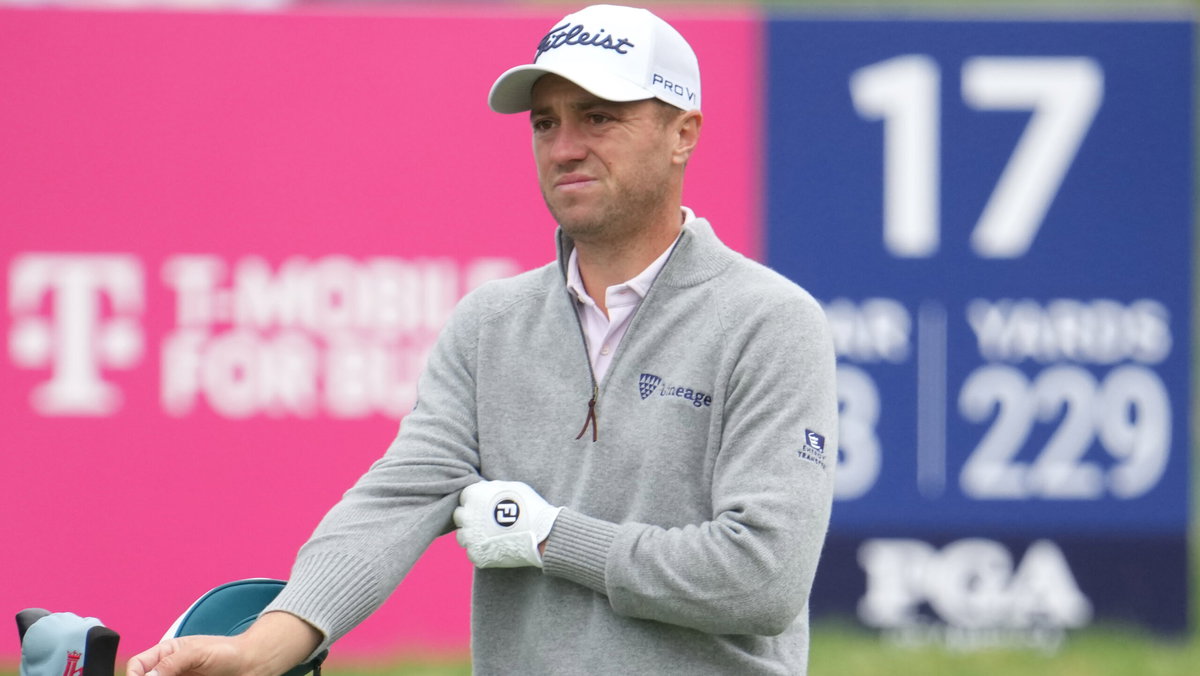
Justin Thomas showed up at Aronimink Golf Club this week with high expectations. As a two-time PGA champion, he returned to a course where major titles are won through patience, precision, and smart play between shots. He played well enough to stay in the mix, but his Saturday round left him angry. On Sunday, though, he bounced back and almost won it all.
Watch What’s Trending Now!
“I was pissed off, I mean, to be perfectly honest,” Thomas said after completing his final-round 65. “I fought really hard to shoot the score that I did, and I felt it was the best I could shoot, but I just was — I was upset and bummed I didn’t play better.”
Thomas stayed at Aronimink that Saturday, practicing long after most players had left. He didn’t trust himself to leave while he was still upset. The chance to win a major kept him there.
Imago
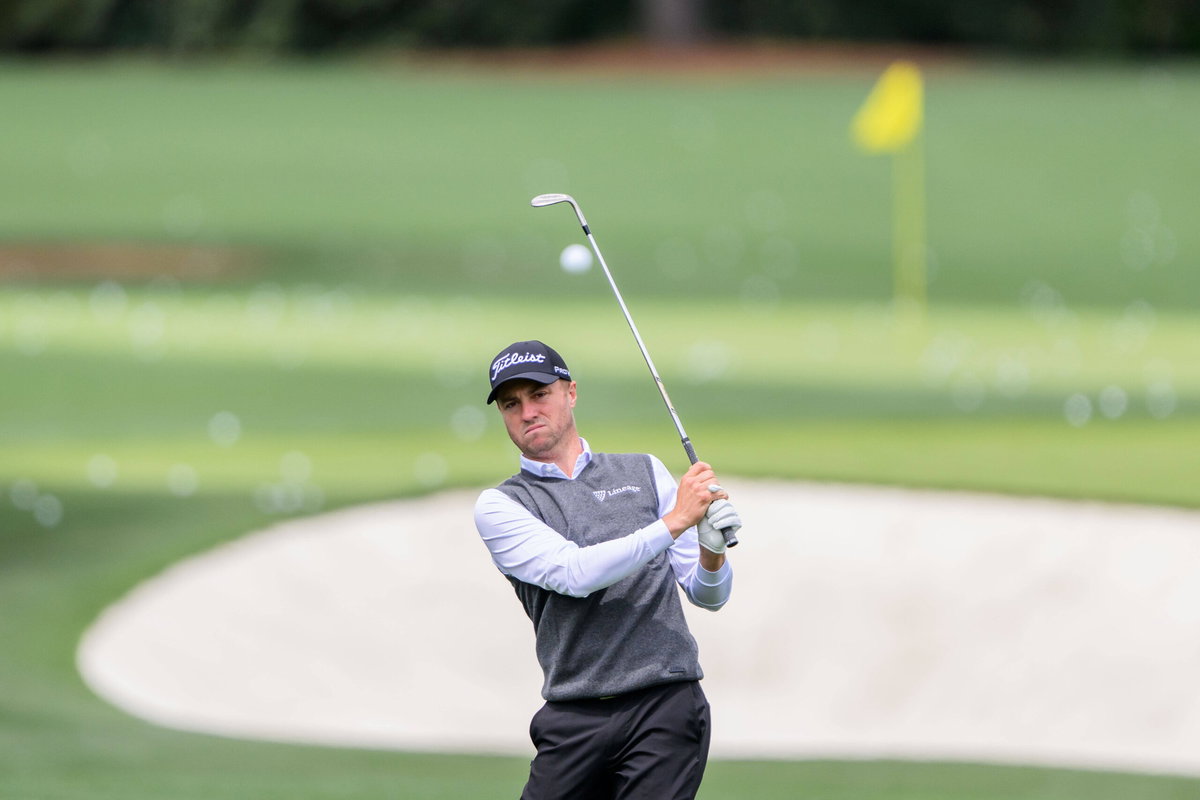
260406 Justin Thomas of the United States during a practice round prior to the 2026 Masters Golf Tournament on April 6, 2026 in Augusta. Photo: Petter Arvidson / BILDBYRAN / kod PA / PA1190 golf masters bbeng the masters augusta *** 260406 Justin Thomas of the United States during a practice round prior to the 2026 Masters Golf Tournament on April 6, 2026 in Augusta Photo Petter Arvidson BILDBYRAN kod PA PA1190 golf masters bbeng the masters augusta PUBLICATIONxNOTxINxSWExNORxFINxDEN Copyright: PETTERxARVIDSON BB260406PA175
“I practiced a lot longer than I normally would have in a situation like that yesterday, but I just felt like I couldn’t leave the golf course in the frame of mind I was in,” he said. “It was not a great chance, there wasn’t a good chance even, but I had a chance to win a major still. I needed to leave this place in a better frame of mind.”
“I felt like it was more of a fire I was leaving with, and it was pissed off, but like a good pissed off, kind of one I wanted to bring with me today and kind of play with.”
His frustration at Aronimink didn’t start on Saturday night. Earlier in the championship, Thomas had pushed back against a pace-of-play warning in Round 2, saying his group was being penalized for a slowdown that had built up all week. That fire had been burning since Friday.
Sunday marked a shift in approach. The night before, he spoke with his wife, Jill, who gave him direct advice instead of reassurance.
“She was like, well, use that tomorrow.”
Thomas has played with this level of intensity before, particularly in Ryder Cups, where his emotional focus has improved his performance.
“I’ve done it in Ryder Cups a lot, and it’s like sometimes it brings a little different energy and different side out of it,” he said.
He maintained that focus on Aronimink’s back nine. After a bogey at the third, Thomas responded with six birdies, including back-to-back birdies on 15 and 16, finishing with a 65 to lead the clubhouse at 5-under. His putting, which had been inconsistent through much of 2026, was reliable this week: 1.644 putts per green in regulation and a Strokes Gained: Putting of +1.065 for the tournament. On the 18th, he faced a long par putt after his third shot went past the upslope by several feet. He read the putt carefully and committed to the line.
This was his fourth round of 65 or better in 42 career major starts. Before this week, he had only one top-30 finish in his last 15 majors since the 2022 PGA Championship. While this performance does not resolve his recent record, it puts him back in the discussion.
Justin Thomas and the question he cannot fully answer
Sunday’s result was determined by Thomas’s physical recovery. His return to competition depended on overcoming injury before anything else.
He had a microdiscectomy on November 13, 2025, at the Hospital for Special Surgery in New York, right after the best run of his recent career. Earlier reports noted that his 2025 RBC Heritage win ended a 1,071-day winless streak. By the end of the season, he had eight top-10 finishes and earned over $10.8 million, before his injury put everything on hold.
When asked on Sunday whether he was fully back, Thomas did not claim to be.
“I don’t know. I’ve been asked that. I think — you’re never — I don’t think you ever are because it’s not like it’s fixed,” he said. “I play a sport that’s about as bad on your lower spine as you could basically draw up. I guarantee you took MRIs of the entire PGA Tour, you have 50 percent of the people who have herniated disks.”
Thomas treats recovery as ongoing work, not a completed process. Sunday was not a statement of full recovery. It was a demonstration that he can still compete, even as his physical limits remain unclear.
Aronimink required patience and discipline across four days. Thomas met those requirements and nearly won the Wanamaker Trophy. His back injury will continue to set his limits, and he has acknowledged that.