
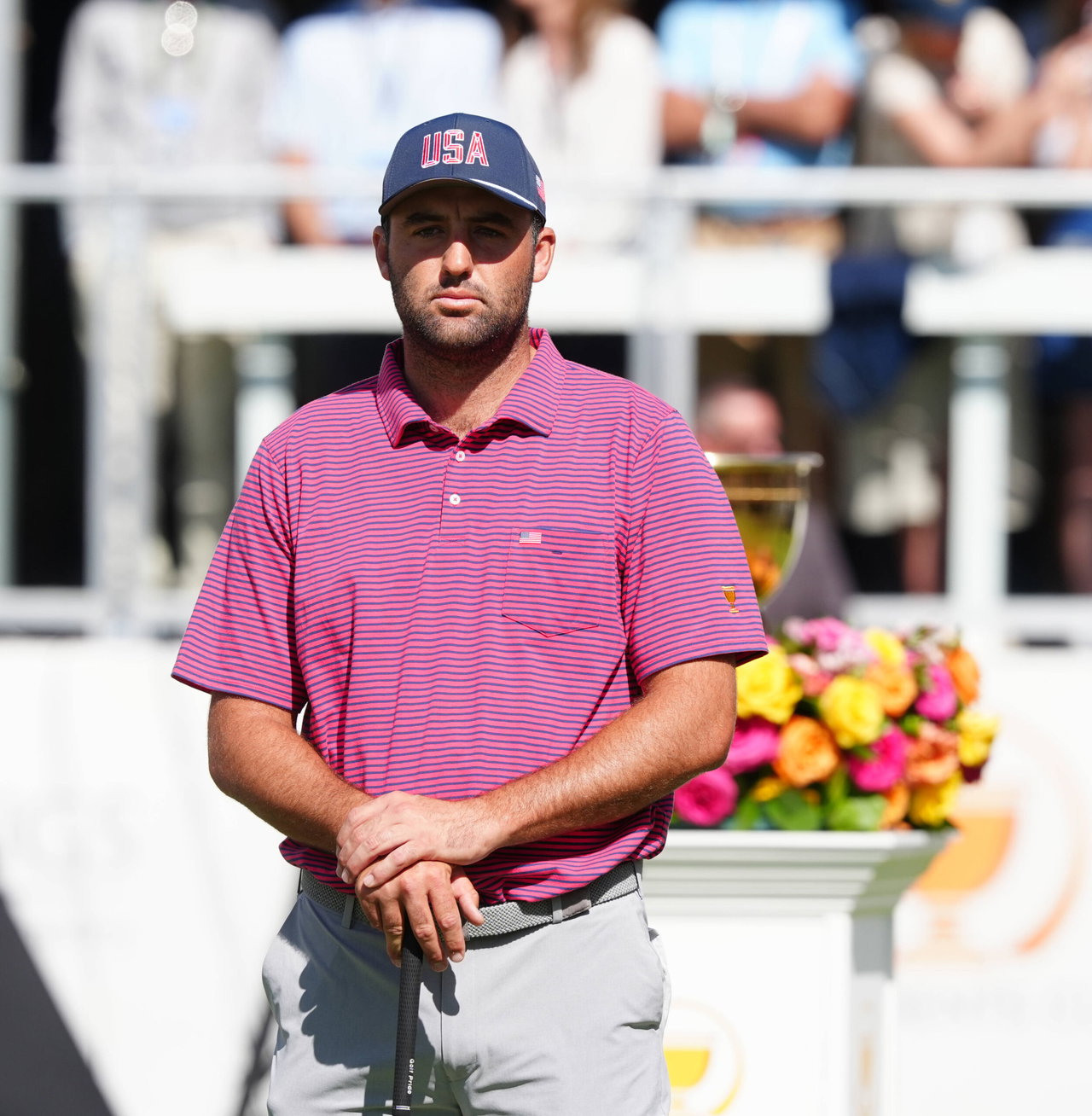
Scottie Scheffler has repeatedly clarified that his life away from golf plays a decisive role in shaping his schedule. For the World No. 1, family comes before professional commitments, a priority that has led him to a limited international schedule. However, this approach doesn’t sit well with two-time DP World Tour champion Eddie Pepperell, who believes that American golfers are missing out on experiences that extend far beyond the game itself.
Watch What’s Trending Now!
“Ultimately, this is what saddens me when I hear of Scottie Scheffler not wanting to travel as much, and the Americans who don’t travel, all they’re doing is limiting their experiences and their future self. And when you can be offered what they’re currently being offered to go and play the game globally, to turn that down I find just remarkable because I would have done it for free, let alone the millions that they would be offered to travel to wherever it might be,” Pepperell said on the Business of Sport podcast.
For Pepperell, the appeal of international golf lies not just in the tournaments themselves but also in the experiences that come with playing across different countries and cultures. While acknowledging the quality of the PGA Tour’s events, he believes the overall experience can become repetitive.
“The events themselves on the PGA Tour are second to none. They’re fabulous events. But it’s very samey week-in, week-out. You stay in a pretty average hotel on the side of the motorway, get your Starbucks at 6am on the way to the course. You go play. Everybody seems a bit depressed out there to me. When I was there, I often thought none of these people seem that happy in spite of the millions that they’re earning. Whereas when you play on the DP World Tour, the vibrancy of experience is so much greater.”
Yet Pepperell’s argument has an interesting irony. While he encourages Scheffler and other American stars to embrace international opportunities, he has little interest in pursuing a PGA Tour career himself. Despite the possibility of earning a PGA Tour card through the DP World Tour’s Race to Dubai, Pepperell has indicated that he would almost certainly decline the opportunity if it arose.
“Interestingly, if I had the most remarkable end to the season and got one of the 10 cards, I would say with 95 per cent certainty that I would turn that down right now, and stick to playing golf on the DP World Tour for another year. I love travelling in Europe. I love Europe personally. And I’ve grown to appreciate Asia a bit more, me and Jen had wonderful trips down to Africa this year, and you just don’t get that on the PGA Tour. I think that is the side of playing golf on the DP World Tour that is just magical.”
Under the strategic alliance between the PGA Tour and the DP World Tour, leading players in the Race to Dubai rankings who are not already exempt can earn PGA Tour membership for the following season. For Pepperell, however, securing such a card does not outweigh the freedom and variety he associates with life on the DP World Tour.
His position highlights an important distinction: the opportunities that make one player’s career more attractive may not align with another player’s idea of fulfilment. Pepperell sees international travel as an opportunity to broaden his horizons, while Scheffler aims to balance his professional ambitions and personal life.
For Scheffler, that balance has become even more important with the arrival of his two sons. He and his wife, Meredith, welcomed their first child, Bennett, in 2024 and their second son, Remy, in early 2026. The American has openly acknowledged that raising two young children under the age of three is a “whole different ballgame”, and his approach to tournament weeks has evolved accordingly. He now makes a greater effort to leave the golf course earlier and return home in time to spend more of the day with his family.
That commitment has also influenced his tournament schedule. Scheffler withdrew from the Houston Open to prepare for the birth of his second child, prioritising time with Meredith and their growing family over another competitive appearance. Such decisions reflect a broader philosophy: trophies, rankings or prize money do not measure success.
His scheduling strategy also reflects the demands of competing at the highest level. Scheffler avoids playing the week immediately before a major championship, believing that a demanding run of three or four consecutive tournament weeks can create a mental drain that compromises performance. Even after highly successful, multi-million-dollar FedEx Cup campaigns, he makes a point of setting aside extended periods during the offseason to disconnect from the game, leave his clubs behind, and recharge with family and friends.
Ultimately, Pepperell and Scheffler are approaching professional golf from very different perspectives. Pepperell values the cultural exposure, travel, and variety that international competition offers, while Scheffler seems content to sacrifice some of those experiences for a more controlled schedule and greater time at home. Neither approach is inherently right or wrong; they reflect different priorities at different stages of a golfing career.
The wider question is whether the PGA Tour can make international competition more appealing without asking players to compromise the personal priorities that shape their schedules. With Brian Rolapp placing prestigious international events as a key pillar of his strategic vision for the PGA Tour, it will be interesting to see whether that approach encourages more of the game’s biggest names, including Scheffler, to venture beyond the United States more frequently.
For now, the contrast between Pepperell’s enthusiasm for global golf and Scheffler’s commitment to family underscores a fundamental truth about professional sport: the freedom to choose what matters most may be just as valuable as the opportunities the game puts on the table.