

Long before the USGA and R&A announced plans to roll back the golf ball, the sport’s most iconic venues were already fighting a losing battle against distance. At St Andrews, tee boxes have gradually crept farther from their traditional locations as modern players continue to push the limits of course design. Similar challenges have emerged across championship golf, where courses have repeatedly added length in an effort to keep pace with modern equipment and faster swing speeds.
Watch What’s Trending Now!
That growing concern ultimately led golf’s governing bodies to introduce the controversial golf ball rollback. But not everyone is convinced the ball is the real problem. Adam Scott is among those who believe the debate is more complicated than simply reducing distance through equipment regulations.
“Yeah, look, this is a popular discussion at the moment. I think multiple factors need to be addressed to have the desired outcome. I think just blanketing it with the ball or a driver head or something else isn’t going to get the outcome we desire. It may have an effect, but it’s not necessarily how I believe the game should be played at the highest level,” Adam said when asked if the golf ball rollback or driver head would make a difference in the men’s elite game.
The golf ball rollback is a new testing standard announced by the USGA and R&A in December 2023 following their Distance Insights Project. Rather than lowering the maximum distance limit itself, the governing bodies revised the testing conditions used to certify golf balls, forcing manufacturers to design products that travel shorter distances under modern high-speed conditions.
The proposed changes are:
- Clubhead speed: 120 mph → 125 mph (+5 mph)
- Ball speed: 176 mph → 183 mph (+7 mph)
- Spin rate: 2,520 rpm → 2,200 rpm (lower spin)
- Launch angle: 10° → 11° (higher launch)
- Maximum distance cap: 317 yards sustained (320 yards with tolerance)
Earlier, these changes were to be implemented in elite competitions from January 1, 2028, and for recreational golfers from January 1, 2030. However, it now has a universal date on January 1, 2030, for all golfers.
The USGA and R&A argue that the rollback is about protecting the long-term future of the game rather than creating an immediate reduction in scoring. Their Distance Insights Project found that driving distances have steadily increased across both professional and amateur golf, forcing courses to add length, acquire additional land, and absorb higher maintenance costs. The governing bodies believe the rollback can slow that trend while preserving the strategic value of classic course architecture.
Supporters of the change have also stressed that the objective is not to dramatically reduce driving distance overnight. Instead, they view the rollback as a way to curb future distance gains before technology and athletic development push courses beyond their intended design.
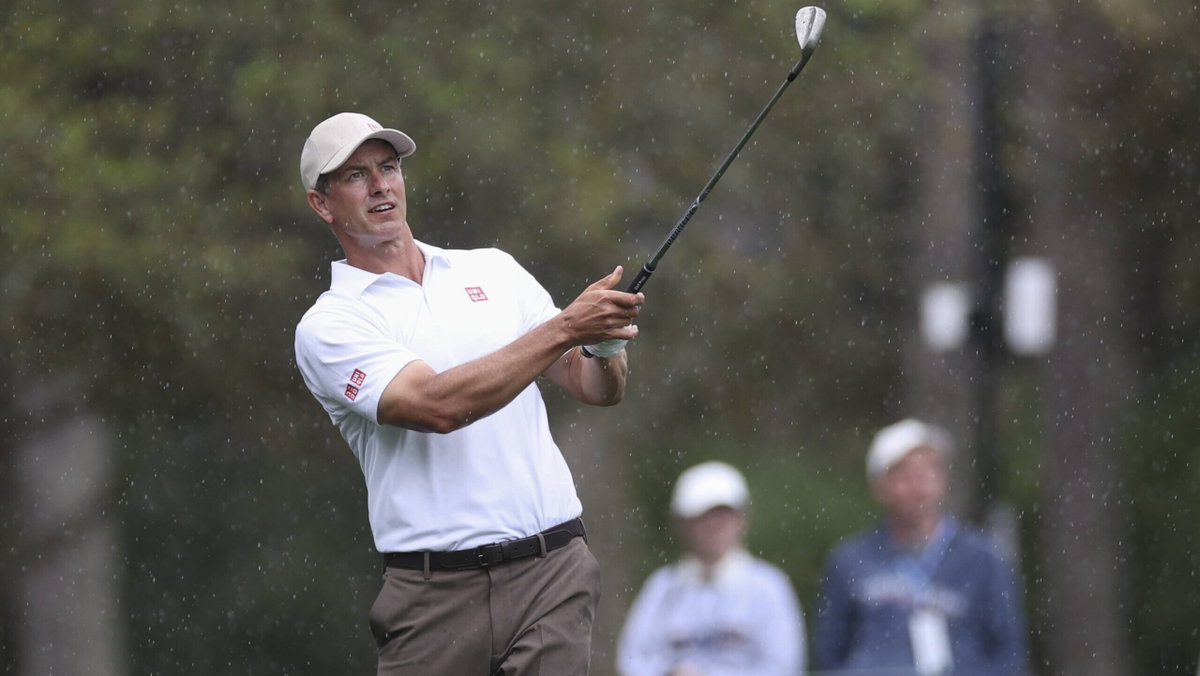
Imago
PONTE VEDRA BEACH, FL – MARCH 12: Adam Scott of Australia plays a shot on the tenth hole during THE PLAYERS Championship on March 12, 2026 at TPC Sawgrass in Ponte Vedra Beach, Fl. Photo by David Rosenblum/Icon Sportswire GOLF: MAR 12 PGA, Golf Herren THE PLAYERS Championship EDITORIAL USE ONLY Icon260312041695
However, as Adam Scott said, he does not believe that this rule alone would make any significant difference. He is not just complaining about the problem, though. In 2023, the veteran golfer also offered a solution.
“The penalty for missing a driver just isn’t high enough anymore, in my opinion, at the top level,” Adam Scott said on the Smylie Show podcast in July 2023. “I’d like to maybe address that first and see what knock-on effects that has. If guys want to swing at it 130 mph, with a tiny driver head, then good luck.”
Scott’s argument centers on forgiveness. Modern drivers can be as large as 460cc, giving players a significantly larger sweet spot than previous generations of equipment. As a result, golfers can swing aggressively while suffering fewer consequences on off-center strikes.
By reducing driver head size, Scott believes the penalty for missing the center of the clubface would return. In his view, players would naturally be forced to prioritize control over pure speed, addressing distance growth without changing the golf ball itself.
Critics of the rollback often point to Cameron Young’s experience as evidence that distance gains stem from more than the golf ball alone. Young has been using a rollback-compliant prototype golf ball, yet his driving distance has remained largely unchanged.
After averaging 313.2 yards off the tee in 2025, Young has averaged 312.8 yards this season. He also recorded a 375-yard drive at The Players Championship while using the prototype ball. While a single player’s results do not prove the rollback will fail, they have fueled skepticism about whether a ball-only solution can significantly alter distance trends at the highest level.
Rory McIlroy, for instance, is a strong supporter.
“It will make no difference whatsoever to the average golfer and puts golf back on a path of sustainability,” he said in 2023.
Tiger Woods has repeatedly backed distance regulation, arguing that golf is running out of room to keep extending championship venues. Lee Westwood has also voiced support for efforts to address the sport’s distance problem.
Others support the rollback but question whether it goes far enough.
“I keep saying, it’s like throwing a deck chair off the Titanic. It’s not very much,” Nicklaus said on the topic during a media presser at the Memorial Tournament 2026.
Then there are professionals like Adam Scott, Lucas Glover, Jordan Spieth, and more who have mixed views about the rule. Glover even called it “laughable.” Similarly, World No. 1 Scottie Scheffler expressed mixed feelings about it.
“I think when you look at the golf ball rollback, when you start moving it back only 8 yards, not only does it disproportionately affect certain players, where you have some guys who it won’t affect at all, and some guys where it will affect 15 to 20 yards, I think creates some issues within our game when you start changing the rules,” Scheffler said at the Memorial Tournament.
Those differing viewpoints highlight why the rollback remains one of golf’s most polarizing issues. The USGA and R&A see it as a necessary safeguard against decades of distance growth, while critics such as Scott argue that the game’s biggest challenge cannot be solved by targeting the golf ball alone. With implementation now set for 2030, the debate over what truly drives distance in modern golf is unlikely to disappear anytime soon.