
In 2004, U.S. Open officials were forced to water Shinnecock Hills during the final round after the course’s infamous seventh green became nearly unplayable. Fourteen years later, the championship returned to the same venue and found itself facing similar criticism as players watched well-struck shots roll away on baked-out putting surfaces.
Watch What’s Trending Now!
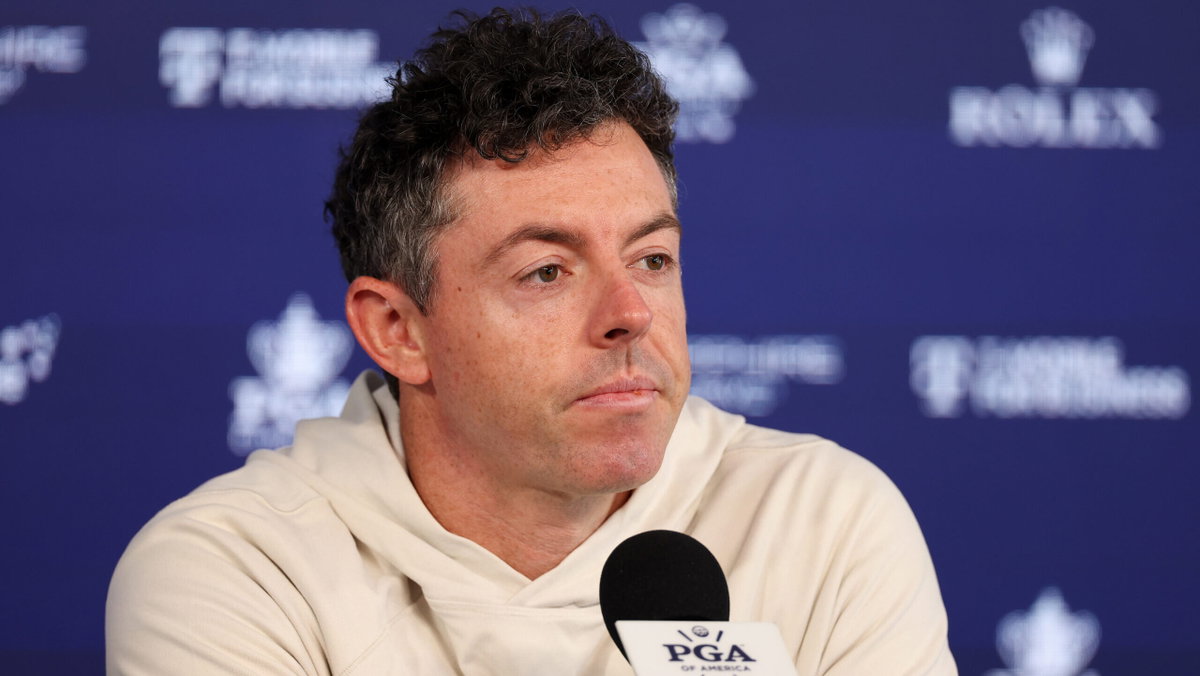
Those moments remain part of Shinnecock’s complicated legacy. Few courses in American golf are as celebrated, or as vulnerable to crossing the line between demanding and controversial when wind, firm turf, and aggressive setup choices collide. That history was fresh in Rory McIlroy’s mind this week. Asked about Shinnecock’s setup ahead of the U.S. Open, the four-time major champion warned that tournament officials must be careful not to repeat mistakes that have defined previous championships at the venue.
“Yeah, it’s a very, very fine line. I think good shots getting rewarded and bad shots getting punished,” said McIlroy.
Imago
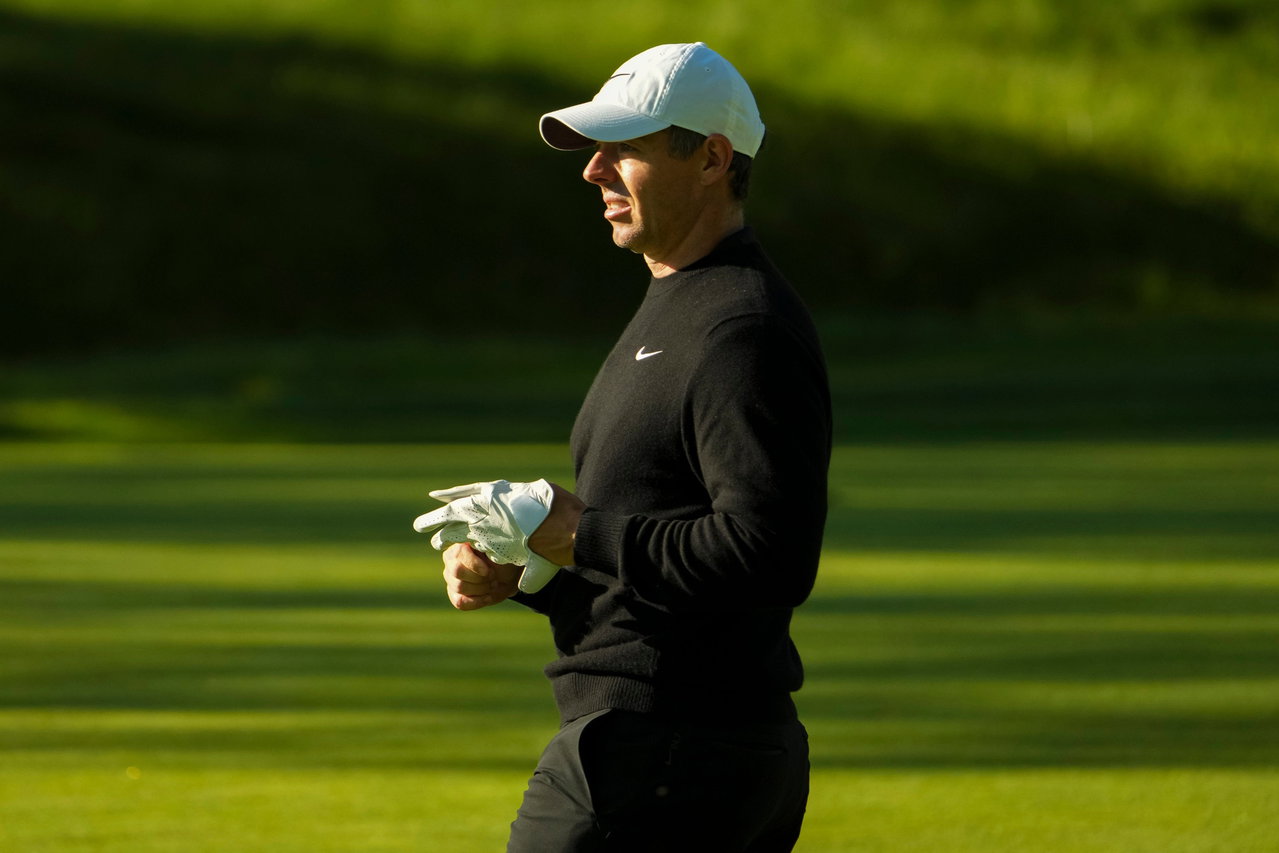
Rory McIlroy walks to the second hole during the Workday Golden Bear Pro-Am at Muirfield Village Golf Club on June 3, 2026.
What concerns McIlroy most is not the weather itself but how the USGA responds to it. While coastal winds are part of Shinnecock’s identity, green preparation remains the one variable officials can influence.
McIlroy has repeatedly stressed that green speeds will be the biggest factor this week. During practice rounds, he noted that balls were already struggling to stay on the 11th green despite gusts being lower than what is expected during tournament play.
“That’s where you just have to use a little bit of caution,” said McIlroy.
The warning carries extra weight at Shinnecock because of the course’s architecture. Designed by William Flynn and spread across an exposed stretch of Long Island terrain, the venue is largely treeless, leaving greens vulnerable to strong Atlantic winds. Its elevated putting surfaces and severe run-off areas already punish imprecise shots; when green speeds increase, the margin for error becomes even smaller.
What makes McIlroy’s warning notable is that he is not advocating for an easier U.S. Open. He has repeatedly described Shinnecock as one of the country’s premier championship venues, precisely because it demands excellence off the tee, into the greens, around the putting surfaces, and in the decision-making required to navigate changing winds.
The greens were already playing soft during practice rounds, but he explained that softer conditions can actually make recovery shots harder. Balls often run away from the putting surfaces, leaving players to chip uphill into slopes where the ball stops.
McIlroy’s concerns stem largely from what happened in 2004 and again in 2018. Both championships became cautionary tales for the USGA after drying winds and increasingly firm greens pushed parts of the course beyond what players considered fair.
Tiger Woods was among the loudest critics in 2004, saying: “This is our national championship and Shinnecock Hills is a great golf course, but they lost control of it. This is not supposed to be how golf is played.”
The criticism carried weight because Woods was not attacking the golf course itself but the setup decisions surrounding it.
Fourteen years later, Zach Johnson delivered a similarly blunt assessment as conditions deteriorated during the third round. “They’ve lost the golf course. When you’ve a championship which comes down to sheer luck, that’s not right. We’re not on the edge. We’ve surpassed it.”
McIlroy experienced those difficulties firsthand in 2018. He opened with an eight-over 80 and missed the cut, one of the lowest points of his U.S. Open career. The experience ultimately helped shape the patient major-championship approach that has since produced six top-10 finishes in his last seven starts at the event.
The USGA is planning precautionary watering between waves this year, a move McIlroy initially questioned before ultimately supporting. He revealed that members at Shinnecock routinely water the greens each afternoon because of how quickly the combination of sandy soil and coastal winds can dry the surfaces out.
Despite his concerns about the setup, McIlroy believes the blueprint for success at Shinnecock remains surprisingly simple.
Rory McIlroy’s strategy for this year’s U.S. Open
Rory McIlroy believes patience gives him the best chance to win this week’s U.S. Open at Shinnecock Hills. The approach has worked well recently, producing six top-10 finishes in his last 7 U.S. Opens.
He finished second in both 2023 and 2024 using that strategy. With strong winds expected throughout the week, he sees no reason to change now.
That patience becomes even more important because Shinnecock can become difficult very quickly. Forecasts for Thursday call for sustained winds around 20-25 mph, with some forecasts projecting gusts that could approach 40 mph.
During practice rounds, players saw balls struggle to remain still on exposed greens. McIlroy remembers how quickly conditions changed in 2018 when he opened with an 80.
Because of those conditions, McIlroy plans to avoid unnecessary risks throughout the tournament, embracing the same patient approach that has historically rewarded champions at Shinnecock.
While fairways average about 45 yards wide, crosswinds can make them play much narrower. In fact, the USGA has restored Shinnecock’s fairways to nearly their original William Flynn dimensions, creating some of the widest landing areas seen at a U.S. Open in decades. The tradeoff comes around the greens, where demanding contours and five-inch rough place an even greater premium on precision.
That strategy also reflects why McIlroy rates Shinnecock among the country’s best championship venues.
The course tests driving, approach play, putting, and decision-making on nearly every hole. Players must constantly adjust because changing winds affect club selection and shot shape.
McIlroy believes success comes from discipline rather than chasing difficult scoring opportunities.
Away from the course, McIlroy expects another lively New York crowd after experiencing the atmosphere at nearby Bethpage during Ryder Cup competition.
But the greater challenge may be the one he discussed earlier in the week. Shinnecock Hills has never needed much help becoming one of golf’s toughest tests. For McIlroy, the key this week is ensuring the championship remains a contest between players and the course rather than a repeat of the setup controversies that have defined some of its most memorable U.S. Opens.