
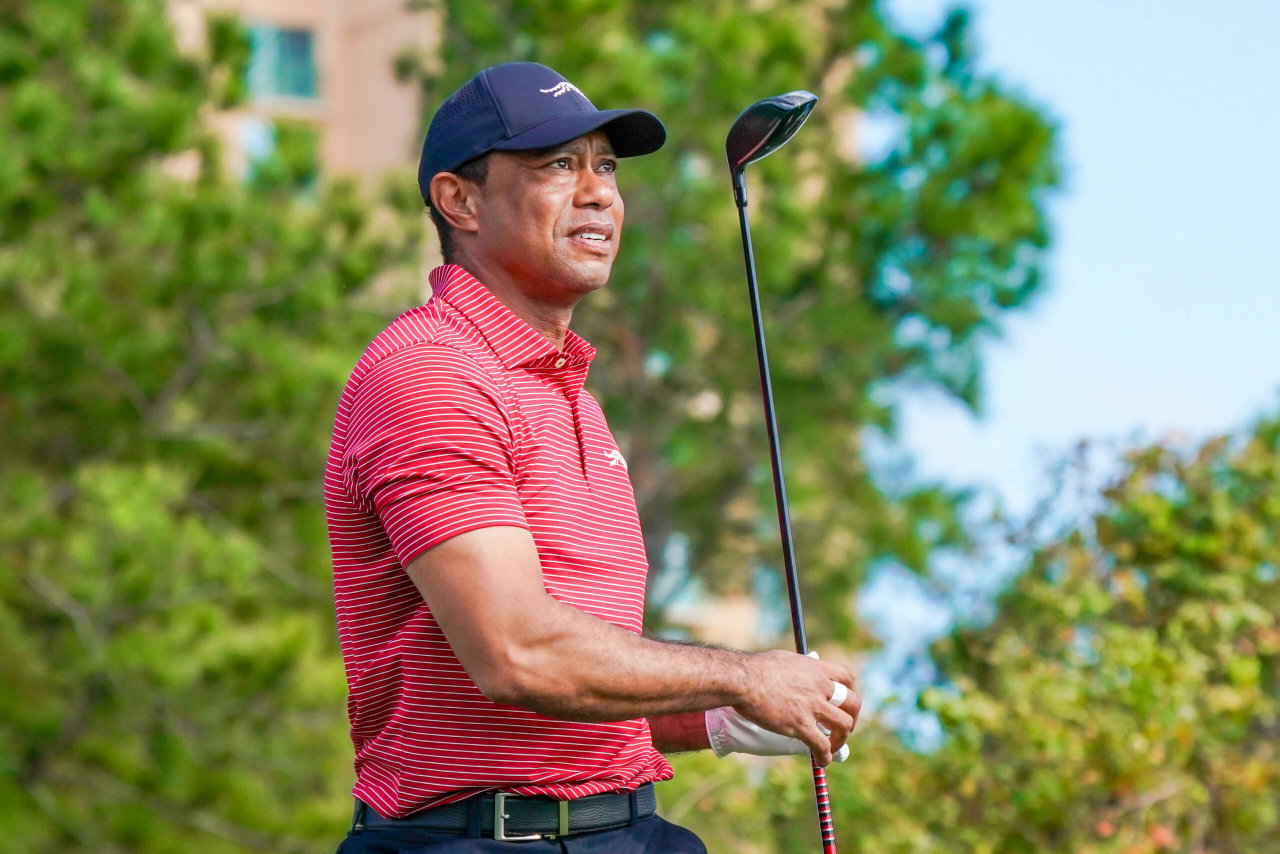
Tiger Woods turned 50 on Dec. 30, 2025, making him eligible for the PGA Tour Champions, which has been preparing for his arrival. Tour president Miller Brady told Golf Channel the circuit had done “wideboarding” for the day Woods commits.
Watch What’s Trending Now!
Yet Woods has not played since missing the cut at the 2024 Open Championship and has announced no senior start. That hasn’t stopped debate over whether his debut could rescue the tour financially. PGA Tour pro Michael Kim, however, says Woods alone can’t solve the circuit’s broader financial challenges.
Kim laid out his case in a post on X on Tuesday, October 26th: “Lots of Tiger comments. It sounds like a massive financial boost immediately but in actuality it’s not that simple. If tiger doesn’t announce the tournament he’s going to well beforehand, they can’t sell extra hospitality and sponsors based on Tiger being there. Then they have to find last minute parking, extra security at spots that aren’t ready to handle that many people. It’s a lot of logistical stuff that the tournament has to organize quickly for not a ton of immediate dollars. If he comes back each yr that’s obviously a whole different story.”
Kim’s comments came after a fan asked how the senior tour makes money. The account Monday Q Info replied that it does so “by losing millions.” Kim, 33, the 2018 John Deere Classic winner, said he had heard the tour was on track to become net positive soon. Replies soon turned to Woods, prompting Kim to elaborate. Given his history of publicly breaking down the costs of life on tour, the financial discussion is familiar territory for him.
Kim’s caution isn’t without precedent. A typical Champions event is much smaller in scale: most tournaments are 54 holes, and a stop like the Constellation Furyk & Friends offers a $2.1 million purse—just a fraction of what’s at stake on the PGA Tour.
Steve Flesch, a four-time Champions winner, echoed Kim’s point last December, saying Woods would need to commit to his schedule well in advance so organizers could prepare. Without that planning, profitability becomes even harder for a tour operating on a much smaller scale.
As Kim suggested, the scenario could look different if Woods commits to playing regularly. Jack Nicklaus provides a precedent for the kind of long-term impact Kim describes. The tour’s 1995 media guide credited Nicklaus, alongside Arnold Palmer and Gary Player, with driving unprecedented growth in popularity in the early 1990s. Because the business infrastructure was already in place, the tour could capitalize on that attention, with tournament purses reflecting the growth as winner’s checks rose from $90,000 in 1989 to $120,000 in 1990.
That said, not everyone sees Woods’ participation as a complicated proposition. Bob Harig, who has covered all 15 of Woods’ major victories, offered a different perspective on the matter during the 5 Club Podcasts.
“If Tiger plays the Champions Tour event, the ratings for that event are going to be off the charts. There’s going to be tons of people watching. They’ll be inside the ropes. They’ll be competing with guys who are really, really good. He’s probably not going to win. He’ll be nervous, and it’s a great testing ground for him to get his game in shape.”
The testing-ground idea fits Woods’ current situation. He has not played an official event since 2024, a gap of more than two years that has cost him two Masters and a PGA Championship. According to Sky Sports, he has entered just 11 official tournaments over the past five years and completed only four. His only competition this year came in TGL, where players compete on a simulator inside a stadium.
Ultimately, Woods has yet to announce his PGA Tour Champions debut. Until he does, questions will remain over whether his presence can deliver an immediate financial boost to the senior circuit.