
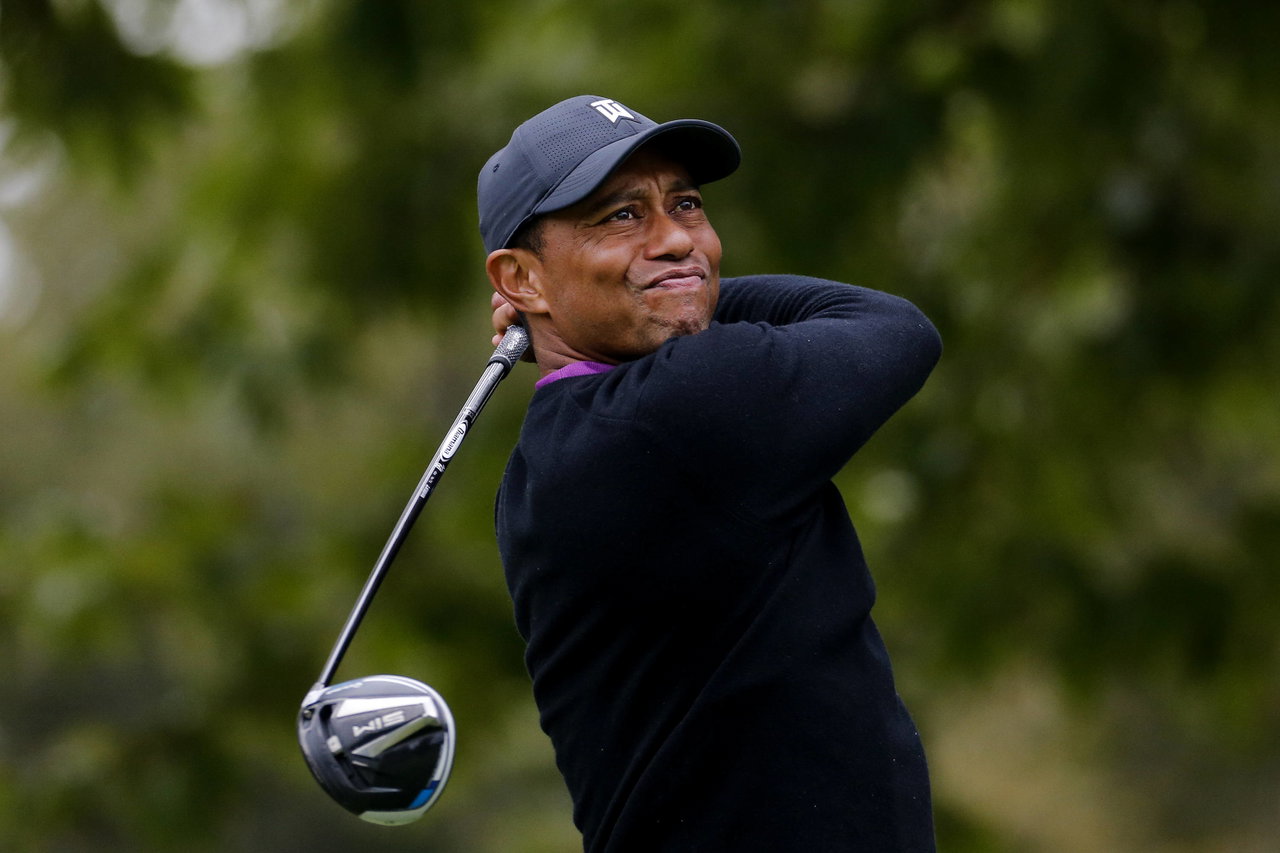
Butch Harmon began working with Tiger Woods when the golfer was only 17. He stayed as his coach through his early pro years. The two parted ways after the 2002 season. In that span, Tiger won eight of his 15 majors, including the 1997 Masters and the “Tiger Slam” stretch in 2000-2001. But the relationship was never linear. For instance, Tiger went against Harmon’s advice and insisted on a full swing overhaul after the 1997 Masters, and it took more than a year to pay off.
Watch What’s Trending Now!
They started working together in August 1993. It was immediately after Tiger’s second-round loss in the U.S. Amateur at Champions Golf Club in Houston. At the time, Harmon was working at Lochinvar Golf Club, about 12 miles from Champions.
Tiger Woods’s father, Earl Woods, was impressed by Harmon’s work with Greg Norman, who had just won The Open Championship in 1993. So he went to the coach and asked if he could bring Tiger so Harmon could watch him and decide whether they could work together. Harmon said it was easy to see Tiger’s raw talent and potential.
On The Real Deal with Bob Philion podcast, a Golf Digest series, the veteran coach opened up about a quirky response from Woods that made him think the golfer was a “cocky S.O.B.”
“I said, Tiger, let me ask you a question. I said, under pressure, everybody’s got a stock shot off the tee where they’re coming down the stretch. They’ve got to drive it in the fairway. What is your stock shot? He goes, you know, I just tee it up. I hit it as hard as I can. And wherever it goes, I go find it,” Butch Harmon said.
“And I’m thinking to myself, well, this is a cocky SOB to come up with this. But the more I got to know him, that’s how he played. He had no fear. He didn’t need a stock shot until he got older. And I explained to him what it does and how he did it when we worked on his golf swing.”
In golf instruction and course management, a stock shot is a player’s most reliable, repeatable shot shape and trajectory that they can trust under pressure. It becomes useful when fine motor control narrows. A pre-defined stock shot helps golfers reduce decision-making and clearly visualize their target.
But as Harmon revealed, Woods never had a stock shot at the beginning because he was fearless and relied on his raw talent. The coach admitted that when he first saw him, Woods had the fastest body unwind he’d seen since Ben Hogan. Harmon specifically noted how fast Tiger’s body unwound through the ball. Sam Reeves, a witness at Lochinvar, also noted that “no one had ever seen speed like that before.”
As time passed, Woods’ confidence and fearlessness began to show in his professional career. For instance, Woods had never shot par in six rounds at Augusta National until 1997. But he went on to win the 1997 Masters by 12 strokes. It was the largest margin in Masters history.
Then, at the 2000 U.S. Open, Tiger won by 15 shots, the largest margin in major championship history.
“The intensity he walked on the first tee, I’ll never forget… He kept that up all the way through 18 holes, even winning by 12, 15, whatever it was,” Ernie Els, who tied for second with Miguel Angel Jimenez at the 2000 US Open, said.
He quickly earned fame and a fearless reputation through his golf skills. In Harmon’s words, Tiger did not need a stock shot until he got older.
Harmon said he explained what a stock shot does when they worked on Tiger’s golf swing.
In the early years, Tiger relied on extraordinary talent, speed and fearlessness. By Harmon’s account, a stock shot only became relevant later.