
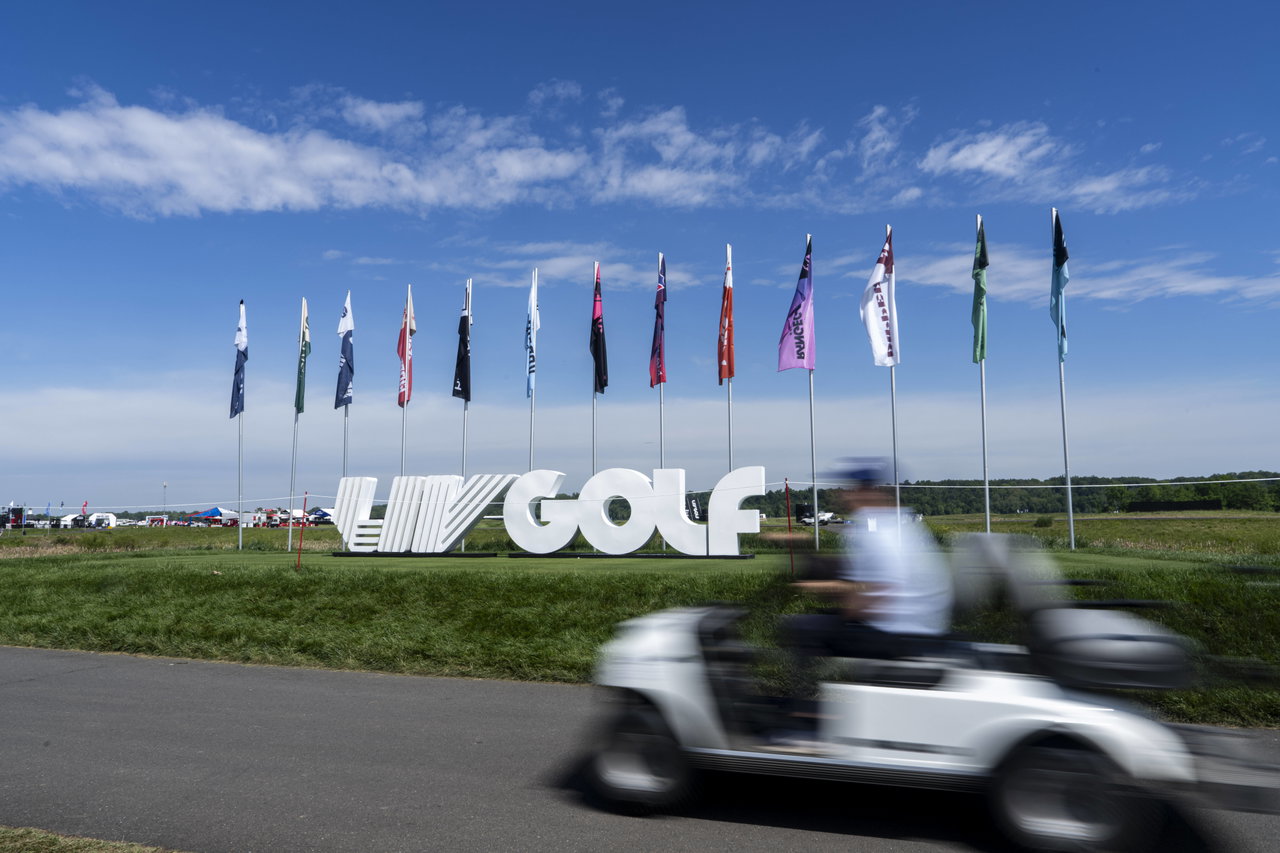
LIV Golf was built on the promise of player freedom. Now, with its future resting on a bankruptcy judge’s calendar, the same idea is at the center of a fight with the DP World Tour.
As reported by NUCLR Golf, citing journalist David Rumsey, lawyers for LIV told the New Jersey bankruptcy court on Wednesday that they
“Anticipate that the decision will be made by the end of the month.”
The decision will determine whether the league winds down or moves ahead with LIV 2.0.
The same lawyers also raised concerns about DP World Tour’s recent announcement on player bans.
“We’re continuing to monitor this situation very closely, and we’re quite concerned by it, frankly… Frankly, the timing in particular strikes us as a clear attempt to interfere with our process, with our players, and potentially our reorganization… Player freedom is the reason LIV Golf was created, and it’s the foundation of LIV Golf 2.0. … It’s unfortunate that another tour is taking an opposite view and pressuring our players with a false choice. And again, we’re reserving all rights in this respect…”
The arguments were made by attorney Robert Fitzgerald, who stated that LIV was concerned about the timing of the DP World Tour’s announcement. Judge Michael B. Kaplan appeared to take notice, saying the comments “do raise concerns.”
To understand the situation, let’s look at the background. Until now, the European circuit let a number of LIV players keep a foot in both camps through conditional releases. Jon Rahm and Tyrrell Hatton were among those who used that route, which also kept them eligible for Europe’s Ryder Cup team.
That arrangement ended on October 12. DP World Tour CEO Guy Kinnings told BBC Sport that “players need to make a choice.”
Kinnings also asserted that anyone who signs up for LIV 2.0 in 2027 will be denied membership on the DP World Tour. Only members can play for Europe at the Ryder Cup, so the decision puts that place at risk too.
The DP World Tour has its own clock running behind the statement. Players must apply for membership by November 16 and will be asked which tour they plan to play. A player who signs with the DP World Tour and then plays on LIV would see that the membership has been terminated.
The reason for a strict measure is timing. Players have until October 25 to commit to LIV 2.0, although BC Partners can extend or waive that date. They have set that date because the private equity firm is offering up to $300 million in financing, and it alone decides how many players make up the “critical mass” the league needs.
But the ban from the DP World Tour forces the players to choose a side before LIV’s roster is complete. LIV’s lawyers believe it is aimed squarely at a vulnerable moment. Reports from The Athletic suggest that the tour’s tougher stance was partly a response to LIV’s plan to give players equity in the new league.
That being said, the pressure they are putting on is visible. Jon Rahm has already exited LIV 2.0, stating that the terms were “unacceptable” to him. Adrian Meronk and David Puig have also said they are out, with Sergio Garcia reportedly seeking formal termination of his contract, which was approved by the court.
But Bryson DeChambeau remains a different case amid the turmoil. The Telegraph reported that his management contacted the DP World Tour about playing more events beyond his committed start at December’s Nedbank Golf Challenge. But the new rules have largely shut that door, as extra European starts now come with a price.
Meanwhile, his lawyers are reportedly organizing a player-led group to negotiate better terms with LIV and BC Partners.
And that move matters because LIV 2.0 only works if its biggest name stays. Bankruptcy filings already show the league owes millions in unpaid compensation to the stars, and fewer players mean a weaker pitch for BC Partners.
Why the pressure feels so familiar?
This is not the first time the DP World Tour has used its rule book against LIV, and it has good reason to do so. After members played the first LIV event near London in 2022, the tour fined each of them £100,000 and barred them from three events, including the Scottish Open.
The players then appealed, and an arbitration panel heard the case in February 2023. Two months later, it ruled that Tour’s regulations were lawful and enforceable. Ian Poulter, Lee Westwood, Sergio Garcia, and Richard Bland later resigned their membership.
That result gave the Tour confidence that its rules can hold up under pressure. It also explains why the new policy is built to avoid a repeat of the first LIV era, when players split their schedules, and the tour was left issuing fines.
This time the fight has moved from fairway to the courtroom. For now, the first hearing is set for October 20, and the player deadline is October 25. With that, LIV has only a few days to prove that its second act is worth the risk.