

When Jon Rahm‘s caddie listed a $14 million North Carolina estate for sale, it made headlines. But nobody expected LIV pro Ian Poulter to turn that real estate story into a financial audit of professional golf that put Brooks Koepka and PGA Tour stars directly in the frame.
Watch What’s Trending Now!
On his Instagram Stories, he wrote: “OMG should we start the earnings comparison of all golfers and caddies on course and off course earnings since 2020. It’s really interesting reading. I’ve already done it. For some reason some golfers have been chatting shite instead of saying thank you.”
He then posted a 2021 PGA Tour all-in earnings chart showing Patrick Cantlay at $22.99 million, Jon Rahm at $16.77 million, and Bryson DeChambeau at $14.31 million, labelled simply: “Pre @livgolfleague.” His third story went straight at Brooks Koepka: “Also not including PGA Tour Equity shares. So add in those values if you base the breakdown on Brooks’ so called $90 million worth.”
That Koepka reference carries real weight. When he returned to the PGA Tour in 2026 through the newly created Returning Members Program, he agreed to pay $5 million to charity and forfeited his Player Equity Program eligibility for five years. The PGA Tour’s own estimate put that forfeited equity value between $55 million and $90 million. Koepka is also ineligible for FedEx Cup bonus payouts this season. So, Poulter was not throwing out a random number. He was pointing at the exact price Koepka paid to walk back through the door.
That brings in the bigger picture Ian Poulter is pushing. The PEP currently covers nearly 200 PGA Tour members, with over $1 billion in granted equity distributed to date. The program followed a $1.5 billion investment from Strategic Sports Group in 2024, and the top 50 players in the 2026 FedExCup standings will receive recurring grants in April 2027. None of this appears in the weekly earnings figures people use when comparing PGA Tour and LIV money. So, Poulter argues that the comparison being made publicly only counts half the ledger.
Imago
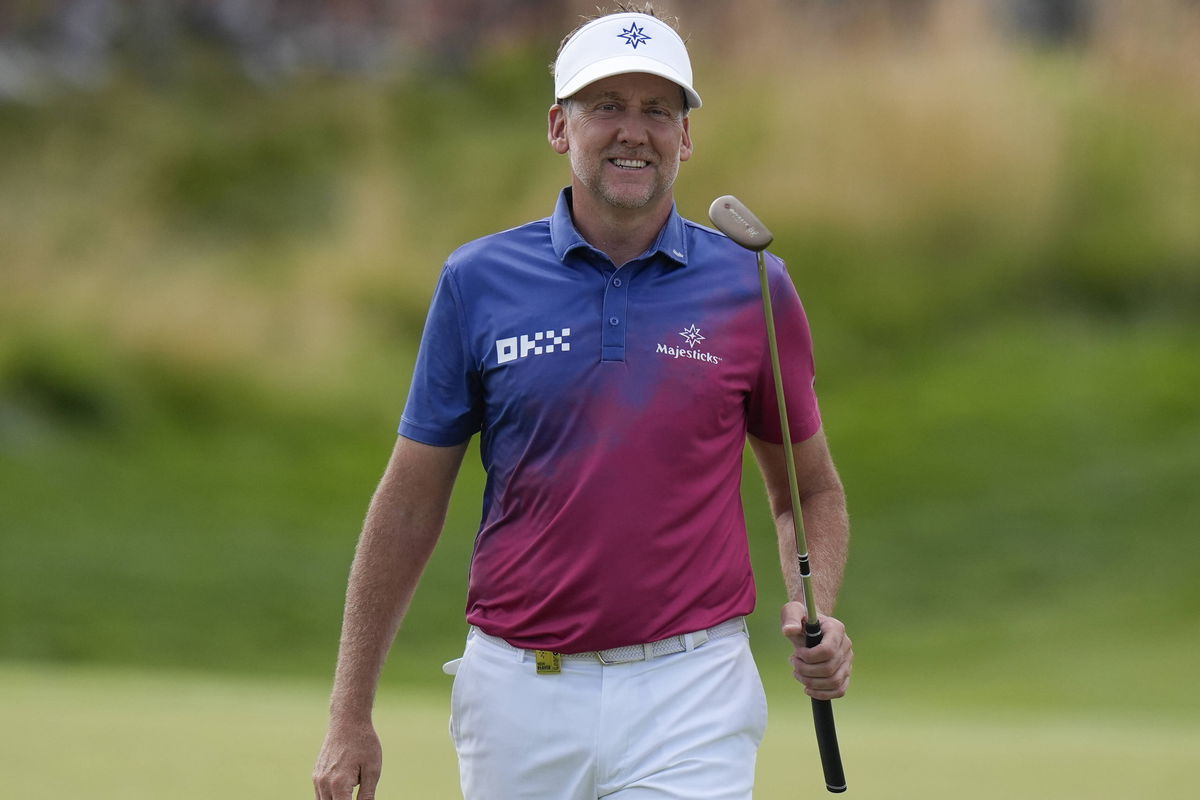
28th July 2024 JCB Golf & Country Club, Rocester, Uttoxeter, England LIV UK Golf League, Final Round Ian Poulter of the Majestics GC walks onto the 14th green PUBLICATIONxNOTxINxUK ActionPlus12673685 StevenxFlynn
The caddie story is what gave him the opening. Hayes has been with Rahm since his rise to the top, and after Rahm’s move to LIV in 2023, the earnings grew considerably. In 2025, Hayes reportedly earned around $2.75 million, making him one of the highest-paid caddies in the sport.
LIV’s 2026 structure runs a $30 million purse per event with no cuts, where the individual winner takes $4 million and even last place receives $50,000. A caddie on a standard 10% cut earns $400,000 from a single win. That guaranteed floor is what most people forget when comparing tour money.
The PGA Tour numbers are not small either. When McIlroy won the 2026 Masters and took home $4.5M, his caddie, Harry Diamond, was projected to earn between $360,000 and $450,000 from that single week. Signature Events now carry purses of $20 million or more, with winners taking approximately 18% of the total. The Tour Championship features a $40 million purse with a $10 million first-place prize. At these numbers, a caddie listing a $14 million estate is not a scandal. It is just math.
Well, this is not the first time Poulter has made this case. He challenged the OWGR’s exclusion of LIV from world rankings, calling the system “dated and obsolete,” and told critics online to “go seek help.” In 2023, he argued LIV had benefited everyone in professional golf. By 2026, as Majesticks GC co-captain, the position has only hardened. The caddie’s house was the trigger this week, but the argument about incomplete earnings comparisons is one he has been building since the day he left the PGA Tour.
And Poulter’s defense comes at a complicated time for the league itself.
LIV Golf’s financial struggles cast a shadow over bold money claims
The numbers Ian Poulter is defending come with a catch. LIV Golf has lost over $1.1 billion across its first three years, with 2024 alone accounting for $462 million in losses. Saudi Arabia’s PIF has pumped over $5 billion into the league since 2022.
In 2024, revenue did go up, rising 75% to $64.9 million. But that number only covers a small part of the yearly costs. The league has also struggled to secure a significant TV deal in the US, which remains a major obstacle to LIV’s financial stability.
Reports say that PIF is now thinking about whether or not to keep funding after the 2026 season. The reason is simple: the current model is hard to justify financially because of low viewership, high operating costs, and signing bonuses like Rahm’s deal, even for a sovereign wealth fund with a lot of money.
Ian Poulter has dismissed collapse talk before, calling LIV a “startup business” as recently as this year. But a startup burning through $462 million annually, with funding potentially ending after this season, is a different conversation from the one he is trying to have about caddie earnings and tour comparisons.