
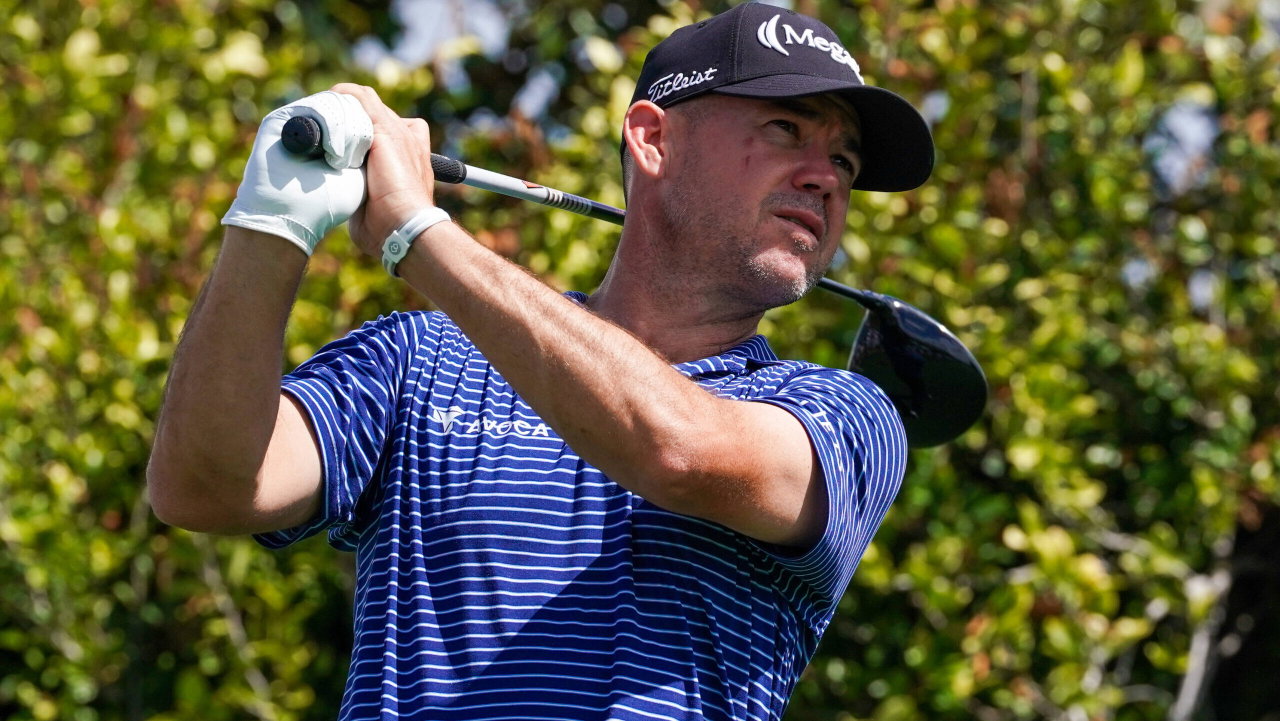
Brian Harman walked off the 18th green at TPC Southwind tied for sixth at seven-under, a third-round 69 that pushed him up 14 spots in the projected FedExCup standings. On the PGA Tour, that’s what climbing a bubble looks like: a better number, a better projection, and a player who still isn’t satisfied.
Watch What’s Trending Now!
“I played great today. Just putted — I had my worst day of the week putting. It was just really frustrating. Had a lot of good looks out there. It’s been a tough year. Hasn’t been awesome. It’s just been kind of one thing or the other,” he said, though he still feels like he’s playing good golf underneath it.
A reporter pressed him on a phenomenon seen in other players lately, some spending recent weeks “living and dying over every shot” once they knew they were on a bubble, and asked how a golfer avoids falling into that trap. Harman didn’t dodge it.
“It’s really hard. Kind of wherever you are on TOUR, you’re on some kind of bubble. You’re either trying to make the TOUR Championship or you’re trying to make the Presidents Cup or you’re trying to make the top 50 or you’re trying to keep your card or trying to win for the first time,” he said.
Asked separately about his mindset heading into the final round, he kept it just as plain.
“It is what it is, man. Just got to go out there and try to play a good round,” he said.
It’s a structural feature of professional golf, not a personal crisis, and Harman’s candor made that distinction plain.
The Weight of Watching the Leaderboard
Harman doesn’t pretend the leaderboard is irrelevant.
“I always look at the leaderboard so I’ll know where I’m at,” he said. “Not that it helps, but I’ll know where I’m at.”
Going into the final round, he wasn’t interested in playing it safe around a number. “I’ll be trying to shoot it super low and trying to win the golf tournament,” he explained. “That will be my goal. We’ll start with that and see where it takes us.”
Asked directly about what making the top 50 would unlock, Harman admitted it hadn’t been on his mind.
“I wasn’t thinking about it. Top 50 is great. I’m in all the majors next year, which helps,” he added. “That Signature Series, it’s where you want to be. It’s where the best golf’s played. I’d love to have a chance.”
He isn’t the only one to describe this weight in his own words. On the Gatekeeper Podcast, Harman talked about narrowing his focus down to something that felt like life and death on every swing, saying that if he missed a shot, it was serious business to him.
That’s a heavier burden than most players admit to carrying, and it sits at odds with something he told Golf Channel years earlier, when he said he was trying to stop living and dying with each shot and instead treat his golf as a career rather than a single tournament. Harman still seems to be working out which version of himself shows up on any given Sunday, the one playing for his life on every hole, or the one trying to take the long view.
This isn’t the first time Harman has lived on one of these bubbles, either. In 2024, he missed the Tour Championship by a single spot in the FedExCup standings, a margin about as thin as they come. Weeks later, captain Jim Furyk still added him to the U.S. Presidents Cup team as one of his picks. Harman has said he didn’t lobby for the selection and mostly stayed quiet about it, letting his season speak for itself. The margin between missing out and making a team, in his case, has already come down to almost nothing once before.
That tug-of-war is baked into how golf works. Harman rattled off a handful of things he’s chasing at once: cracking the top 30, making teams, winning. Not one goal at a time, all of them, all the time. He put it this way: there aren’t just 15 guys trying to win a tournament out there, there are 15 different tournaments going on, each with its own bubble and its own stakes, playing out across the same 18 holes.
For Harman specifically, that math now comes down to one round. A big number tomorrow moves him back into position; a flat one sends him home early with, as he put it dryly, “an extra week at home with the family.”
Either way, the pressure doesn’t disappear. It just relocates, to the next tournament, the next bubble, the next cut line. That, more than any single putt he missed today, is what it means to grind through the PGA Tour’s pressure week after week.