
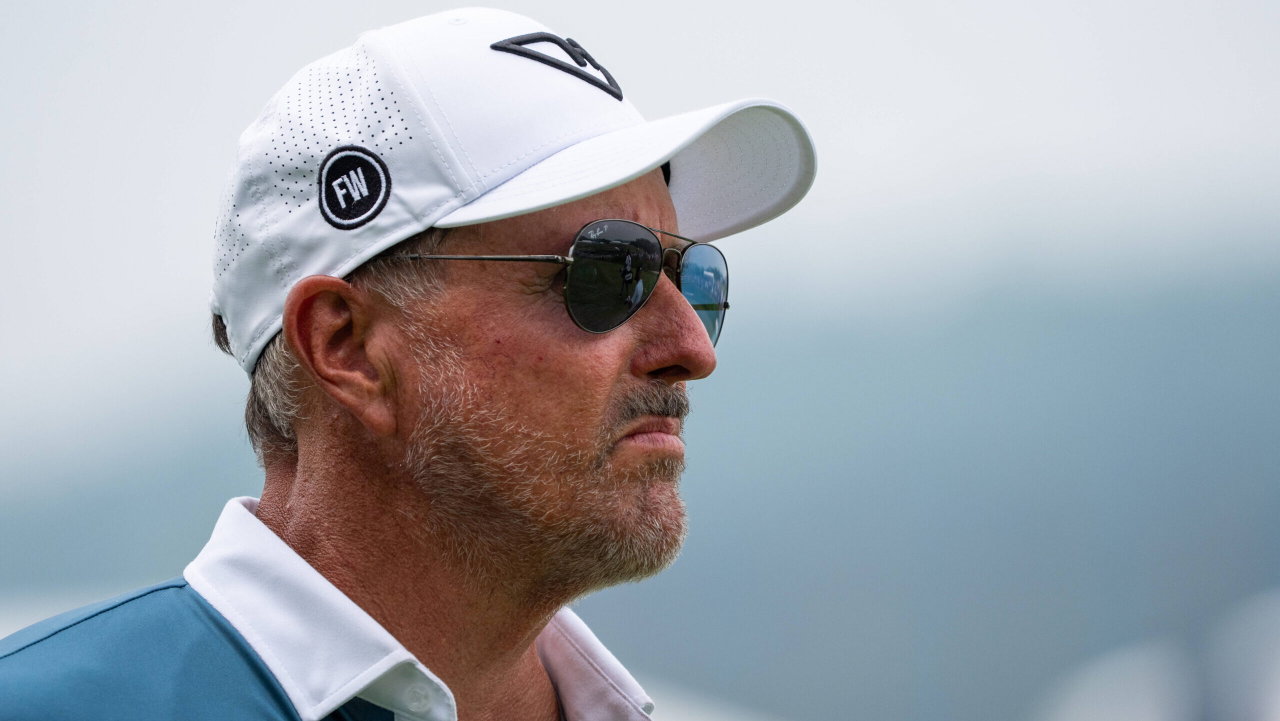
LIV Golf’s most vocal apostle, Phil Mickelson, started a fight that changed professional golf. Probably forever. But the fallout also hurt his own reputation. Journalist Alan Shipnuck captured that change better than most. He pointed out an uncomfortable truth: much of what Phil said publicly against the PGA Tour was true.
Watch What’s Trending Now!
“Some PGA Tour players say, though not on the record, that privately, Phil was right about many aspects regarding the tour’s management. Since the arrival of LIV Golf, which Phil helped found, money has flowed into the PGA Tour, and the players have taken control of the tour’s operations. Phil was right on both counts, but because he was so disruptive and took such an unpleasant attitude in the press regarding this whole battle between the tours, they don’t want to admit these things in the end. They will admit it privately.”
Mickelson damaged his own image while pushing for changes that later happened. Meanwhile, the Tour that criticized him ended up adopting many of the changes he wanted. Here are three changes in the PGA Tour that happened after LIV Golf.
The purse size went up by jaw-dropping amount
Let’s start with the money, because that is where the fight began. Before LIV Golf, the PGA Tour’s biggest non-major events had purses of around $12 million. The Tour’s Player Impact Program was one way to reward its biggest stars. It paid players based on their popularity and influence, not just their results. In 2021, Tiger Woods received $8 million from the program even though he played very little that season. This showed that the Tour knew its biggest stars brought in huge value.
LIV Golf then pushed the issue into the spotlight. They offered a staggering amount of money as the tournament purse. In 2022, the PGA Tour responded by raising prize money. The changes started the following year with the launch of Signature Events.
These smaller-field tournaments had no cuts and offered purses of up to $20 million. The Players Championship went up to $25 million, while this year’s Tour Championship has a $40 million purse.
While some see this as a positive change because golf’s biggest stars are finally being paid more like athletes in other major sports, there is also a downside. Unlike other major sports, which enjoy huge popularity, golf is still behind in drawing eyeballs. Which means sponsors don’t always get a tangible return by investing a whopping amount into tournaments.
Moreover, regular Tour events without Signature status now look less important. This has created a bigger gap between the Tour’s biggest events and its smaller tournaments.
PGA Tour players now have equity
The second change is even more surprising: golfers now own part of the business they play for.
According to the PGA Tour, in 2024 it actually launched its Player Equity Program (PEP). It gave eligible players ownership stakes in PGA Tour Enterprises, the business arm of the Tour. The move was a direct answer to one of Mickelson’s biggest arguments: players were creating much of the value but were not getting enough of it. Supporters say the program gives players a fairer share of the business. Critics see it differently.
They believe the Tour is using ownership stakes to keep players loyal and stop them from leaving.
Pros have a major say in how the Tour functions
The third change may be the most important in the long run. After the PGA Tour’s deal with Saudi Arabia’s Public Investment Fund shocked players in June 2023, the Tour gave players more power.
Tiger Woods was added as a sixth player director, giving players a majority on the policy board for the first time. Players had six seats, compared with five for independent directors.
Rory McIlroy, Patrick Cantlay and later Jordan Spieth also joined the board. This changed the role of players in Tour decisions. Before LIV Golf, even stars like Woods and Mickelson did not need a board seat. Their influence was usually enough. Supporters believe this gives players more control and makes the Tour more accountable. Critics worry that giving active players so much power could create conflicts of interest.
The cost of being right but also leading a rebellion
Here is the uncomfortable part: none of these three changes may have happened without the disruption LIV Golf caused. But Mickelson, as an active recruiter for LIV, never got to enjoy the results.
Shipnuck explained what Mickelson lost along the way. He lost the chance to become a Ryder Cup captain, a role that seemed perfect for him. He also missed out on a possible honorary starter role at the Masters alongside Tiger Woods and a potential $20 million-a-year career as a TV analyst.
It makes Mickelson’s legacy complicated. The PGA Tour now has bigger prize money, player ownership, and more player power. Mickelson pushed for many of these changes, even though he rarely gets credit for them today.
Fans can still debate whether LIV Golf was actually good for golf. But the changes are real. Signature Events, player equity, and a player-majority board are now part of how the PGA Tour works. And Phil Mickelson helped create the blueprint. He just isn’t there to see it.