
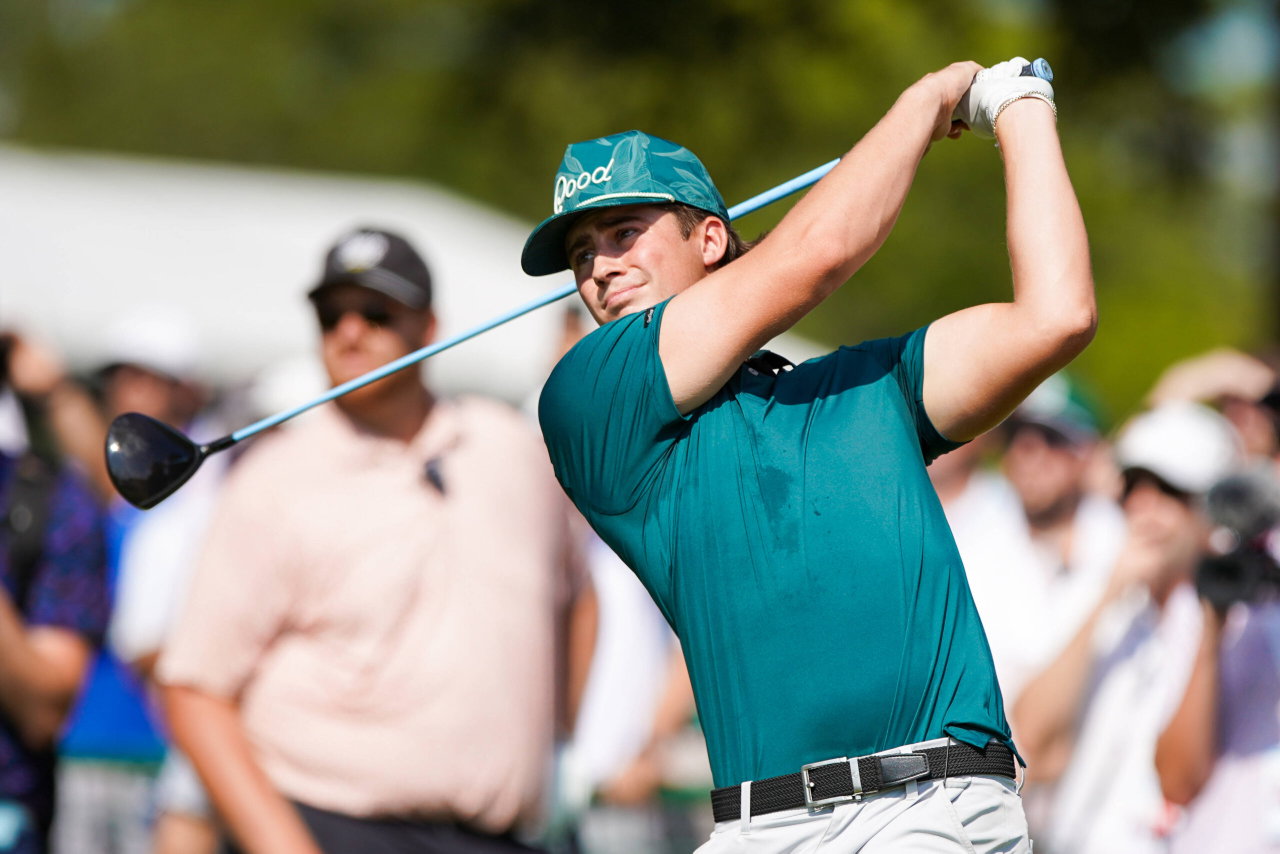
Callaway Golf may have avoided a financial setback from its controversial Good Good advertisement, but the incident left a mark on the company’s reputation. President and CEO Chip Brewer has now acknowledged that the backlash temporarily affected consumer sentiment. It also forced internal changes and ultimately contributed to the end of the company’s partnership with the popular golf content creator group.
Watch What’s Trending Now!
Speaking during Callaway’s third-quarter earnings call on November 5, Brewer described the controversy as a serious incident for the company and its employees. While he maintained that the advertisement had no discernible impact on sales trends, he admitted that the brand’s online ratings and consumer sentiment declined during the backlash.
“Needless to say that that whole incident was a serious one for us. It was a tough two weeks for our team and our brand,” Brewer said, as noted by Front Office Sports. “Fortunately, we didn’t see a material financial impact. There were really no discernible changes in sales trends, even during the event.”
He also acknowledged the company’s responsibility, stating, “In the end, we made a mistake. We took the matter seriously. We took responsibility. We apologized. And then, more importantly, we addressed our internal deficiencies and updated our processes to make sure that doesn’t reoccur. As a company, a brand, I’m confident we’re going to come out of this even stronger.”
According to the CEO, the company did not experience a material financial impact following the advertisement’s release. However, the company’s internal brand monitoring told a different story.
Callaway regularly tracks its brand ratings and online consumer sentiment. Brewer acknowledged that both indicators declined during the controversy. But he claimed that they quickly returned to their previous levels.
The company did not disclose the exact size of the decline, the underlying sentiment scores, or the precise date of recovery. Therefore, the improvement remains management’s assessment rather than an independently verified measurement.
The controversy began on August 20, 2026, when Callaway and Good Good released a co-branded advertisement promoting a new driver.
The commercial featured Good Good co-founder Garrett Clark and fellow creator Alexis Miestowski. In the scripted scene, Clark ran toward Miestowski and shoved her to the ground after she reached for his golf driver.
He then delivered the line, “Do not touch my new driver.”
The creators described the concept as a parody inspired by the horror film Obsession, intended to portray an exaggerated obsession with golf equipment. However, viewers criticized the execution for making light of violence against women.
Callaway subsequently faced questions about its involvement in approving the commercial. On August 25, Brewer publicly apologized and confirmed that the equipment manufacturer had approved the advertisement before publication.
He acknowledged that the approval should never have happened.
Callaway announced on August 27 that it was ending its partnership with Good Good, which had started in 2023.
The company also committed $1 million to organizations working to prevent violence against women. The commitment represented a significant response to the criticism.
The company also stopped selling the co-branded driver through its website. The club had an initial price of $650.
Interestingly, Good Good continued offering two editions of the Callaway driver through its own online store, even after the partnership ended. Their continued availability does not mean the companies resumed their commercial relationship.
The retail consequences were also more visible for Good Good.
Dick’s Sporting Goods, Golf Galaxy, and PGA Tour Superstore removed Good Good merchandise from their stores. However, the retailers did not pull Callaway products that were unrelated to the creator group.
Good Good also mutually ended its partnerships for a PGA Tour event and a Golf Channel show following the controversy.
One of the most significant consequences involved Callaway’s internal content approval procedures.
Although Good Good produced the advertisement, Callaway acknowledged that its own team approved the final video before it went public.
Alex Upegui, Callaway’s director of content and production, approved the advertisement on the company’s behalf. He was subsequently fired.
The company also brought back Harry Arnett as its senior vice president and chief brand officer. Arnett had previously served as Callaway’s head of global brand and marketing from 2012 to 2019.
Brewer addressed these changes during the earnings call, explaining that the company had taken responsibility, apologized, and addressed internal deficiencies.
Although Brewer said the Good Good controversy did not produce a noticeable sales setback, Callaway’s overall third-quarter revenue did decline.
It fell 5.6% during the quarter covering July 1 through September 30, 2026. Golf equipment sales fell more sharply, down 7.9%.
However, Callaway attributed the downturn to a delayed launch of a new irons collection rather than the advertisement controversy.
The company also raised its full-year net sales guidance despite the quarterly decline.
The improved forecast supports management’s position that the controversy did not derail the company’s broader financial outlook.
Involved parties are already making an attempt to move on
While Callaway has focused on its internal changes and brand recovery, Good Good’s public-facing content operation has continued.
On November 6, the group published another episode of its ongoing series, titled “Golfing 50 States in 50 Days | Day 39.”
The episode features the group’s Illinois stop, with Kokopelli Golf Club named in the video’s description.
The format continues to combine golf challenges, travel, group activities, fan interactions, and merchandise promotion.
Alexis Miestowski is also making content regularly.
The group has continued to create content, but the business consequences of the controversy remain a separate question.
Just days before Brewer’s earnings-call comments, former Good Good vice president of brand and marketing Jeffrey Lefkovits filed a defamation lawsuit against the company and its former CEO, Matt Kendrick.
Lefkovits is seeking more than $1 million in monetary relief. He is alleging that he was wrongly associated with approving the controversial advertisement.
According to the complaint, Lefkovits approved an initial parody script that did not contain the scene showing Clark pushing Miestowski to the ground.
Kendrick and Good Good have not publicly addressed the specific allegations through the court proceedings.
But the Good Good incident was not the first time Callaway had to reconsider a relationship following a public controversy involving a prominent golf personality.
In February 2022, the company paused its long-running partnership with six-time major champion Phil Mickelson. This came following his controversial comments about the PGA Tour and a proposed Saudi-backed golf league.
Callaway had sponsored Mickelson since 2004.
The current numbers may suggest that Callaway weathered the controversy financially. The decisions made afterward show the company understood the damage went much deeper.