
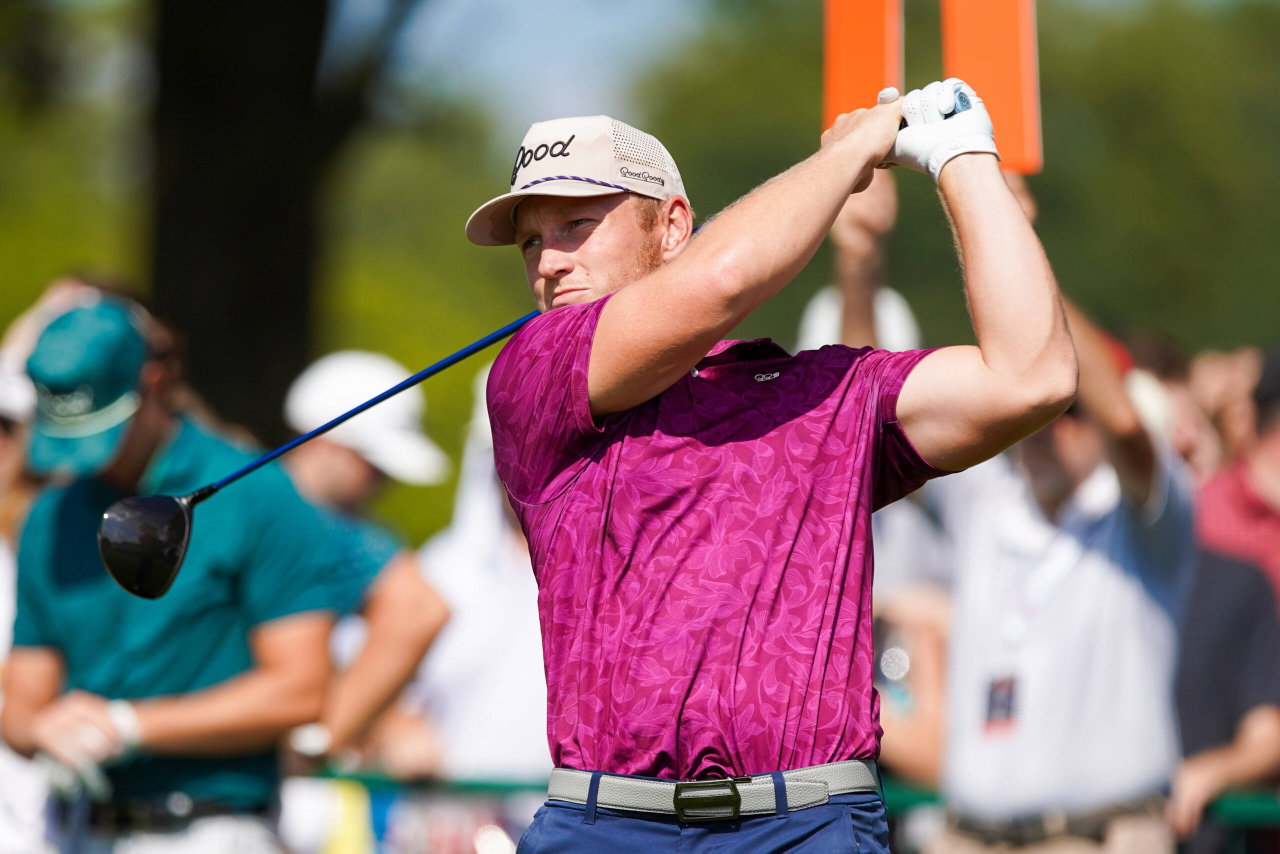
YouTube golf star Brad Dalke has opened up about the intense online backlash he faced after a disastrous performance at the 2026 Rocket Mortgage Classic. After shooting an 11-over-par 81 in the opening round of the $10 million PGA Tour event, Dalke found himself at the centre of criticism, with fans questioning whether he deserved his sponsor exemption.
Watch What’s Trending Now!
Speaking on The Scratch Golf Show, Dalke revealed that his wife, Abbie (Abigail) Ohanna Dalke, encouraged him to delete X, formerly known as Twitter, for a couple of weeks to escape the negativity. Although he insisted that online criticism rarely bothered him, she recognised that constantly exposing himself to hostile comments was unhealthy.
Recalling her advice, Dalke said, “Look, you need to just delete X right now.”
His experience highlights the challenges golf content creators face as they transition from digital entertainment to professional competition, where every performance can invite intense scrutiny. For Dalke, the backlash wasn’t just about a poor round. It was also about the wider debate over whether YouTube personalities deserve opportunities traditionally reserved for touring professionals.
Brad Dalke’s Nightmare Round Sparks Backlash
Competing on a sponsor exemption, the former Good Good Golf creator endured a difficult opening round at Detroit Golf Club. Mic’d up for the PGA Tour’s coverage, Dalke gave fans an unfiltered look at his struggles, particularly on the 14th hole, where his tee shot veered into the 16th fairway and landed out of bounds.
After reloading, battling through heavy heather and taking a penalty drop, he eventually carded a triple-bogey 8. His round featured seven bogeys, a double bogey and just one birdie, leaving him near the bottom of the leaderboard. A second-round 75 took his total to 16 over par, leaving him to miss the cut.
However, the criticism extended beyond his scorecard. Dalke, a former top-ranked amateur who finished runner-up at the 2016 U.S. Amateur and helped the University of Oklahoma win the 2017 NCAA Championship, had already attracted scrutiny over his route into professional golf.
His comments suggesting he did not need to grind through mini-tours to establish his career had fuelled debate about his approach. When his performance fell short of expectations, critics seized the opportunity to question whether he deserved the invitation.
Many traditional golf fans argued that sponsor exemptions should go to professionals working their way through the ranks rather than content creators. Dalke, however, suggested that some critics were simply waiting for an opportunity to attack YouTube golf.
He also defended the contribution of digital creators, arguing that their content introduces new audiences to the sport. Despite his struggles, he attracted considerable spectator interest, with fans following his group and requesting autographs.
Dalke Opens Up About the Emotional Toll
Rather than hide from the disappointment, Dalke confronted his performance openly. He collaborated with the PGA Tour’s digital media team on a shot-by-shot video examining his opening-round 81, allowing viewers to see what went wrong.
He also acknowledged how difficult the experience had been. Describing the tournament as “nightmare fuel,” Dalke recalled the “lonely feeling on the course” as his round unravelled.
Reflecting on the result in an Instagram post, he admitted: “Knowing how well I can play and what I am capable of and getting dead last on the biggest stage just honestly sucks… a lot.”
Despite his usual ability to laugh off extreme comments, Dalke recognised the importance of stepping away from the constant negativity. His wife’s advice gave him an opportunity to regain perspective without feeling compelled to monitor every reaction to his performance.
He later returned to X, but the episode reinforced an important lesson for creators whose careers depend partly on public engagement: being accustomed to criticism does not make an unrelenting stream of negativity harmless.
What the Experience Reveals About YouTube Golf
Dalke’s experience also reflects the broader tension between traditional professional golf and the growing influence of online creators. YouTube personalities can attract new audiences, generate interest in tournaments, and introduce the game to people who might not otherwise follow professional golf.
However, their popularity can also heighten expectations and criticism when they get opportunities to compete on the PGA Tour. For established professionals working their way up the ranks, sponsor exemptions can be valuable chances to advance their careers, making the selection of content creators a contentious issue.
The controversy surrounding Good Good Golf’s promotional video for a Callaway driver offers another example of the scrutiny facing golf’s digital personalities. It drew widespread criticism for a scene in which co-founder Garrett Clark pushed fellow creator Alexis Miestowski to the ground after she reached for the club. The backlash led to the video’s removal, public apologies, and significant consequences for the brand’s partnerships.
Dalke had already left Good Good before the advertisement, so nothing indicates he played a role in creating it. Nevertheless, the two separate incidents illustrate how quickly online attention can turn negative, whether over an individual sporting performance or a brand’s creative decisions.
Ultimately, Dalke’s experience highlights the challenges facing YouTube golfers as they enter professional competition under intense public scrutiny. While creators bring new audiences to the sport, they must also navigate criticism, high expectations, and the pressure of life online. For Dalke, stepping away from X offered a chance to regain perspective, proving that protecting mental well-being is just as important as handling setbacks on the course.