
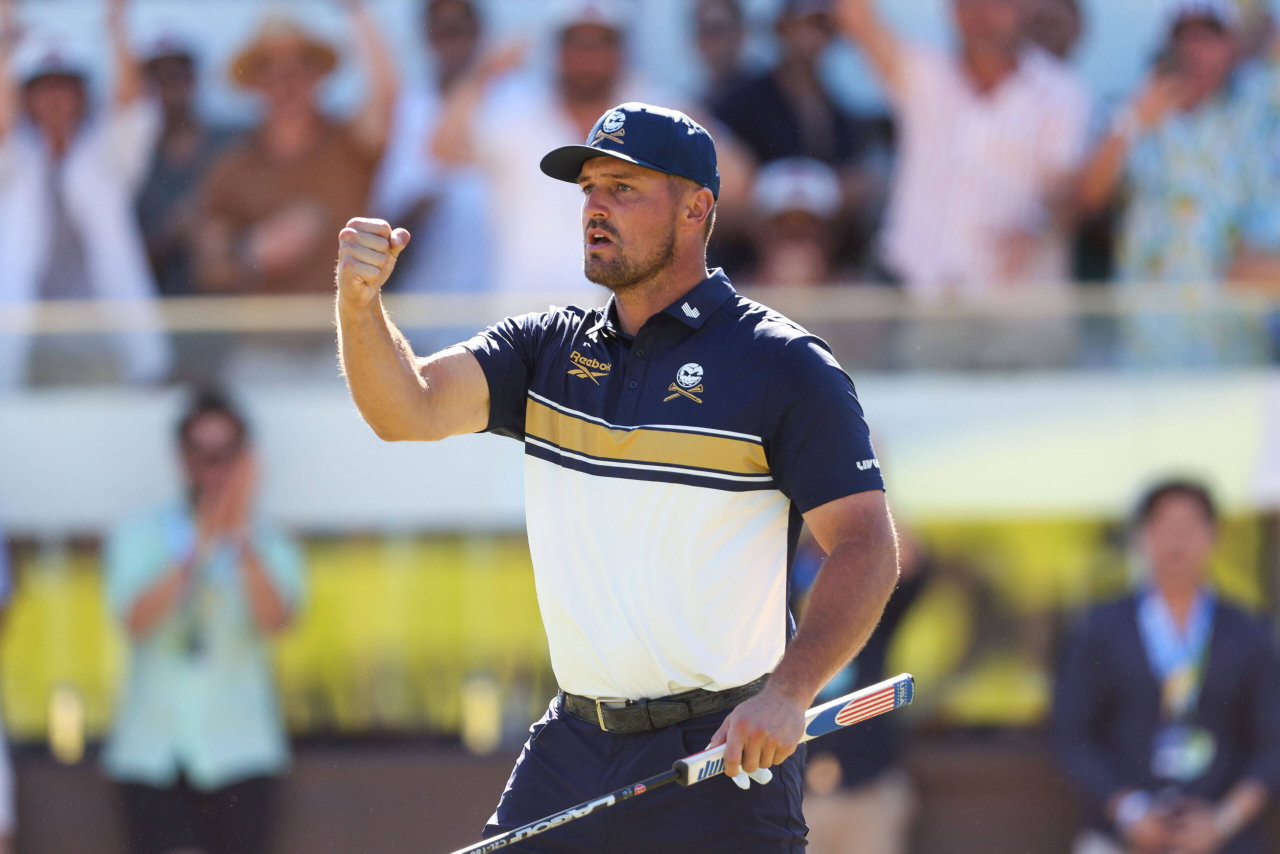
Bryson DeChambeau still believes in LIV Golf. However, his vision for the league’s future appears to have changed considerably since he joined the Saudi-backed circuit in 2022. With LIV Golf facing bankruptcy proceedings, questions surrounding its financial structure, and several high-profile players reconsidering their futures, DeChambeau has offered a candid explanation of what went wrong and what could come next.
Watch What’s Trending Now!
Speaking to entrepreneur and podcast host Raj Shamani, the American professional discussed LIV’s financial troubles, the management decisions that contributed to its difficulties, and the league’s proposed restructuring.
“It didn’t work out, but the business model makes a lot of sense. And we’re actually working through that right now for this new model where it will make full financial sense. It’s no funny business, no nothing. It’s going to be one, right. And this is going to be a league, hopefully, that exists forever. It’s not combative. We’re not trying to compete against the tour. We want to be creative; we want to bring value to anywhere and everywhere in the golf market across the world,” Bryson DeChambeau said.
His comments echo the philosophy promoted by LIV CEO Scott O’Neil. He has repeatedly used the expression “Complete, not compete” while discussing the proposed restructuring.
“Our goal isn’t to replace or restrict any tour. Our mission is to bring something distinctive to the ecosystem that elevates it and makes the whole game better,” he said.
Interestingly, former LIV CEO Greg Norman made a similar argument during the league’s 2022 launch. He described LIV as being “100 percent additive to any golf tour” and rejected suggestions that the organization intended to damage the PGA Tour.
The idea behind these statements is that LIV can offer a different product through its team-based competitions and international schedule. Bryson DeChambeau admitted that it is this team golf approach that has kept him hooked on the breakaway league all these years.
Its tournaments combine individual results with team standings, giving fans two connected competitions to follow.
However, LIV competes with other tours for players, sponsors, broadcasters, and audiences. Therefore, Bryson DeChambeau and O’Neil’s comments represent their preferred relationship with the PGA Tour, rather than an established agreement between the organizations.
While defending team golf, DeChambeau was considerably more critical of LIV’s original management structure.
During the conversation, he explained that the teams were performing well financially, but the parent organization was not managed effectively.
He cited almost $29 million in revenue, approximately $21 million in costs, and around $8 million in EBITDA generated by his team, Crushers GC, alone. According to him, these expenses included player payments, travel, and operating costs.
“The teams were doing well, but then all the player payments and everything got pushed down to the teams when they went bankrupt because the top co wasn’t being run effectively. Which no fault to each other. It’s just, you know, we thought that there was a lot more capital that was going to be at play with the guys that were funding it,” he said.
That financial backing eventually disappeared when Saudi Arabia’s Public Investment Fund announced its withdrawal following the 2026 season. LIV subsequently filed for Chapter 11 bankruptcy protection on September 8, 2026, reporting liabilities between $500 million and $1 billion.
Bryson DeChambeau’s most revealing comments concerned LIV 2.0’s proposed ownership and governance structure.
He explained that players initially required substantial upfront payments because they had little control over how the organization operated.
“We had to get upfront payment because we had no real governance,” he said.
However, he believes the next version could reverse that arrangement.
“This time around it’s more the opposite. We’re not really getting paid, but we do have the governance … control,” he explained.
The proposed restructuring involving BC Partners Credit includes up to $300 million in financing and a player-majority ownership model. Scott O’Neil has also discussed making teams independent commercial businesses, giving players an opportunity to build equity in their franchises.
This is the part of LIV that remains worth preserving for Bryson DeChambeau. He believes team golf has commercial potential if players have a meaningful stake in its success.
The two-time major champion also discussed the personal and physical challenges surrounding his departure from the PGA Tour in 2022.
He revealed that his pursuit of greater swing speed had caused problems with his hand. At his peak, he had reached approximately 152 mph in swing speed and 221 mph in ball speed.
Despite the discomfort, he continued playing through early 2022. After the Masters, he decided to address the injury, which required about eight weeks of recovery. He acknowledged that he had been playing with a broken hand.
The period also coincided with his father’s death and relationship difficulties.
His support for LIV has remained consistent since then. In June 2025, he expressed confidence in the league’s future. Even after PIF’s withdrawal in 2026, he continued defending the commercial potential of team golf.
Bryson DeChambeau’s interview makes it clear that he believes the original LIV business structure failed, but he does not believe team golf was a mistake.
The departures of Jon Rahm and several other established players make the league’s survival challenging. However, several golfers recently committed to LIV 2.0 days before its deadline. But the league still lacks unanimous support.
Bryson DeChambeau remains committed to the concept. Whether the restructured league can turn his vision into a sustainable business will depend on its ability to deliver what the original organization could not.