
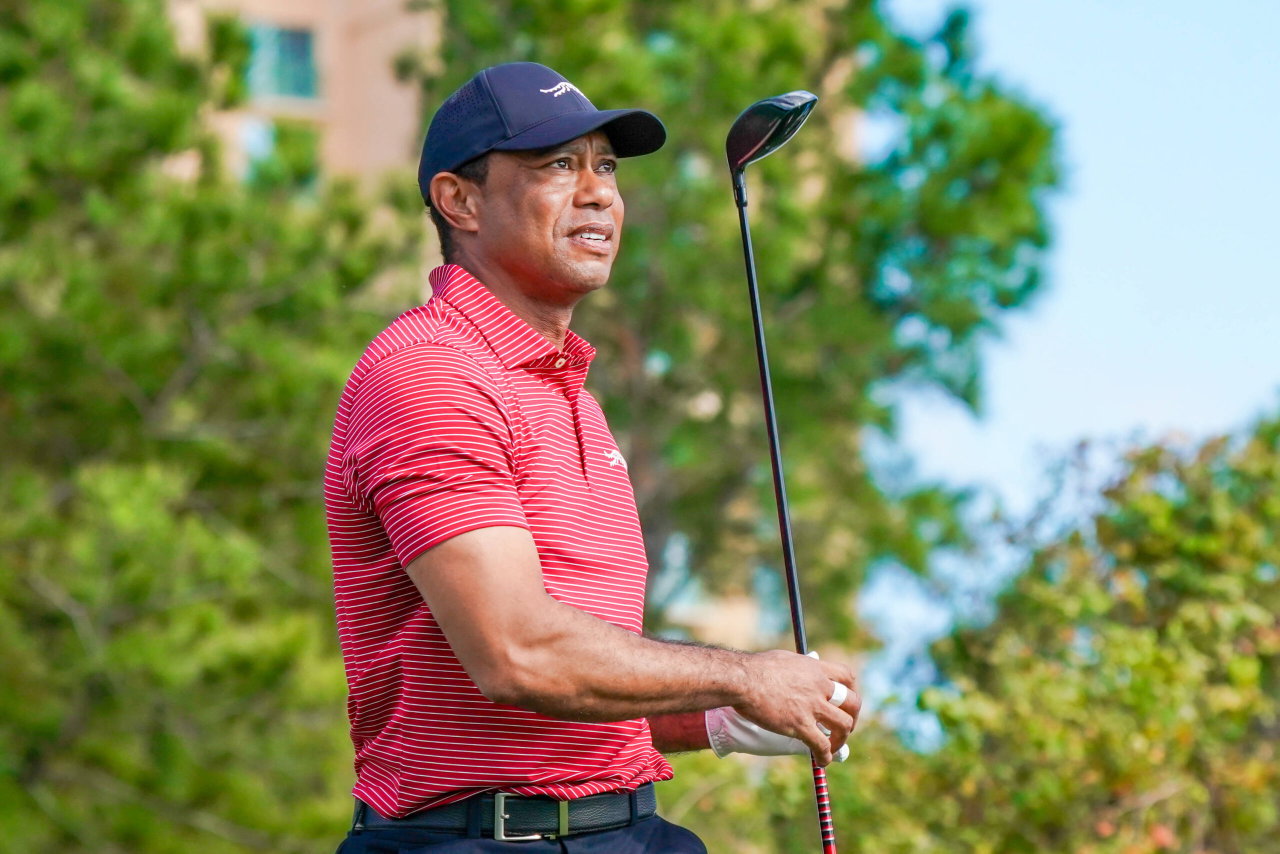
For Tim Palmer, Tiger Woods’ ability to hit almost any shot does not mean ordinary golfers should try to master every variation to build consistency. Instead, they need a predictable pattern they can trust under pressure. Speaking with Scott Fawcett, creator of DECADE Golf, on Looper Talk, the PGA member, professional caddie, and golf media host warned against treating versatility as a substitute for reliability.
Watch What’s Trending Now!
“I think that, like you said, aesthetics is one thing, but reliability beats aesthetics nine out of 100 times. I don’t care. It’s like Tiger in the nine-box drill. I think that’s ruined more people than it’s helped because we’re trying to do this paradox of choice, trying all this different stuff,” he said.
Palmer’s reference to the paradox of choice highlights how too many options can complicate decision-making. In golf, constantly experimenting with different shot shapes and trajectories can leave players uncertain about their swing and shot selection, particularly under pressure.
Palmer then refers to conversations with experienced golfers who watched Woods during the late 1990s and early 2000s. According to Palmer, Woods relied more heavily on established tendencies than his extraordinary shot-making ability might suggest.
“And the older guys, like Sutton and people that I’ve talked to about Tiger when he was in the late ’90s, early 2000s, they’re like, he just didn’t do that. He basically cut the driver, and he basically drew his irons. Like, he just wasn’t hitting this crazy stuff all the time.”
The distinction is important. Woods could produce an extraordinary range of shots, but he did not need to use every variation on the course. His preferred patterns gave him dependable options, while his versatility allowed him to adapt when necessary.
The nine-box drill combines three trajectories—low, medium, and high—with three shot shapes—draw, straight, and fade. Although it can develop ball-striking control, Palmer’s concern is that amateurs may mistake the ability to execute every variation for the ability to play consistently.
The priority should be to develop a dependable stock shot before expanding the options. Golfers can then use their natural shot tendencies to choose appropriate targets rather than constantly changing their approach.
That principle connects directly to Fawcett’s course-management philosophy. Rather than judging a shot solely by where the ball finishes, he emphasizes choosing a target that accounts for the golfer’s expected shot pattern.
Fawcett illustrates this with Will Zalatoris’ hole-in-one at Winged Foot during the 2020 US Open. After the remarkable shot, a PGA Tour staff writer joked that Fawcett would probably care more about whether Zalatoris had aimed at the right target than about the ace itself.
Fawcett contacted Zalatoris to ask where he had aimed. Zalatoris replied that his target was approximately seven yards to the right of the hole.
For Fawcett, that detail separated the quality of the decision from the outcome. Zalatoris had selected a target according to his strategy, and the ball happened to finish in the hole. The ace was an exceptional result, but it did not automatically mean that aiming directly at the hole would have been the better decision.
The same principle underlies Palmer’s warning about Woods’ shot-making repertoire. A spectacular result does not necessarily validate a decision, just as a well-planned shot can finish away from its target despite being executed correctly. Judging decisions solely by their outcomes can encourage golfers to chase unlikely results rather than stick to sound strategy.
Ultimately, better golf comes from pairing a dependable shot with disciplined course management. Amateur golfers do not need to replicate every aspect of Woods’ game. They need to understand their own tendencies, aim accordingly, and accept that even well-executed shots will not always finish exactly where intended.
The goal isn’t to hit the perfect shot every time, but to make smarter decisions, trust a reliable stock shot, and give yourself the best chance of scoring well.