Imago
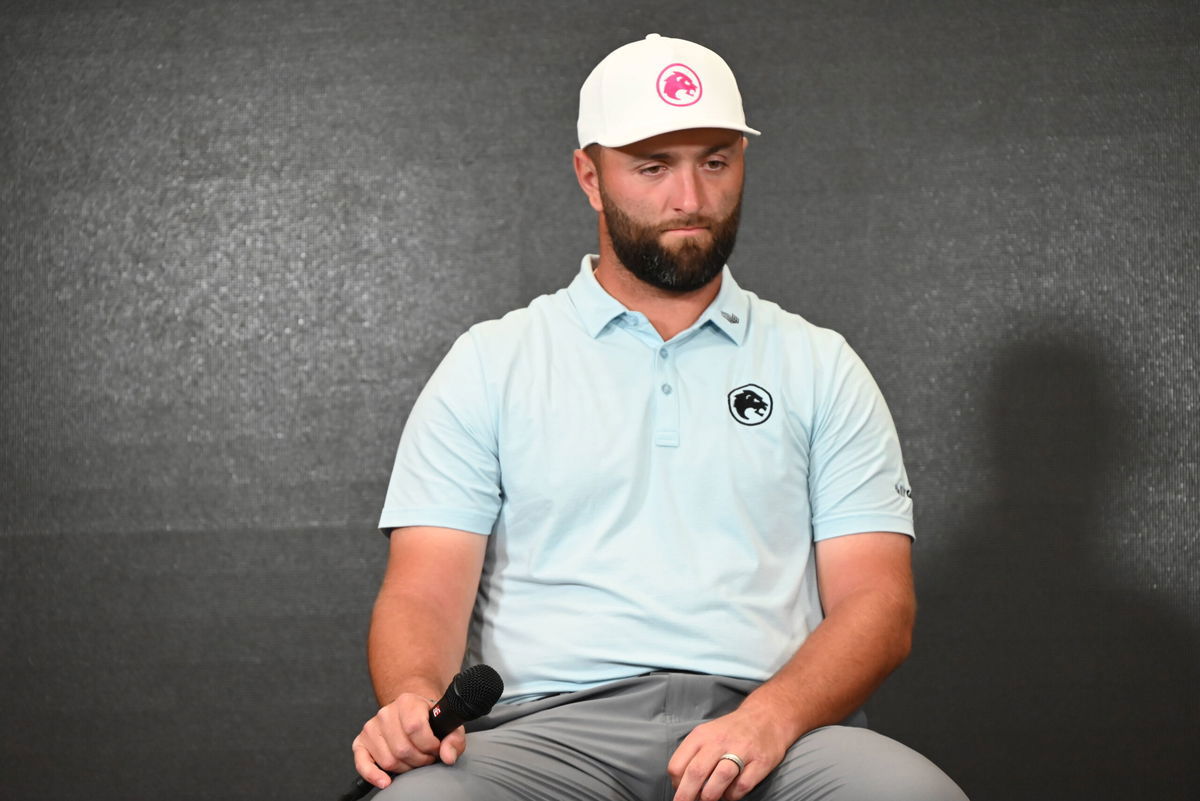
Jon Rahm, Bubba Watson And Phil Mickelson At LIV Golf press conference, PK, Pressekonferenz in Miami – 03 Apr 2024 Captain Jon Rahm of Legion XIII GC shown, Captain Phil Mickelson of HyFlyers GC not shown and Captain Bubba Watson of RangeGoats GC not shown speak at a press conference during the practice round before the start of LIV Golf Miami at Trump National Doral in Miami. Miami United States Copyright: xKylexMazzax/xSOPAxImagesx KMZ_4517
Imago
Jon Rahm, Bubba Watson And Phil Mickelson At LIV Golf press conference, PK, Pressekonferenz in Miami – 03 Apr 2024 Captain Jon Rahm of Legion XIII GC shown, Captain Phil Mickelson of HyFlyers GC not shown and Captain Bubba Watson of RangeGoats GC not shown speak at a press conference during the practice round before the start of LIV Golf Miami at Trump National Doral in Miami. Miami United States Copyright: xKylexMazzax/xSOPAxImagesx KMZ_4517
The Players Championship has chased the “fifth major” label for decades without success. The pursuit went quiet under Jay Monahan, and the tournament grew stronger for it. But last month’s promotional tagline, “March Is Going to Be Major,” signaled a revival of the campaign, and it arrives at a moment when Jon Rahm and several of the game’s biggest names remain excluded from the field at TPC Sawgrass.
Watch What’s Trending Now!
On March 7, Golf Digest posted on X, asking if The Players Championship could become a major in the future and describing the PGA Tour’s efforts led by Brian Rolapp. Tournament director Lee Smith confirmed this goal at last month’s media preview, saying it shows the organization’s confidence and momentum. However, the 52nd Players Championship starts this week without Rahm, Bryson DeChambeau, and Tyrrell Hatton, who remain with LIV Golf after turning down the PGA Tour’s Returning Member Program in January. The tournament is now aiming for major status, but some of the sport’s biggest names are not taking part.
The four established majors survived golf’s civil war precisely because they refused to pick sides. The Masters, U.S. Open, PGA Championship, and The Open remained open to anyone who could qualify, regardless of which league signed their checks. That universality became the foundation of their authority. The Players, as a tour-only event, cannot replicate it. Phil Mickelson made the math plain in February, arguing that you cannot prohibit four of the world’s top 10 and call yourself a major. Lee Westwood went further, challenging Brian Rolapp to invite the top 15 LIV players as a test run to see what an open field would actually look like.
Could we see the Players Championship gain major status in the coming years? 🤔
Read more: https://t.co/zqE0BSR2qy pic.twitter.com/3FbywNQ6o7
— Golf Digest (@GolfDigest) March 6, 2026
A tour source has said that LIV players could be allowed to qualify for The Players in the future. If that happens, it may be the minimum requirement for the tournament to be considered a major. Geography is another issue. Three of the four majors are already in the United States. Adding a fifth, always played at a tour-owned course in Florida, gives critics in Europe and Asia a clear argument. The Tour will not move from the Sawgrass. The course is central to the tournament’s identity and finances, but that also limits its reach.
Augusta National is not a rival, but its influence is clear. The Masters marks the start of golf’s season. Holding The Players in March does not disrupt that, but making it a major in March could. Some within the Tour think The Players would have to move back to May, which would push the PGA Championship to August. The PGA has changed dates before, most recently in 2019.
The soft campaign, meanwhile, has already started. Russell Henley stated publicly at the Arnold Palmer Invitational that he has always considered The Players a major.
“It’s just such a tricky golf course and it rewards great shots, typically. I think it’s a major. It’s our home tournament. I mean, it is,” Henley said.
Rory McIlroy, speaking at Pebble Beach in February, offered the counterweight.
“I’m a traditionalist, I’m a historian of the game. We have four major championships. It’s The Players. It doesn’t need to be anything else.”
If the Tour wants to redefine what counts as a major, it is worth noting that the current definition is not as old as many believe.
How the PGA Tour’s ‘fifth major’ push collides with golf’s invented history
The Western Open and the Canadian Open were once counted as majors. Amateur championships were also included until a research committee, led by commissioner Deane Beman in the late 1980s, decided that only professional tournaments would count. That is why Jack Nicklaus is credited with 18 majors, not 20.
Before Palmer and Drum clarified the issue, there was no single definition of a ‘major.’ Different people used the term for different tournaments. Some called the U.S. Amateur, the British Amateur, the Western Open, the North and South at Pinehurst, and the British PGA Match Play majors, but the list kept changing. The Masters was not seen as a major when it started in 1934. It took strong fields and winners like Gene Sarazen to raise its profile by the late 1930s. Still, it was only after World War II that everyone agreed on what counted as a major.
The current concept of the majors did not emerge by chance. Augusta National brought in Grantland Rice, a founding member and leading sportswriter, to help raise the Masters’ profile. In the 1960s, Bob Drum, another sportswriter, created the modern Grand Slam concept with Arnold Palmer. The goal was to link Palmer to Bobby Jones’ 1930 season and strengthen Palmer’s legacy.
Majors have always depended on who sets the terms. The tour is now following the same approach. Rolapp is not waiting for approval. The plan is to make the case quietly, so that when the governing bodies are finally asked, the decision seems obvious. Still, there are empty spots in the field at Sawgrass this week. Until those are filled, nothing changes.
Related Newsletters