Imago
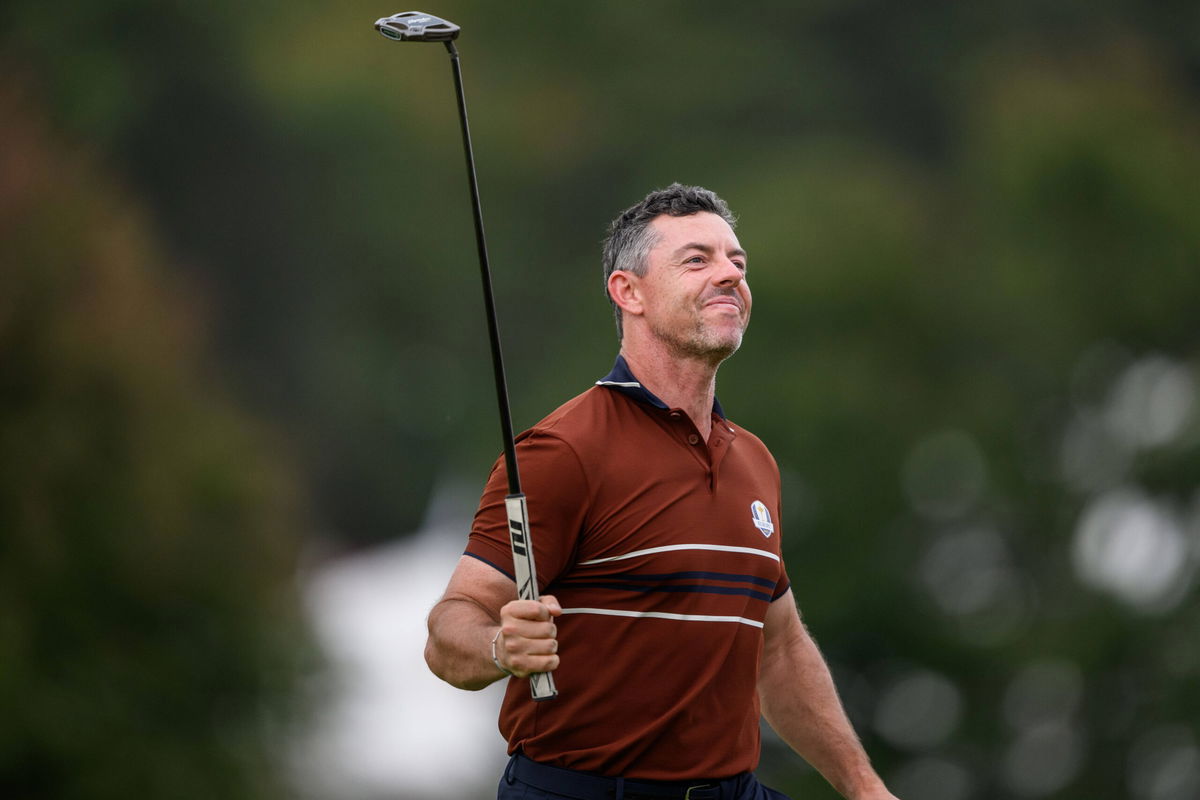
250927 Rory McIlroy of Team Europe celebrates during a fourball match on day 2 of The Ryder Cup on September 27, 2025 in New York. Photo: Jesper Zerman / BILDBYRAN / kod JZ / JZ0618 golf ryder cup day 2 bbeng jubel *** 250927 Rory McIlroy of Team Europe celebrates during a fourball match on day 2 of The Ryder Cup on September 27, 2025 in New York Photo Jesper Zerman BILDBYRAN kod JZ JZ0618 golf ryder cup day 2 bbeng jubel PUBLICATIONxNOTxINxSWExNORxFINxDEN Copyright: JESPERxZERMAN BB250927JZ119
Imago
250927 Rory McIlroy of Team Europe celebrates during a fourball match on day 2 of The Ryder Cup on September 27, 2025 in New York. Photo: Jesper Zerman / BILDBYRAN / kod JZ / JZ0618 golf ryder cup day 2 bbeng jubel *** 250927 Rory McIlroy of Team Europe celebrates during a fourball match on day 2 of The Ryder Cup on September 27, 2025 in New York Photo Jesper Zerman BILDBYRAN kod JZ JZ0618 golf ryder cup day 2 bbeng jubel PUBLICATIONxNOTxINxSWExNORxFINxDEN Copyright: JESPERxZERMAN BB250927JZ119
Imago
250927 Rory McIlroy of Team Europe celebrates during a fourball match on day 2 of The Ryder Cup on September 27, 2025 in New York. Photo: Jesper Zerman / BILDBYRAN / kod JZ / JZ0618 golf ryder cup day 2 bbeng jubel *** 250927 Rory McIlroy of Team Europe celebrates during a fourball match on day 2 of The Ryder Cup on September 27, 2025 in New York Photo Jesper Zerman BILDBYRAN kod JZ JZ0618 golf ryder cup day 2 bbeng jubel PUBLICATIONxNOTxINxSWExNORxFINxDEN Copyright: JESPERxZERMAN BB250927JZ119
Imago
250927 Rory McIlroy of Team Europe celebrates during a fourball match on day 2 of The Ryder Cup on September 27, 2025 in New York. Photo: Jesper Zerman / BILDBYRAN / kod JZ / JZ0618 golf ryder cup day 2 bbeng jubel *** 250927 Rory McIlroy of Team Europe celebrates during a fourball match on day 2 of The Ryder Cup on September 27, 2025 in New York Photo Jesper Zerman BILDBYRAN kod JZ JZ0618 golf ryder cup day 2 bbeng jubel PUBLICATIONxNOTxINxSWExNORxFINxDEN Copyright: JESPERxZERMAN BB250927JZ119
The five-time major champion, Rory McIlroy, sat across from Gary Neville, Jamie Carragher, and Roy Keane on January 2, 2026, and delivered a verdict that should sting everyone involved in golf’s ongoing civil war. The same sovereign wealth fund that fractured his sport? McIlroy praised them. But the caveat cut deep.
Watch What’s Trending Now!
“I think about this, they’ve spent billions on LIV, the PIF and Saudis, and then I look at what they’ve done with Newcastle, for example,” McIlroy said on the Stick to Football podcast. “There are financial regulations around football, right? So it’s not as if they can just go out and spend 5 billion, but in golf, they could. I just think what they’ve done in Newcastle, and I would say they’ve done a great job from where Newcastle were to where they are now. I think if they had just similarly approached the golf, we wouldn’t be at this point.”
Same owner. Same billions. Opposite outcomes.
How PIF built Newcastle United through forced restraint
Newcastle United operates inside a regulatory straitjacket that golf never possessed. The Premier League’s Profit and Sustainability Rules cap losses at £105 million over a rolling three-year period. The incoming Squad Cost Ratio will tether spending to 70% of revenue for clubs competing in Europe. PIF couldn’t flood Tyneside with cash. They had to build.
🚨 Rory McIlroy Returns 🚨
🎁 His Gift For Roy
🏆 Winning The Masters
🍿 Ryder Cup Drama
⛳️ VR Golf Challenge
🟢 Green Jacket SecretsWatch now on YouTube or listen on all podcast platforms! pic.twitter.com/XS7biZS7Ty
— The Overlap (@WeAreTheOverlap) January 2, 2026


The numbers illustrate the constraint. Newcastle generates approximately €372 million in annual revenue — roughly half of Manchester City’s €838 million. Under the new rules, that revenue gap translates directly into a spending ceiling. PIF’s billions sit in reserve, waiting for commercial growth to unlock them.
This forced patience bred legitimacy. When PIF acquired Newcastle in October 2021 for £305 million, supporter approval reached 93.8%. CEO David Hopkinson, the former Madison Square Garden executive who took the helm in 2024, now targets European dominance by decade’s end. “I see this club being in the debate about being the top club in the world,” Hopkinson declared.
The trajectory feels earned, not purchased.
LIV Golf followed no such blueprint. Without financial fair play equivalents, PIF deployed capital like a firehose. The UK operating arm alone hemorrhaged $461.8 million in 2024. Cumulative losses have surpassed $1.1 billion outside the United States. Total investment approaches $5 billion — and the return remains elusive.
“I don’t like what it has done to our game because it’s created this massive fracture,” McIlroy admitted. “If LIV is failing to capture the imagination and they’ve spent so much money on this venture and it isn’t making a return for them, I don’t know how long they can keep it going.”
Newcastle sells out St James’ Park every fortnight. LIV struggles to crack 300,000 television viewers while PGA Tour events draw millions. One project won a city’s loyalty. The other alienated an entire sport.
But McIlroy’s frustration extends beyond spending patterns. It points toward a deeper flaw in golf’s architecture — one that made the fracture inevitable.
Why Rory McIlroy believes golf needs its own constitution
Golf possesses no equivalent to UEFA’s financial regulations. No unified governing body enforces spending restraint. The PGA Tour, DP World Tour, and LIV operate as separate fiefdoms with no overarching framework demanding cooperation. This vacuum created the conditions for disruption. In football, PIF had to negotiate with existing structures. In golf, they could bypass them entirely. The merger talks reflect the consequences.
View this post on Instagram
Nearly three years have passed since Jay Monahan and Yasir Al-Rumayyan announced a framework agreement in June 2023. The original deadline, December 31, 2023, expired without a signature. White House meetings in February 2025, brokered by President Trump, produced optimism but no resolution. LIV CEO Scott O’Neil confirmed in December 2025 that serious negotiations had stalled.
The exhaustion has spread beyond McIlroy. Justin Thomas described the situation as beyond “the level of exhaustion” at the 2025 Players Championship, noting he was “glad I don’t know more” because it would be “mentally draining.” Adam Scott confirmed negotiations have “gone silent” since February. The tours remain “poles apart” structurally.
McIlroy’s Newcastle comparison isn’t nostalgia for what might have been. It’s a diagnosis of what golf still requires. Any future coexistence demands a regulatory architecture.
Newcastle fans occasionally lament PSR restrictions that prevent PIF from unleashing their full wealth. They don’t realize that those same restrictions built the trust that made the project viable. Golf learned the opposite lesson too late. Unchecked capital didn’t create a competitor. It created a wound. Whether that wound heals depends on whether golf’s stakeholders can impose the constraints they never had.
Related Newsletters