
Golf’s governing bodies have reset the ball-rollback timeline to a single, universal implementation date of January 2030. In a joint statement issued in June 2026, the USGA and the R&A said that, in the meantime, they will adopt a more collaborative approach. After seeing backlash from many professionals, these bodies will now focus on working more closely with players, the tours, and manufacturers to find solutions that meaningfully curb elite driving distance.
Watch What’s Trending Now!
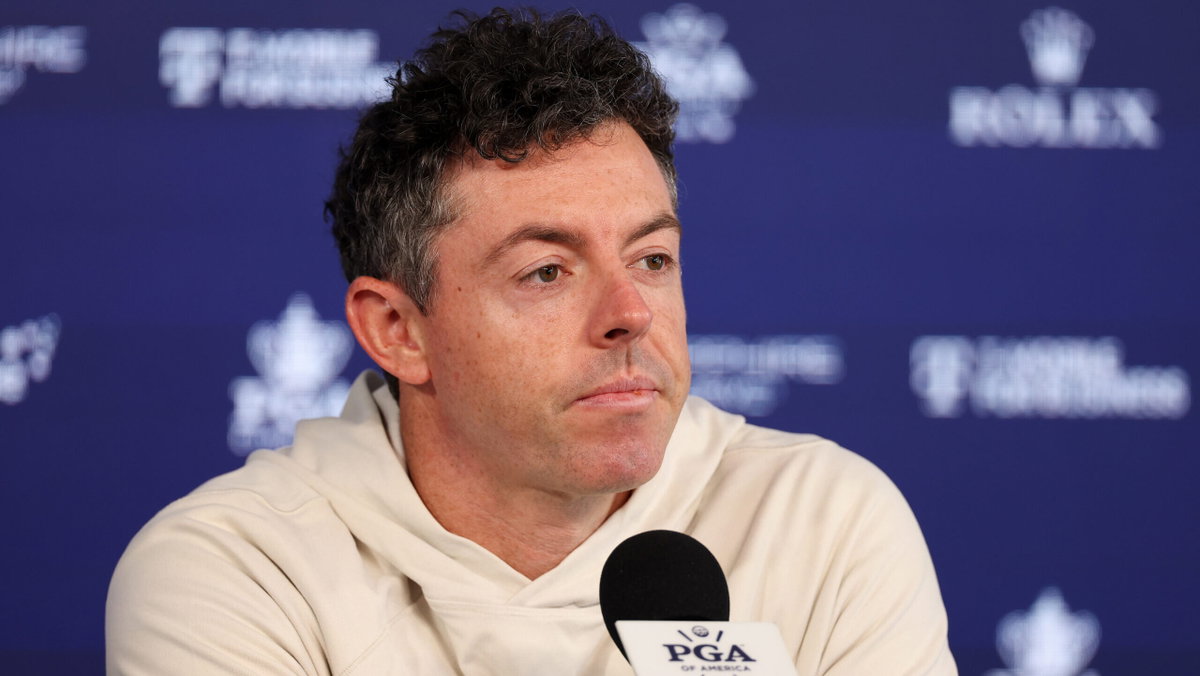
While Rory McIlroy is fine with this decision now, a delay like this would have frustrated him a couple of years ago. During the pre-tournament press conference at the Tour Championship 2026, he shared his blunt take on the matter.
“Yeah, I’d say maybe a year or two ago I was getting a little impatient and I was like, please, somebody, just do something. But I think that was to look at it a little bit too simplistically. Surely we can just do something about the golf ball, everyone will go back 10 or 15 yards,” Rory McIlroy said.
“But I think from the research that the TOUR has done, and again, like Cameron Young and now Gary Woodland played the golf ball last week, the Pro V1 Double Dot, that would be a conforming golf ball if it were the 2028 or 2030 rules.”
The Titleist Pro V1x Double Dot is a Tour-only CPO ball widely believed to conform to the proposed Overall Distance Standard (ODS) rules. While the governing bodies introduced ODS to reduce distance, the Titleist Pro V1x Double Dot yields the opposite result. Cameron Young started using the ball this season.
He has witnessed improvement in his driving accuracy while maintaining elite distance. In 2025, he averaged over 313 yards, but hit only 53.85% of fairways. This season, however, his driving average so far is 318.2 yards, while his accuracy percentage increased to 60.43%. This helped him win the Players Championship and the Cadillac Championship.
Gary Woodland switched to the Titleist Pro V1x Double Dot ahead of last week’s BMW Championship 2026. The results were clear, as he finished tied for fourth in the second playoff event. His average driving distance across the four rounds was 339.50 yards, and the accuracy was 67.86%. He was even able to break his seven-year Tour Championship curse.
Rory McIlroy, therefore, believes that no matter what rules the governing bodies bring in, manufacturers have now become very smart to eventually find ways to get around them. But despite driving being one of his biggest weapons, he is determined to establish regulations for golf equipment.
“Yes, it may take a couple extra years to figure out what the need is, but I think everyone agrees that the equipment needs to be regulated. It needs to be regulated. It just can’t keep carrying on at the rate it’s going. Not at the elite level. Leave amateurs alone. Bifurcate. I’m all for bifurcation. But I think at this level, to keep some of those golf courses relevant that we want to go to and we’re talking about, I think equipment, whether that’s ball, whether that’s club, whatever that means, I think it has to be regulated to a higher degree than it is at the minute,” Rory McIlroy added.
Augusta National’s chairman has repeatedly said that driving distances are increasing rapidly. The club has to keep modifying the layout to preserve the challenge. There are many golf venues, such as Shinnecock Hills and Oakmont Country Club, that are now easier to play because of advanced equipment.
But as Rory McIlroy said, there are other simpler ways to address the issue. For instance, Sir Nick Faldo recommended, and the Northern Irishman backed the idea of one-inch tees. Then there’s Butch Harmon and José María Olazábal, who said that the governing bodies should reduce the number of clubs in the bag to nine. Faldo also endorsed this nine-club idea. Patrick Reed shared his own suggestion of reducing the driver head. All of these can make driving longer challenging and bring back the art of golf.
The golf ball rollback debate is far from over. But Rory McIlroy backs taking a little more time to bring severe measures to curb driving distance, at least at the elite stage.