Imago
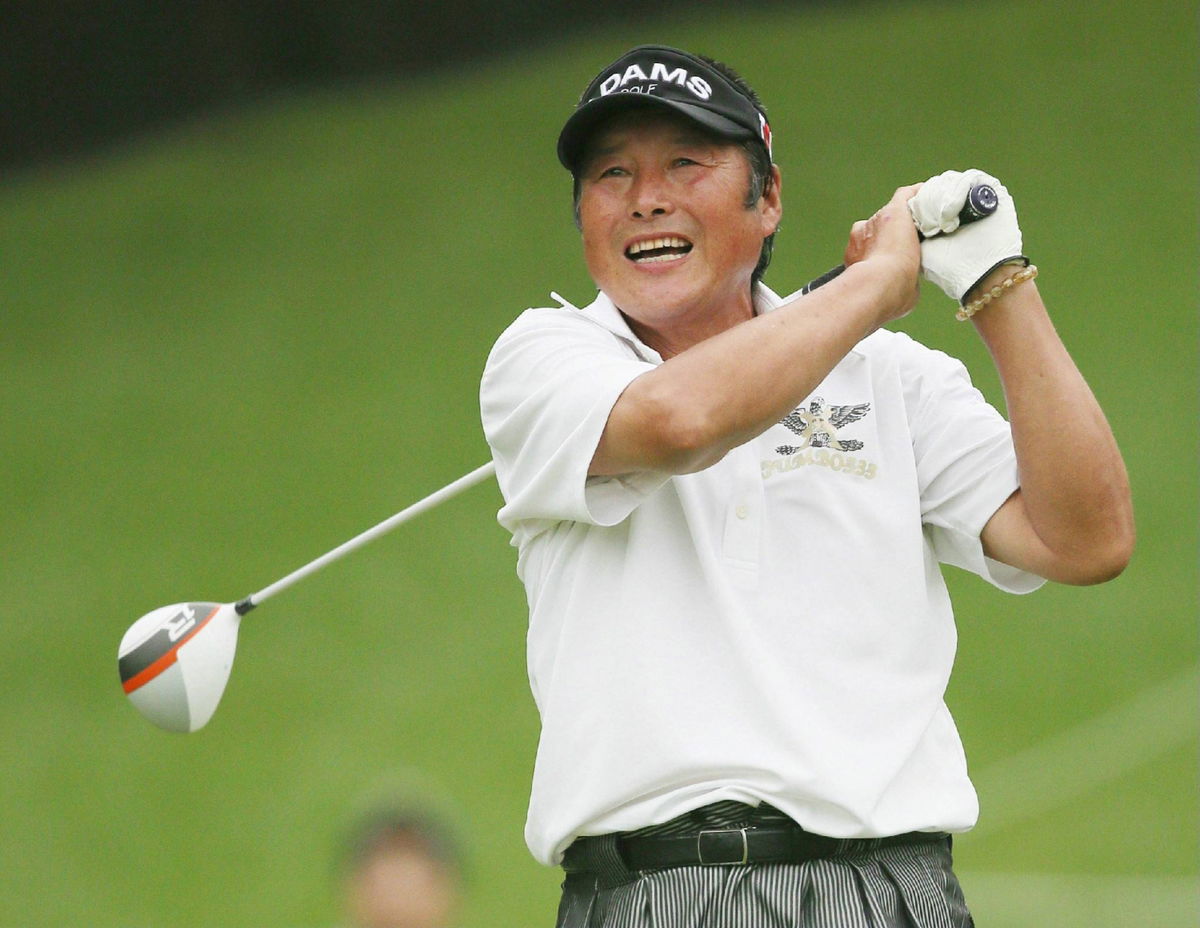
credits: Japan Times (Masashi Ozaki hits a tee shot during a Japan Golf Tour championship in June 2013, in Ibaraki Prefecture. | JIJI)
Imago
credits: Japan Times (Masashi Ozaki hits a tee shot during a Japan Golf Tour championship in June 2013, in Ibaraki Prefecture. | JIJI)
Imago
credits: Japan Times (Masashi Ozaki hits a tee shot during a Japan Golf Tour championship in June 2013, in Ibaraki Prefecture. | JIJI)
Imago
credits: Japan Times (Masashi Ozaki hits a tee shot during a Japan Golf Tour championship in June 2013, in Ibaraki Prefecture. | JIJI)
A golfer who used to play baseball and had one goal at every tee: to hit the ball as far as possible. That was Masashi “Jumbo” Ozaki, the giant of Japanese golf who turned his love of distance into a career that changed what it meant to be great in Asian golf. On Monday, the golf world mourned as the World Golf Hall of Famer passed away at the age of 78 following a long battle with colon cancer.
Watch What’s Trending Now!
Masashi Ozaki won 94 times on the Japan Golf Tour, 43 more than his closest rival, Isao Aoki, who was also a World Golf Hall of Famer. He had six Japan PGA Championships and five Japan Open titles in his trophy case.
He was the highest-paid player on the Tour a record 12 times, including five consecutive years from 1994 to 1998. He was inside the top 10 in the Official World Golf Ranking for about 200 weeks, climbing as high as 5th in 1996 at the age of 49. Ozaki also netted a T8 at the 1973 Masters, a T6 at the 1989 U.S. Open, and a T10 at the 1979 Open Championship. He also played the 1996 Presidents Cup. Paired with Vijay Singh, he bested Fred Couples and Davis Love III.
Masashi “Jumbo” Ozaki, whose 113 worldwide victories were the most of any player from Japan, has died of colon cancer, the Japan Golf Tour said. He was 78. https://t.co/Ls9GxvAcuP
— The Associated Press (@AP) December 24, 2025
He won his last money title in 2002, when he was 55. Ozaki said he wished he had played more often outside Japan when he was inducted into the World Golf Hall of Fame in 2011. “But I dedicated my life to Japanese golf and am extremely grateful the voters thought I was worthy of this honor,” he stated after getting 50% of the vote on the International ballot.
And his life off the course? Well, he was a cultural icon.


He was often compared to Arnold Palmer because of his charm and fearless golf. He introduced style to the course by wearing silk shirts and baggy pants. He was good at more than just golf. Ozaki was a brilliant baseball pitcher. He also played guitar and released three songs that reached the top of the charts in Japan in the 80s — a lively personality.
The Japan Golf Tour honored him in a social media post, stating: “He is an indispensable, one-of-a-kind figure in discussing men’s golf, both now and in the future.” And the tribute didn’t stop there.
Tributes pour in after Masashi Ozaki’s passing
The loss felt deeply personal to fans worldwide. A comment read, “Another legend who made the game look easy. Rest in peace, Jumbo.” Even though he used to hit long, his swing looked natural. His charisma and success made many Japanese golfers, including Hideki Matsuyama, who won the Hero World Challenge earlier this month, pick up clubs.
Another fan paid tribute, “Man will be remembered as a legend on the field. Rip.” His 94 JGTO wins set a standard that no one has been able to match. Current Japanese Tour players still want to break the records that Ozaki set, especially his 12 money titles. His accomplishments made Japanese golf well-known around the world in the 1980s and 1990s.
One fan said, “78 is too young for a legend who dominated like no one else. Rest in peace to a true giant.” The nickname “Jumbo” came from his 6-foot-1 physique, which was unusually tall for Japanese athletes of his period. His prime years, which spanned three decades, made him seem like a permanent part of Japanese sports culture.
“rip jumbo truly a legend in the game.” Some champions kept their distance, but Ozaki’s guitar playing and success in the entertainment industry demonstrated that he knew how to entertain. He was on TV shows and ads, which made golf more popular in Japan.
“RIP Jumbo Ozaki🙏🌹.” His induction into the HOF in 2011 proved what Japanese fans have known for years: Masashi Ozaki was one of the best golfers of all time. From 1994 to 1998, he held the Tour earnings record for five years. This was during a time when golf was growing rapidly in Asia. His performance helped the Japan Golf Tour get bigger rewards and more international TV coverage.
Related Newsletters