Getty
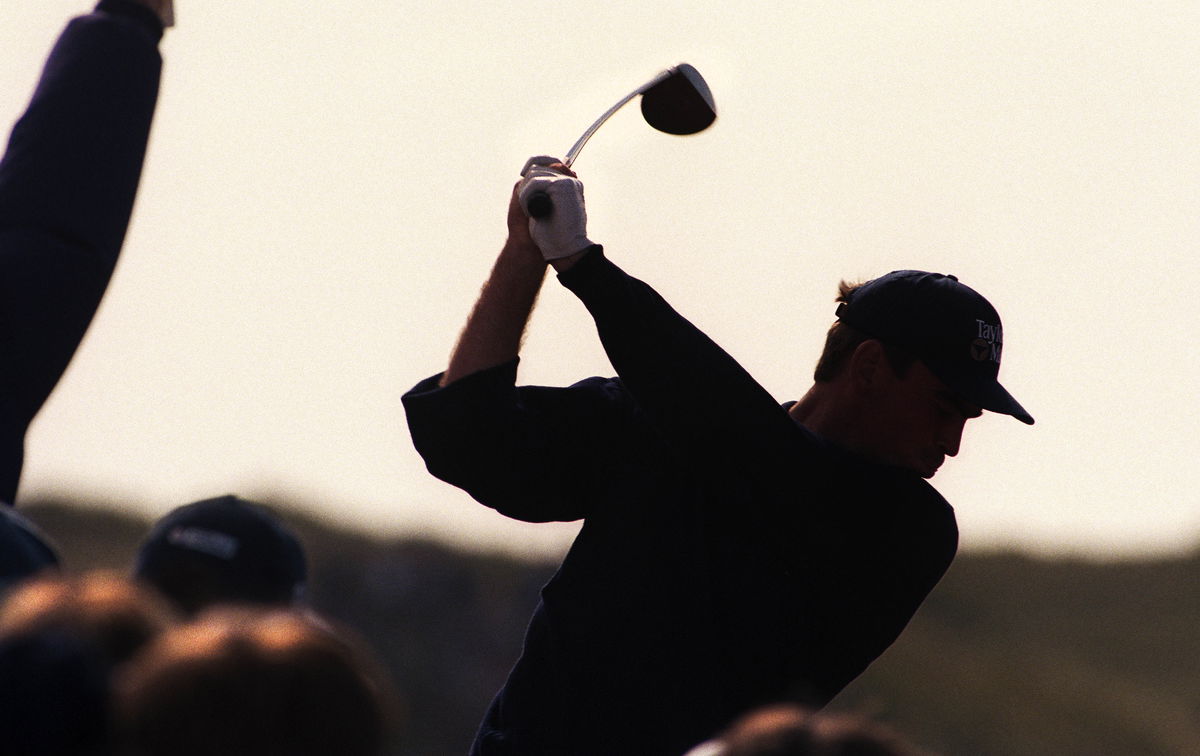
Silhouetted golfer on the tee during the 127th British Open Golf at Royal Birkdale GC in Southport 16th-19th July 1998. (Photo by David Ashdown/Getty Images)
Getty
Silhouetted golfer on the tee during the 127th British Open Golf at Royal Birkdale GC in Southport 16th-19th July 1998. (Photo by David Ashdown/Getty Images)
What’s the difference between a withdrawal and a disqualification? For LIV Golf’s Sam Horsfield, it might be the difference between defending himself against unfair accusations and accepting a narrative that just doesn’t sit right with him.
Watch What’s Trending Now!
The 28-year-old Englishman found himself at the center of a heated debate after officials disqualified him from The Open Championship Final Qualifying at West Lancashire Golf Club. However, when Golf Lover UK shared Horsfield’s Instagram response on X, it gained immediate traction with over 9,000 views.
The response revealed a detailed account that painted a very different picture from the official narrative. “So I flew back home Sunday night and landed into Heathrow at 4pm by the time I got up to west lancs it was about late,” Horsfield explained in his social media statement. “Had a bit of dinner and fell asleep at 10:30/11. At 1am the fire alarm went off and we had to go stand outside for an hour or so. I eventually got back to sleep around 5:30am for a 6am alarm which I slept thru but fortunately my caddy woke me up.. I felt completely dizzy and out of it all day.”
ADVERTISEMENT
After detailing his exhausting night, Horsfield delivered a pointed message to his critics. “Don’t listen to the propaganda out there pages. Hope this clears things up,” he concluded, directly challenging the media coverage and official accounts of his departure from the course.
Good to see Sam Horsfield stand up for himself!@MajesticksGC pic.twitter.com/LpTyVTqSjM
— Golf Lover UK (@GolfloverUK) July 1, 2025
The R&A had officially stated that Horsfield was “disqualified after leaving the venue without informing officials” following his 7-over-par front nine. Still, Horsfield’s Instagram account tells a story of sleep deprivation rather than simple abandonment. The Majesticks GC star had traveled directly from LIV Golf Dallas, arriving late Monday evening before facing the grueling 36-hole qualifier the next morning.
ADVERTISEMENT
The situation becomes more complex when compared to similar incidents. This mirrors previous qualifying scenarios where player departures have sparked debate about proper protocols. Yet Horsfield’s case differs significantly from typical early departures. He wasn’t simply giving up due to poor scoring. Instead, his detailed explanation reveals a night of interrupted sleep that left him physically compromised.
Billy Horschel once emphasized the importance of finishing rounds, tweeting in 2014: “Never crossed my mind to WD. I played bad. No excuses.” But Horschel likely never faced a fire alarm disrupting his sleep hours before a major qualifying event.
ADVERTISEMENT
Top Stories
Reactions Pour In as Jordan Spieth’s Strange On-Course Moves Catch Fans Off Guard
LIV Golf in Hot Waters After Disrespecting DP World Tour Pro Despite His Dubai Invitational Win

Paige Spiranac Feels ‘Deeply Misunderstood’ as She Accepts Sad Reality About Golf Career

Paige Spiranac Shares Painful Admission About Her Mental Health Battle: ‘I Hate…’

Wishes Pour in for Golf Legend After He Underwent Open Heart Surgery for Concerning Health Issue
Sam Horsfield’s case highlights the physical and mental toll of Qualifying events
Horsfield’s experience exposes the brutal reality of professional golf’s qualifying system. These 36-hole marathons test players beyond simple technical ability, demanding both physical and mental resilience that few outside the sport truly understand. What makes Horsfield’s situation particularly compelling is the scientific backing for his claims. General sleep research consistently shows that sleep deprivation affects mood more severely than cognitive or motor functions. Studies of Challenge Tour professionals reveal concerning mental health statistics: sleep disturbance rates of 10.3% and distress levels reaching 51.7%.
Horsfield’s experience at Walton Heath during U.S. Open qualifying earlier this year provides crucial context. There, he withdrew after his first round but faced no disciplinary action. This inconsistency becomes even more glaring when considering that Alex Fitzpatrick, Kieran Vincent, and Kazuma Kobori also received disqualifications at the same West Lancashire event, while fellow LIV player Adrian Meronk withdrew from his Dundonald qualifier after 18 holes without penalty.
ADVERTISEMENT
Horsfield’s social media defense highlights a growing trend of players using digital platforms to control their narratives. His willingness to share personal details about his challenging night demonstrates the human side of professional golf that rarely surfaces in official reports. The question remains: will golf’s governing bodies listen? For Horsfield, the difference between a withdrawal and a disqualification might just be the difference between fair treatment and an unfair judgment call that he refuses to accept.
ADVERTISEMENT
ADVERTISEMENT
ADVERTISEMENT