
Essentials Inside The Story
- LIV Golf had quite literally stabbed the PGA Tour in the back when it poached away the star players.
- A merger could benefit both the entities in long-term, just like the 1968 split did.
- Despite Gary Player's wish to see the big stars play together, the Tour is unlikely to shake hands with LIV.
Golf had very humble beginnings in America as a loose, unorganized set of events. Gradually, with the help of the PGA of America, it grew into a well-recognized entity. But in 1968, some of the players broke away. It was a bold move, but they believed the tournament golf should operate as its own commercial body, with the players having control over it. That split in 1968 gave birth to the modern PGA Tour we know today. Half a century later, we stand on that very same threshold.
Watch What’s Trending Now!
When LIV Golf launched in 2022, competing against the literal synonym of traditional professional golf was a challenge in itself. But by teasing the PGA Tour with its moniker “Golf but louder,” LIV found a way to poach away many heavyweights. Four years into play, though, that noise has muffled into cries for help. As it now faces a future hanging by a thread, the debate around the possibility of a merger keeps growing. Adding to the reasons why it should be pursued again, nine-time major champion Gary Player has recently added another reason.
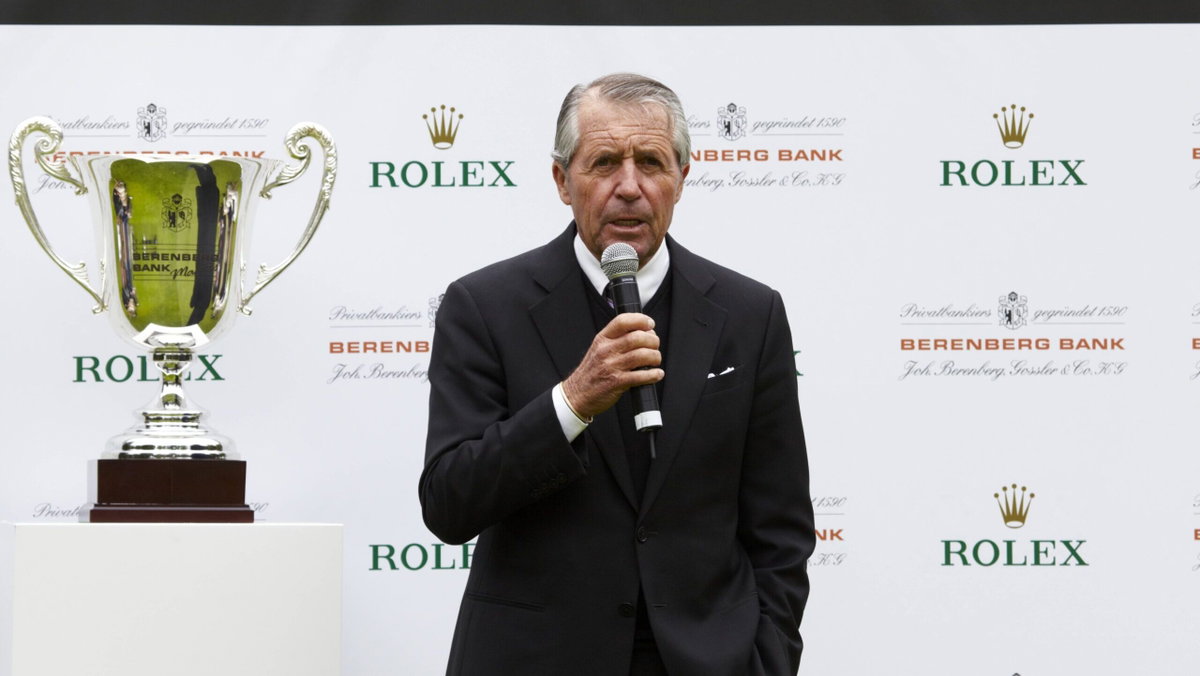
“I have spent 73 years in professional golf and have been a proud member of the PGA and PGA TOUR for decades. This game has given me so much, and I feel a responsibility to speak up for its future,” Player wrote in a lengthy tweet on Monday. “We have faced division before, but one truth has never changed.
“We have the privilege of earning our living on the golf course because of the fans and sponsors who support us. We must never lose sight of that. Golf fans around the world want to see the best players compete against one another week in and week out.
“I want to see Jon Rahm and Bryson DeChambeau competing regularly against Scottie Scheffler and Rory McIlroy, not just at our major championships. My hope is that we can finally put the divisions of recent years behind us and make that possible.”
The PGA Tour didn’t form with happy handshakes. But that 1968 breakaway created a new path for professional golf and the players who make the product. It separated itself from the PGA of America’s broader mission and gave the players more flexibility over schedule, exemptions, sponsors, and whatnot. Now, while a merger with LIV Golf is a tried-and-tested attempt gone wrong, it can still create more opportunities. It has already proven it can.
Yes, the PGA Tour stands as the highest form of golf that prides itself on the traditions it has upheld for decades. But LIV Golf also pushed it into increasing players’ payments, making efforts to gain more young followers, and even giving a chance to social media creators to give more visibility to its product. While the Tour has succeeded to a point, LIV can offer much better options.
Indeed, LIV Golf hasn’t exactly turned out the way its creators would’ve liked. Over the few years of existence, it has only incurred losses to the point that it still owes millions and had to file for bankruptcy earlier this year. While LIV has found a new lead investor in BC Partners after PIF walked out, their future still hangs by a thread. But there’s still one thing they do well: they keep their players and their fans happy.
By joining hands, golf can return to its highest level that enables its players to compete against the world’s best, and also gain visibility. While this is a nice thought, it doesn’t match reality.
The PGA Tour will not merge with LIV Golf that easily
Let’s go back to the time when Dustin Johnson joined the breakaway league. He was doing very well on the Tour, yet no one could’ve opposed the reason why he chose to move out.
“I’ve done pretty well out there for the last 15 years. But this is something that was best for me and my family,” Johnson said in 2022.
Could you say that the reason was entirely wrong? Yet, it was.
LIV went after the PGA Tour’s best players with guaranteed contracts and prize money the Tour couldn’t match. Backed by Saudi Arabia’s PIF, some deals were enormous: Jon Rahm’s contract was worth around $300 million over three years, despite joining a year later. Plenty of players made the jump after publicly pledging their loyalty to the Tour. As a result, the fight grew uglier.
The Tour suspended players who joined LIV events without a release, fined them, and took the fight to court. LIV players and the league countersued, arguing that the Tour’s actions had stifled competition. The fallout was not pretty: friendships broke down, the Tour also lost some of its biggest names, and had to raise its own prize money while building richer signature events to keep up. But LIV’s disruption didn’t last very long.
Brooks Koepka, Patrick Reed, and others later returned to the PGA Tour. Yet the biggest blow for LIV came when Saudi Arabia’s PIF decided to pull its funding in April. Suddenly, the league’s future was in doubt, prompting players to explore options. According to Today’s Golfer, several LIV players contacted the DP World Tour about fallback plans in case the league folded, and Golf Monthly has since reported that five have entered Q-School. Then things got worse when the breakaway league had to file for bankruptcy earlier this month.
Although it has found a new lead investor in BC Partners and plans to restructure in 2027 with a modified format, it still carries $500 million to $1 billion in debt. Not to mention, several big names from the breakaway tour may not stick around to see its “LIV 2.0” era. Naturally, at a time like this, the PGA Tour, which spent years fighting LIV in court, might not be too keen on bailing out its rival. Still, this isn’t the first time a merger between the two sides has been brought up.
How merger talks 1.0 ended
In June 2023, the PGA Tour, DP World Tour and Saudi Arabia’s PIF announced a framework agreement to combine their commercial assets. The December 31 deadline that year passed without a finalized deal, and progress stalled as the PGA Tour secured a $3 billion investment from Strategic Sports Group (SSG) in 2024. The final nail in the coffin came in August 2026.
“There’s no merger, no conversations. We’ve been really concentrated on the PGA Tour,” PGA Tour CEO Brian Rolapp said, putting an end to the possibility of a tie-up.
At the end of the day, Gary Player’s plea is unlikely to change anything: the PGA Tour and LIV Golf will almost certainly never merge. LIV’s 2027 restructuring under BC Partners and individual players’ choices about where to compete, more than any call for unity, will determine whether Rahm and DeChambeau ever face Scheffler and McIlroy week in and week out.