
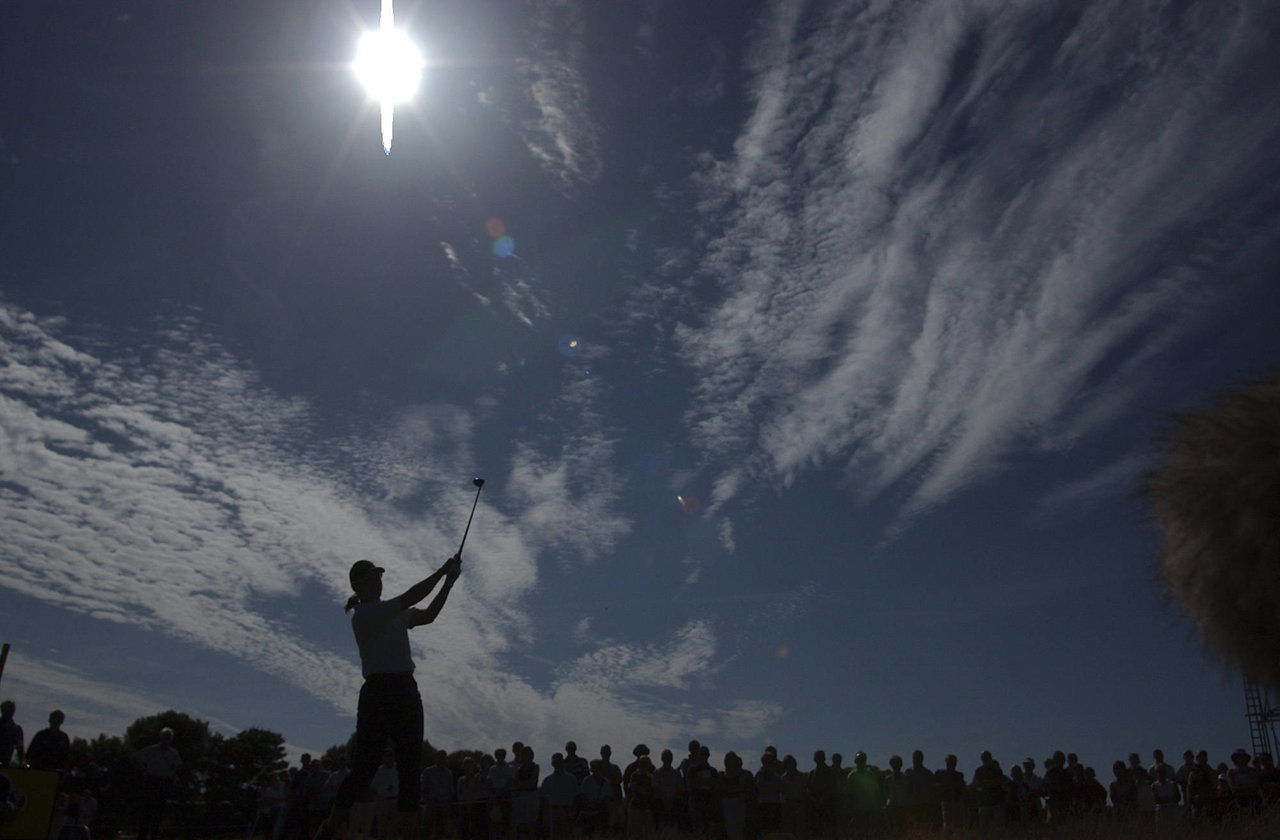
LPGA Legend Kathy Cornelius, the 1956 U.S. Women’s Open champion and an important figure in women’s golf, died on September 28 at the age of 93. Her death has brought tributes from across the golf world, with many remembering her as a strong competitor who spent nearly three decades on the LPGA Tour.
Watch What’s Trending Now!
Fans also shared their memories of Cornelius after news of her passing. One fan on X wrote, “The first clubs I ever played with had Kathy Cornelius’ name on them. I hadn’t thought of her much until seeing your post about her passing. She’ll always be a part of my golfing life. RIP.” Golf writer Adam Schupak also paid tribute, writing, “Great anecdote. Great reporting (as always). RIP, Kathy.”
The tributes have also continued to come from people who had the chance to meet Cornelius. Kris Doorey, who spoke with her about her time at Florida Southern, shared his sadness on X. “So sad to hear this! I had the opportunity to speak with Kathy a few years ago to talk about her time at @FLSouthern.”
Another also remembered Cornelius warmly. “She was so nice! I am sorry she is gone. These pros of today should be grateful of all these women who paved the way for today. They made today possible. They had great games, but more importantly, they gave of themselves to the fans.”
Cornelius’ first year on the LPGA Tour turned into a memorable one. In 1956, she picked up two victories, with the biggest coming at the U.S. Women’s Open. She faced amateur Barbara McIntire in an 18-hole playoff at Northland Country Club in Duluth, Minnesota, and won 75-82.
Her other win that season came at the St. Petersburg Open, where she also set a new LPGA record for 72 holes by six shots. The timing of her biggest victory made the week even more special. Cornelius won the U.S. Women’s Open on the second birthday of her eldest daughter, Karen.
She continued to compete at the highest level for years and finished her career with seven LPGA Tour victories. Among those wins was the 1962 Babe Zaharias Open. She also teamed up with Beverly Hanson, a future World Golf Hall of Famer, to win the 1956 Hot Springs 4-Ball Invitational.
Cornelius had to wait until 1973 for her final LPGA title, but she finished her career in style. At 40, she defeated Judy Rankin in a playoff at the Sealy-Faberge Classic and collected $25,000, the largest winner’s check on the LPGA Tour at that time.
Her career also put her alongside many of the era’s biggest names, including Betsy Rawls, Patty Berg, Kathy Whitworth and JoAnne Carner. Cornelius remained a regular presence on tour for more than two decades, finishing outside the top 48 on the money list just once from 1956 through 1977.
Her place in Arizona golf history was later recognized when she entered the Arizona Golf Hall of Fame in 2017. But her story goes beyond the seven trophies she won. Cornelius spent decades competing at a time when women’s professional golf was still growing, helping shape the tour that later generations would inherit.
A rare mother-daughter milestone
Cornelius’ legacy goes beyond her seven LPGA Tour wins. She and her youngest daughter, Kay, are still the only mother-daughter pair to each win a USGA championship. Kathy won the U.S. Women’s Open in 1956, while Kay won the U.S. Girls’ Junior 25 years later in 1981 at just 14.
Kay also remembered what life was like traveling with her mother on tour. “We didn’t have daycare,” she said. “We walked 18 holes every day and lived and breathed every stroke.”
Cornelius’ life in golf was closely connected to her family. Her daughter Kay also became a champion, making them the only mother and daughter to have both won USGA championships. Kathy captured the U.S. Women’s Open in 1956, while Kay won the U.S. Girls’ Junior in 1981 at age 14.
Being a mother on the professional golf circuit was not easy during Cornelius’ playing days. Judy Rankin, who competed during the same era, explained how much harder it was for women trying to balance motherhood and competition. “Every time you go back a decade, it’s that much harder,” she said. “There’s no substantial help. You’re figuring it out while you’re traveling and in places you don’t know.”
Cornelius’ own journey into golf started when she was 13. Born Kathy McKinnon, she grew up in Lake Worth, Florida, and later moved away from home at 16 to attend Florida Southern College. She studied journalism and even played on the school’s men’s golf team when an extra player was needed.
Her time at Florida Southern also brought her together with Bill Cornelius, who was working as an assistant professional at a nearby course. They married in 1953. Not long after, Kathy left college and turned professional, choosing to pursue golf full time.
She later explained the decision to Golfweek in 2022 in simple terms: “I just couldn’t resist the urge to play golf.”
Rankin also remembered the person behind the golfer. She described Cornelius as someone who rarely showed what she was feeling on the course. “Kathy was the most mild-mannered person you will ever know,” Rankin said. “She was humble, steadfast, just lived life the same way that she played. You didn’t know if she was over par or under par when you looked at her.”
Bill was a major part of the family’s life on tour and traveled with Kathy for much of her career. The couple later started Magique Golf, a small golf equipment business that they continued to run into the early 2000s. Bill died in 2019.
Kathy spent her later years in Chandler, Arizona, close to her family. Even as her health declined, some of the habits she had carried for decades stayed with her.
In a memory care facility during the final months of her life, she began playing “My Country, ‘Tis of Thee” on the dining room piano three times a day. Her daughters had never known her to play that song when they were growing up.
Kay believed the music may have taken her mother back to her own childhood. “I think it was a memory from 85 years prior,” she said, “from watching her mom play the piano.”
Golf was still close to Cornelius, too. Staff at the facility sometimes set up a putting mat for her, giving her a chance to return to a skill she had first learned as a teenager. Even after retiring, she would take an old pitching wedge on neighborhood walks and hit small shots between trees.
Her daughter summed up that lifelong connection to the game in just a few words: “She never did stop putting.”
Cornelius leaves behind her daughters, Karen and Kay, along with grandchildren and great-grandchildren. Her story began with a young girl learning golf in Florida and grew into a career that helped shape an important period in women’s professional golf.