Imago
Source: IMAGO
Imago
Source: IMAGO
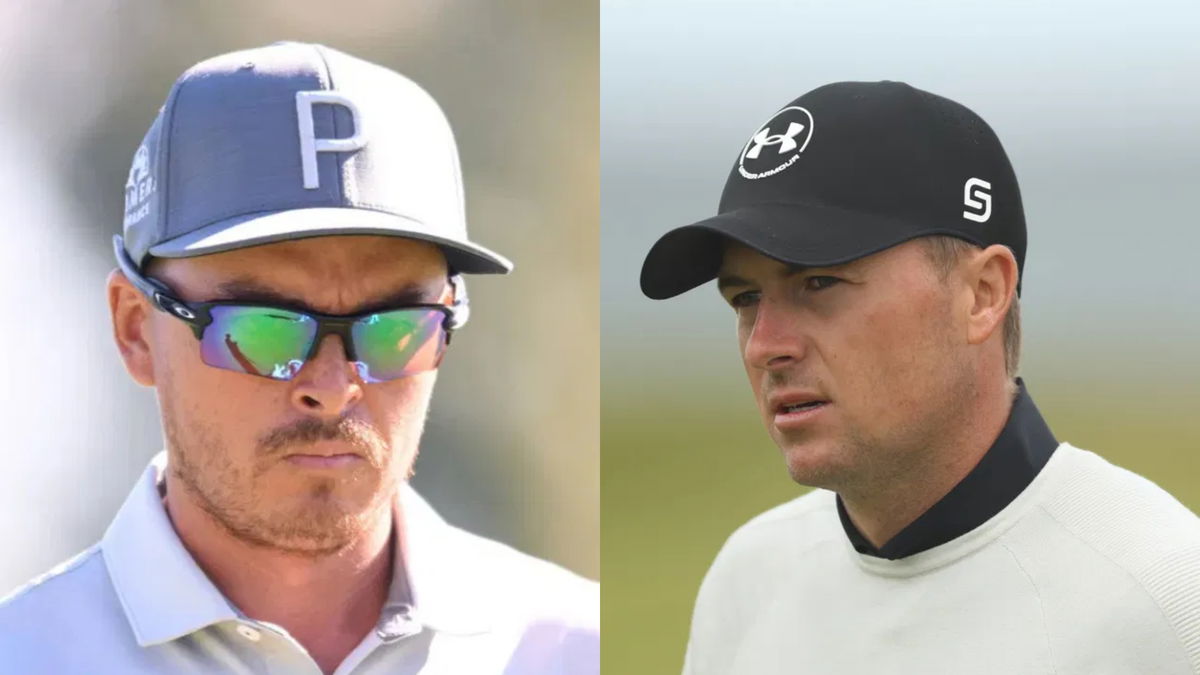
SBJ’s Josh Carpenter wasn’t the first one to bring up the question of broadcast quality, but he is certainly the latest. Carpenter recently tweeted a 50-second mic’d-up clip from the 2026 Players Championship featuring Jordan Spieth and Rickie Fowler debating the merits of a ‘mini driver’ versus a 3-wood on the 18th tee at TPC Sawgrass and posted a statement about what fans need.
Watch What’s Trending Now!
He asked the audience whether they wanted commentary or just two pros getting into it and just talking ball. And this is where the problem started. Carpenter’s post gained some traction when former PGA Tour player and current CBS broadcaster Colt Knost jumped into the conversation and said that if this were the case, fans would either get more of such conversations or more shots.
Knost’s logic is fair enough, given the current infrastructure, and you simply can’t do anything about that. Unlike the other stadium-based sports, in golf, action occurs simultaneously across eighteen different locations. In the eyes of the network, capturing fifty seconds of ‘ball talk’ on a tee box means potentially omitting four or five other shots from the field. So, it doesn’t add any value at the end if the audience misses the eagles or the birdies happening elsewhere on the course while listening to the players’ conversations.
Still, there are many simple things the networks can do to help the audience, as the debate about whether we even need announcers is nothing new. Fans often feel there is just too much wasted space.
Event sponsor interviews, updates on other tours, inane graphics that add little context, cutaways to B-roll footage, and showing the putting again and again just take up so much extra space. Here, add problems like a lack of compelling advertising and too many announcers trying to talk at the same time, and the matter gets even worse. And the player-caddie conversation before hitting a shot could be the most captivating piece of audio in all of sports. But they also don’t have that. Occasionally, the show even loses track of the leaders on a busy Sunday afternoon.
I understand where you’re coming from. But you either get more of this or more shots. Which one do you want?
— Colt Knost (@ColtKnost) March 18, 2026
Despite that, it is not always about anger, as fans also show a lot of support to their beloved broadcasters. For example, Roger Maltbie and Gary Koch were brought back for the U.S. Open after an overwhelmingly positive reception during guest appearances at the 50th edition of The Players.
On the other hand, it is also fair to say that golf TV has made steps. Around August 2025, Josh Carpenter noted that technology is getting much better for viewers and said that CBS would keep doing bigger things to help the fans. Specifically, CBS also brought the course to life during the first playoff event in 2025. They used lower camera angles to show the tiny slopes of the greens. And the fans were pleased about that, but it simply was not enough.
So they voiced their frustration just after the Jordan Spieth and Rickie Fowler video went viral.
Fans demand a raw and real golf experience
One fan bluntly added, “But @ColtKnost, we don’t get this often. Of course, we want more actual shots, but give us this over a history of winners that have walked the fairways, blah, blah, blah script like a lecture.”
You can argue all you want, saying Jordan Spieth, in particular, is one of the few players from a distinctive class who consistently talks during a round, while most of the players, like Cameron Young or Patrick Cantlay, generally remain silent. But the fans still believe that strategy talk is much, much better than a scripted lecture, even if it comes rarely.
So one fan said, “I want a sponsor to cover all commercial breaks and instead put their fat logo on the screen for things like this that happened ‘just moments ago – lets listen in to Jordan and Ricky talk golf.'” ”
Golf is unique in that there are no breaks in the action. So they simply put the tournament logo in the middle for a few seconds. But some experiments around the Aon Risk-Reward Challenge, which provides data to the viewer while keeping the sponsor’s name front and center, have had great success. So if that works, why not the strategy talk between the players?
But most of the fans argue that more shots and more commentary can exist at the same time.
As one fan said, “Either. The ‘more golf’ feedback really boils down to fewer in-broadcast commercials (CEO interviews, etc) and less detractive commentary. If what fills the space are shots, great. If what fills the space are conversations like this, also great. But first, create the space,” while another added, “Those aren’t mutually exclusive. Both can occur.”
But how do you implement it? One fan has an interesting solution- “Less putting Thr-Sat, Sunday leaders yes. More player/caddie mic ups, never ‘Scottie on the range’ before the round when guys are playing out there.”
In general, early-round coverage on Golf Channel and the stage-setting on network TV lead to gaps of 15-20 minutes where no golf shots are shown at all. Fans would rather see a player grinding to make the cut on a Friday than a superstar like Scottie Scheffler hitting range balls. Fans even accept a 20-minute delay if it means the production team could coordinate a feed that captures those moments, like Speith and Fowler.
And if the PGA Tour needs a model for improvement, fans suggest they can look at the DP World Tour. The DP World Tour’s ‘Back 9’ and ‘Play-Offs’ are praised for having an atmosphere where birds chirping and nature’s ambient sounds are prioritized over constant broadcasting. Commentators such as Ewen Murray are renowned for their ability to let the golf speak for itself.
As one fan noted at the end, “Watch the DP world tour announcers. They talk half as much as the announcers here. It’s so much better. Let us watch and listen. We don’t need commentary on every single thing.”
Written by

Edited by

Riya Singhal