
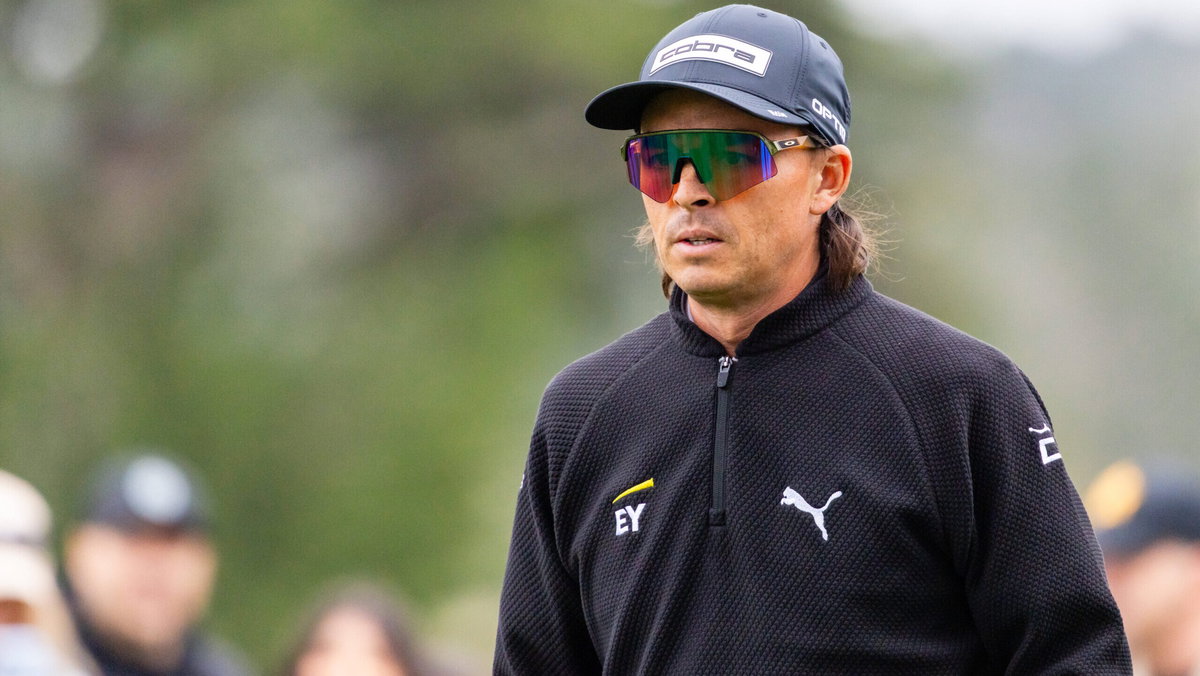
Rory McIlroy called the Track Two events “glorified Korn Ferry Tour events,” calling for national championships to be Track One. That was before he somewhat backpedaled and waxed lyrical about the PGA Tour’s new vision manufactured by CEO Brian Rolapp and marketed by the Tiger Woods-led Future Competition Committee. Most pros have tried to stay on the PGA Tour’s side since the announcement was made public. Rickie Fowler, however, isn’t ready to pop the champagne just yet.
Watch What’s Trending Now!
Fowler, playing at the Rocket Classic, was asked to share his thoughts on the two-track system. For the record, just a day after confirming the Travelers Championship as the first Championship Series event, the Tour unveiled a surprise second addition: the Sompo Championship. Backed by insurance giant Sompo, the event will debut at Silverado Resort in Napa, California, next year. Perhaps unironically, next year it will be played around the same time, effectively serving as a replacement for the Rocket Classic, the tournament Fowler loves the most.
“It’s tough to really know until obviously everything’s out,” Fowler said in the Rocket Mortgage Classic presser. “I know a lot of times there’s going to be tweaks here or there. I think it simplifies things… not having any of this: ‘Am I in this event? Do I need to go play down or go over here?’ So is it going to be better? I’m not sure.”
His measured response stands in contrast to some of the PGA Tour’s biggest voices. Tiger Woods, who helped shape the proposal through the Future Competition Committee, called the new structure “an exciting moment for the game of golf.”
The two-track system effectively slices the pros into two separate groups. Top 120 players will tee off in the top-tier events. They will have to fight to keep their playing status the same for next year. And players in top-tier events will not be able to tee it up in tier two tournaments.
Fowler believes that will create a clearer picture for pros where they won’t have to look at their status on the FedExCup standings and decide whether they need to add one more event to their calendar. But that creates another problem too.
There is no certainty of which events will end up in the Championship Series (Track One) and which events will be part of the Challenger Series (Track Two). How does that create a problem?
Many pros tee off in non-signature events because of their special connection to them. Scottie Scheffler likes to play in the Texas Children’s Houston Open. If that is not part of the Championship Series, will the World No. 1 be able to support the tournament?
The most plausible answer is no. Similarly, Fowler has served as the de facto official ambassador of Rocket Classic. But the tournament is in its last leg, and the PGA Tour will bid adieu to Detroit after Sunday. Fowler calls it a bummer but also remains hopeful that the new system will fix some problems that pros currently face.
“I do think it has the potential to be better than where we currently are,” the six-time PGA Tour winner concluded. “It gives a little clearer idea for the player and for the fans.”
Beginning in 2028, the top circuit will feature 23-24 Championship Series events, including the four majors, The Players Championship, and either the Ryder Cup or Presidents Cup.
The season will run from February through August, with around 120 players competing for $20 million purses. A Challenger Series will provide the pathway via promotion and relegation. PGA Tour CEO Brian Rolapp has also identified cities like Boston, Denver, New York, Philadelphia, San Francisco, Seattle, and Washington, D.C., as potential future Championship Series markets.
Behind the scenes, the business side is moving just as quickly. Championship Series sponsorships are expected to command $33 million to $37 million annually, depending on the venue, and the complete 2028 schedule is expected to be finalized and released in January 2027. According to Tour officials, discussions with sponsors and host cities for both the Championship and Challenger Series are progressing steadily.
For Fowler, though, the conversation isn’t about markets or money. It’s about execution. On paper, the Tour’s biggest facelift in decades checks plenty of boxes. Whether it actually delivers for players is a question that is yet to be answered. Perhaps it’ll come once the first tee shots of 2028 are in the air; only time will tell.