
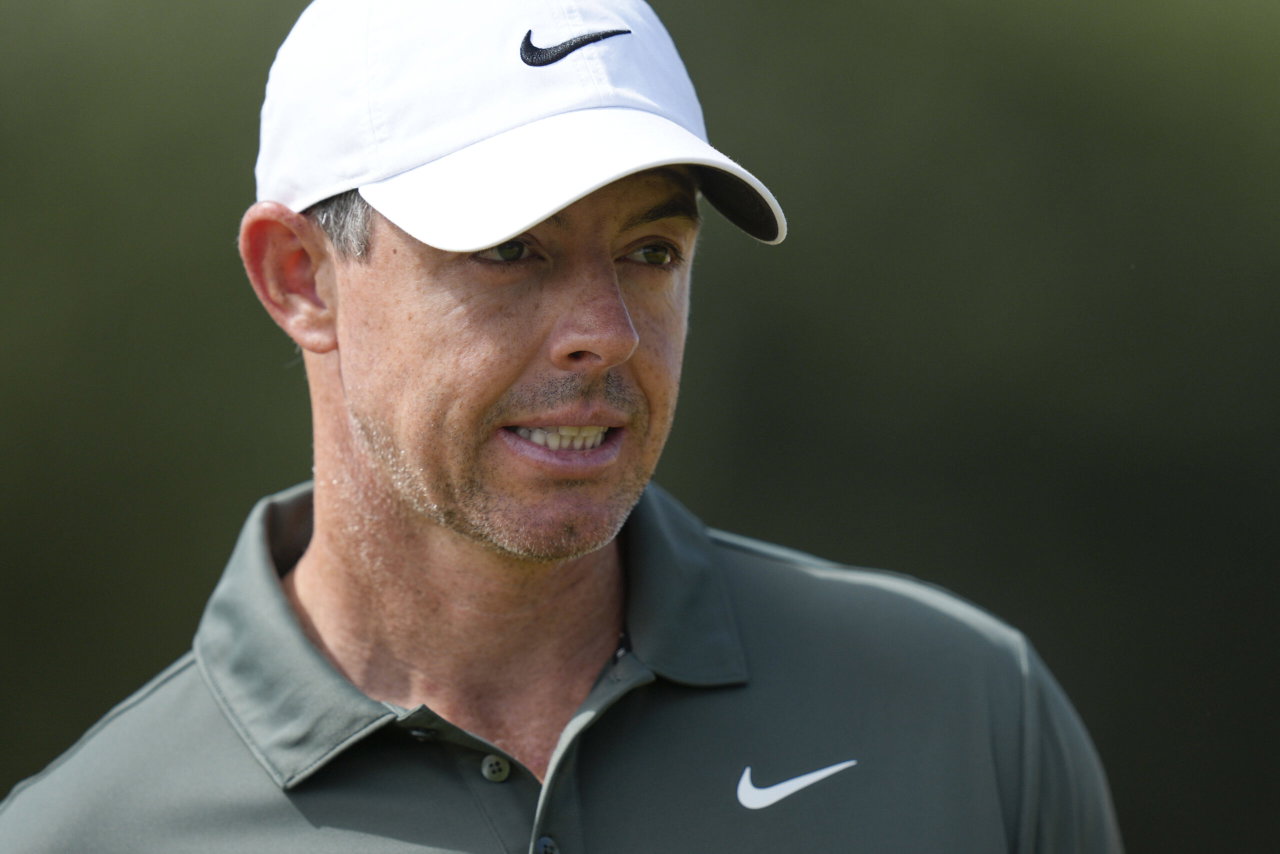
At most golf courses, the driver is a player’s ticket to an advantage. But at Delhi Golf Club, it might be the quickest way to throw away a good round. As the stars prepare for the DP World India Championship 2026, some of the game’s biggest names are considering a rather unusual strategy: leaving their most powerful club untouched.
Watch What’s Trending Now!
Rory McIlroy has admitted driving is his biggest strength, and he has every reason to say so. With an average of 330.3 yards, the Northern Irishman ranks second on the PGA Tour in driving distance.
Similarly, many other strong hitters will play at the DP World India Championship this week, including Ryan Fox (314.8 yards average), Min Woo Lee (322.4 yards), and others. But none of them plan to use their drivers.
The six-time major winner is happy to keep his driver in the hotel room. Ryan Fox has removed it from his bag entirely, while Min Woo Lee is preparing for a week when his biggest strength may have to take a back seat. Patrick Reed, meanwhile, plans to carry his driver but expects it to spend most of the tournament collecting dust.
Their decisions might sound surprising, especially at a venue measuring 6,912 yards. However, Delhi Golf Club (DGC) has a reputation that makes distance a secondary concern.
When British planners and colonial officers mapped the area in the early 1930s, they routed the course through overgrown jungle, thorny bushes, and Tughlaq- and Lodhi-era historical monuments. Its narrow fairways, sharp doglegs, dense trees, and thick rough demand accuracy and patience from players used to unleashing their drivers.
The fear is not about hitting the ball far. It is about what happens when the ball misses its intended target. At DGC, one wayward tee shot can turn a promising hole into a recovery exercise. This makes restraint a sensible strategy, not a sign of weakness.
Rory McIlroy prefers winning over hitting driver
The 30-time PGA Tour winner’s approach captures the field’s dilemma. Few players can match his ability to generate power off the tee, but the Northern Irishman sees little reason to use that advantage at Delhi Golf Club.
Last year, he left both his driver and 3-wood out of his bag at DGC. Instead, he chose longer irons to keep the ball under control. His decision attracted attention because spectators naturally want to see one of golf’s most explosive drivers take on the course with his signature power.
The conversation ahead of this year’s championship suggests his thinking hasn’t changed much. Asked whether the driver might make an appearance given the longer rough, McIlroy recalled a joke from Shane Lowry. Lowry joked that the DP World should write in McIlroy’s contract that he should use his driver at least four times a day in India.
But Rory McIlroy’s response was straightforward.
“I’m here to win the tournament. I’m not here to hit drivers. I think the best chance will be by keeping the driver in the bag or in the hotel room so I’m not even attempting to hit it,” Rory McIlroy said.
For a player of Rory McIlroy’s ability, this is nothing short of a mindset shift. He must resist the temptation to rely on one of his greatest strengths and trust that accurate positioning will create enough scoring opportunities. At DGC, the smartest shot may be the one that leaves a little extra distance for the next one.
Ryan Fox makes a rare equipment change
The reigning Open champion recalled playing aggressively, especially over the weekend, to win the season’s final major. At Royal Birkdale, he used his driver frequently to attack bunkers and gain an advantage. The New Zealander gained 3.18 strokes off the tee across four rounds.
But Delhi Golf Club presents a different challenge because of the thick rough or dense vegetation. The extra distance from a driver may offer little benefit if the ball ends up in a position where reaching the green becomes difficult.
Fox responded by removing his driver from his bag and adding a 2-iron, a club he hadn’t carried since The Open.
“I don’t have a driver in the bag this week, like a fear a chunk guys don’t. Yeah, it’s a placement, control-your-ball-style golf course,” the New Zealander said. “This week is different to that. It is — if you miss a tee shot, you’re hitting it again basically. So there is definitely going to be a measured approach to how to play this golf course. It’s going to be get it in play off the tee for the most part. I would say most guys in the field are going to take this theory.”
He even acknowledged he couldn’t recall playing a tournament without a driver in his bag. He did play a few events where he used the driver rarely, but every course still had a few holes where he could let himself loose. This makes the decision an unusual one even for an experienced professional.
Min Woo Lee faces a test of patience
For Min Woo Lee, DGC presents a mental test.
“No drivers, which is a little bit different to a normal course, but it’s going to test the mental strength this week,” Min Woo Lee said. “Yeah, I guess, I mean, we still have to play golf, so, I mean, it’s not like I’m bad with the other clubs. Again, I just tell myself it’s going to be a test.”
He said that the change might seem straightforward on paper. But repeating those shots throughout a round requires a different kind of concentration.
The thick rough adds another layer of difficulty. Lee described it as the juiciest he had encountered all year, even compared with courses in the United States. During the pro-am, he found himself in lies so difficult that reaching the green became a challenge despite his ability to generate substantial power.
Such conditions leave little room for careless swings. Players must remain committed to their chosen strategy, even when the temptation to take a more aggressive line becomes difficult to ignore.
For him, success will depend on staying focused and trusting the clubs that give him the best chance of reaching the fairway. His ability to hit long drives remains valuable, but DGC asks him to prove he can compete just as effectively when he uses that strength less often.
Patrick Reed will carry his driver, but it may collect dust
Unlike many other professionals who play the DP World Tour event in India, Patrick Reed tried to use the driver during today’s practice match. He used it on the 10th and 18th holes. However, he acknowledged that he kind of “forced” himself to use a driver.
Unlike Ryan Fox, Rory McIlroy, and Min Woo Lee, Reed has decided to retain his driver in the bag. However, his plans for the club suggest it may be largely symbolic during the championship.
“Well, driver is always — yes, driver will stay in the bag. I just wouldn’t have anything to replace it with. I go 3-wood, and I have interchangeable where I go 7-wood or 2-iron. They go the exact same distance, so for me I don’t want to have two clubs in the bag that go the exact same yardage. It’s like, if I do, it’s like, okay, do I want to hit this one or that one,” Patrick Reed said.
“So I’m going to stick with my normal setup. It’s going to look pretty sitting in there, but not be pulled out. That’s fine with me. Just kind of go out there and play the hole with what I feel like is the best way for me to go out there and attack it. Yeah, the driver will get dusty by the end of the week. Just kind of sit in there.”
He even hit a 2-iron off the tee on par-5 holes, followed by a 3-wood toward the green. Such decisions might seem counterintuitive on holes where players ordinarily try to maximize distance, but Reed believes positioning the ball correctly matters more than trying to reach the green in fewer shots at any cost.
He also warned against overswinging. The American professional noted that players who try to hit the ball harder can lose control and send it farther offline. At DGC, that small error can significantly affect the scorecard.
Why Delhi Golf Club makes distance a risk
Rory McIlroy’s decisions and those of others point to the same underlying challenge. DGC rewards players who can control their ball and manage risk, rather than those who rely on power to gain an advantage on every hole.
At 6,912 yards and par 72, the course might appear relatively short by professional standards. Yet its layout changes how players approach each tee shot.
Several factors explain why the driver can become a liability.
Narrow fairways leave little room for error. Players cannot always rely on their usual driving patterns to find a safe landing area. The same goes for thick rough, which makes recovery difficult.
Therefore, patience becomes a scoring skill here. Repeatedly choosing irons and hybrids requires players to accept that they must approach some holes conservatively. The goal is to avoid costly mistakes and wait for opportunities to attack.
Tommy Fleetwood’s 2025 victory offers the same lesson.
Tommy Fleetwood won the 2025 tournament at 22 under par. He finished with a final-round 65, building his success on control and careful course management.
Fleetwood revealed he didn’t use anything longer than a 5-wood during the event. His approach showed that players could win without relying on the driver, even when competing against some of the longest hitters in professional golf.
Delhi Golf Club may be short by modern professional standards, yet its tight corridors and punishing rough test judgment as much as ball-striking ability. Players who accept those demands could gain an edge over those who try to overpower the course.