
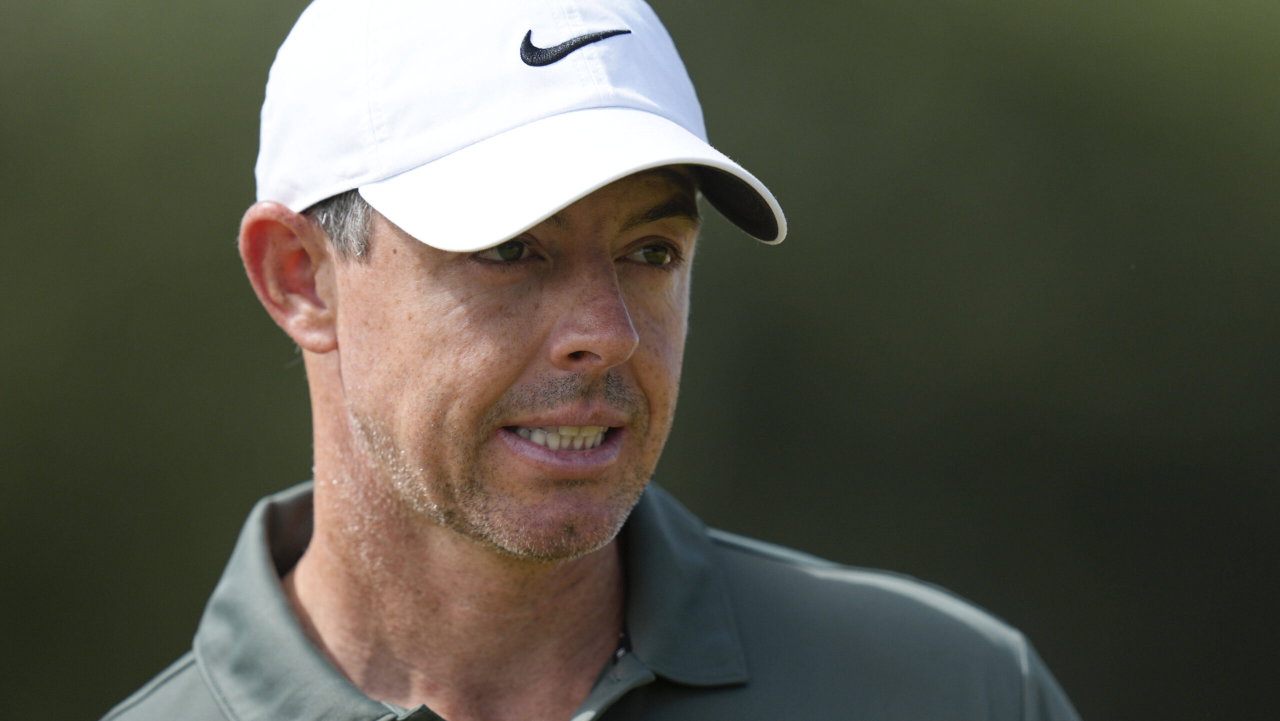
Rory McIlroy had plenty of reasons to celebrate after another historic week in Dubai. The Northern Irishman secured his eighth Race to Dubai title on November 15, 2026, matching Colin Montgomerie’s all-time record. This also extended his winning streak in the season-long competition to five consecutive years. However, while McIlroy’s latest achievement added another chapter to his remarkable career, a closer examination of his final-round performance revealed a familiar concern about his game under pressure.
Watch What’s Trending Now!
On the latest episode of the Talk Birdie To Me podcast, former PGA Tour professionals Nick O’Hern and Mark Allen highlighted what they believe is one of Rory McIlroy’s most overlooked weaknesses. They discussed an increasingly lengthy pre-shot routine when the stakes are high.
The discussion raised an interesting question about the 37-year-old.
“It doesn’t mean you have nine looks. No. Yeah, you can still be nervous and pull the trigger with two or three looks. But this is what the whole point we’re making is, and the point that Nick makes in his books,” Mark Allen said when a fan commented that Rory McIlroy should be allowed to be nervous. “But why would you practice one way and then under pressure do it totally differently? So why in practice would you just have two looks and pull the trigger and then under pressure do something totally differently and have nine?”
McIlroy’s latest Race to Dubai victory was far from straightforward. He entered the season-ending DP World Tour Championship at Jumeirah Golf Estates, trailing Spain’s Eugenio Chacarra in the season-long standings. Chacarra had held the advantage for much of the campaign, setting up a dramatic battle between the two players in Dubai.
Do You Think Jackson Koivun Can Win a Major Next Season?
McIlroy eventually overturned the deficit with a bogey-free final-round 67. He finished second at 10-under par. Although Tyrrell Hatton claimed the tournament title with a five-shot victory, McIlroy’s runner-up finish was enough to put him ahead of Chacarra in the Race to Dubai standings.
The achievement carried considerable personal significance. McIlroy became emotional after securing the title and dedicated the victory to his father, Gerry, who had spent months in hospital and undergone a double-lung transplant.
But the main talking point on Talk Birdie To Me was McIlroy’s final-round pre-shot routine at the DP World Tour Championship. O’Hern and Allen examined footage of the Northern Irishman’s shot and counted how many times he looked towards his target before finally starting his swing.
Their count reached nine.
The number stood out because McIlroy’s routine looks considerably different during practice. According to the discussion, he generally takes around two looks at the target on the range before swinging. It is a quick, athletic approach that allows him to maintain rhythm and react naturally to the shot.
His routine on the course, however, can stretch to five, six or seven looks. In particularly tense situations, that number can increase to eight, nine, or even ten.
O’Hern has repeatedly drawn attention to this difference. He has also discussed the subject on social media, arguing that watching Rory McIlroy use his quicker range routine in competition would be thrilling.
The former world No. 16 believes the extra looks could indicate that McIlroy is becoming too conscious of his decisions before swinging.
Mark Allen agreed with the assessment. He suggested that McIlroy could be leaving some of his natural ability unused because of the additional time he spends over the ball.
However, O’Hern also acknowledged that the longer routine could be for a reason. McIlroy might genuinely feel that taking additional looks helps him manage pressure. If that is the case, the routine could be a conscious strategy rather than a sign that something is going wrong.
Nevertheless, O’Hern wants to see him try the quicker approach at least once under competitive pressure.
What makes O’Hern’s criticism particularly interesting is that Rory McIlroy has previously acknowledged the same issue himself.
After his heartbreaking defeat at the 2024 U.S. Open at Pinehurst No. 2, McIlroy said his pre-shot routine had become longer than usual. He had been leading by two strokes with five holes remaining before missing short putts at the 16th and 18th. This allowed Bryson DeChambeau to claim victory.
Reflecting on the defeat, McIlroy admitted, “I think if anything, I’d say my pre-shot routine got a little bit long. I started to look at the target a few more times over the ball.”
He also explained that he had become too conscious of what was happening behind him instead of staying focused on his own game.
Importantly, Rory McIlroy acknowledged that the problem had started well before the U.S. Open.
“My pre-shot routine got a little long but it wasn’t just that week — I had been feeling that for a while. You will see that before the U.S. Open, in Canada or at Quail Hollow, I was starting to take extra looks.”
The admission suggests the issue isn’t something O’Hern simply identified from watching a few swings. McIlroy himself recognized the pattern and subsequently worked on shortening his routine.
Rory McIlroy’s 2024 U.S. Open and 2026 Open Championship show why the discussion matters
Rory McIlroy’s 2024 U.S. Open defeat remains one of the clearest examples of how pressure can affect his decision-making.
He had an excellent opportunity to end his major drought at Pinehurst, but two missed short putts on the closing stretch proved costly. His bogey at the 16th and another at the 18th allowed DeChambeau to overtake him.
His explanation of taking extra looks at the target added weight to O’Hern’s argument.
The concern resurfaced during the 2026 Open Championship at Royal Birkdale. McIlroy endured a difficult opening round, missing three putts from four feet or closer across the seventh, eighth, and 10th holes. The mistakes contributed to a frustrating start in a tournament where he had hoped to contend.
He expressed his frustration about making too many unnecessary errors, describing them as sloppy mistakes.
There is also an earlier example from 2016. During a difficult stretch that year, Phil Mickelson observed that McIlroy appeared tentative through impact, particularly with his putting.
Mickelson noted the contrast between McIlroy’s powerful, effortless driver swing and the lack of confidence he appeared to show when striking putts.
While these incidents do not establish that an extended pre-shot routine caused every mistake, they illustrate why the subject continues to attract attention. McIlroy has repeatedly demonstrated how effective he can be when he commits to his shots, yet moments of uncertainty have occasionally interrupted that rhythm.
Golf Channel analyst Brandel Chamblee offered another perspective after the 2024 U.S. Open. He suggested Rory McIlroy sometimes seemed to have too many swing thoughts and too many voices influencing his decisions.
Chamblee also questioned whether the amount of information players consume from instructors, sports psychologists and online golf instruction can create unnecessary mental clutter.
His comments were broader than O’Hern’s specific criticism of McIlroy’s target looks, but both arguments point towards the same concern: overthinking can make an otherwise natural golf swing more complicated.