
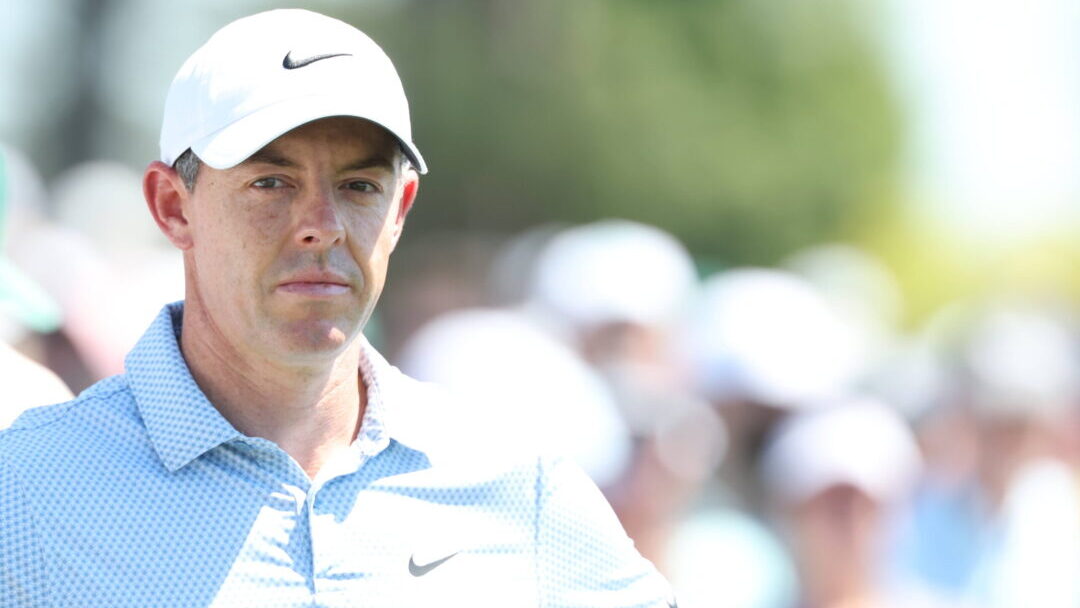
Two green jackets. Six majors. A $4.5 million check from Augusta’s record $22.5 million purse. By any standard, Rory McIlroy has just finished the most successful run of his career. But on Wednesday, standing on the firm, sun-baked ground at Quail Hollow, just three weeks after joining the most elite company in Masters history, McIlroy wasn’t looking back. He was already focused on what lies ahead.
Watch What’s Trending Now!
“I feel like if anything, I’m more motivated after what happened at Augusta this year than I’ve ever been,” McIlroy said at his Truist Championship press conference.
That line is worth reading again. It’s not surprising, but it means a lot. Last year’s Masters win was a release after seventeen years of chasing the career Grand Slam. This year’s repeat was harder to define, and McIlroy explained the difference himself: the 2025 victory was “life-changing,” a goal finally reached after decades of waiting, while the 2026 win was “validation for all the work.” These are two very different mindsets, and only one of them suggests a dominant summer ahead.
In the weeks after Augusta, McIlroy talked about how his goals had changed during an appearance at the Laureus World Sports Awards. He said finishing the Grand Slam was “the destination,” but admitted he needed to rethink his approach.
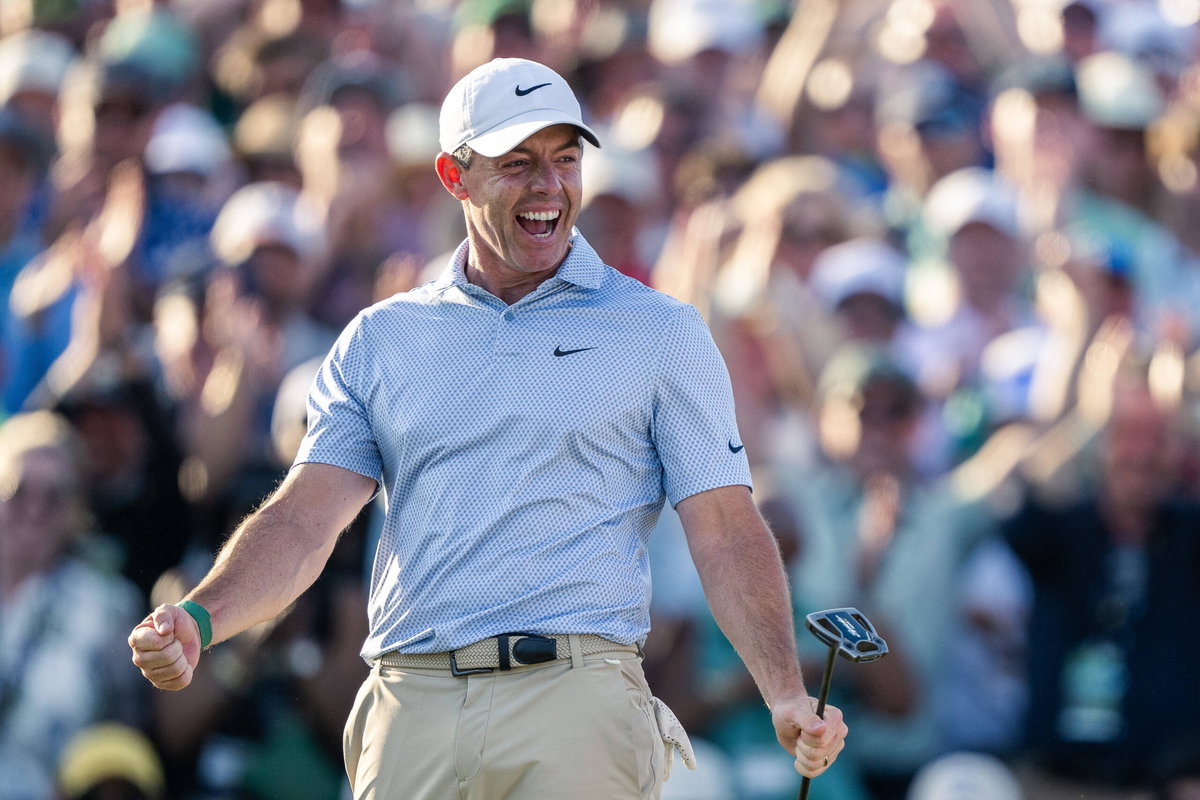
Imago
260412 Rory McIlroy of Northern Ireland celebrates during the final round of the 2026 Masters Golf Tournament on April 12, 2026 in Augusta. Photo: Petter Arvidson / BILDBYRAN / kod PA / PA1196 golf masters bbeng the masters augusta jubel ***
“I’m still competitive. I have a lot left to give. It took me a while, but I had to reframe my goals and think about what’s next?”
The three weeks between Augusta and Quail Hollow were not spent celebrating. McIlroy made a conscious decision to keep his schedule private, avoid media appearances, and focus on rest. This approach is uncommon after a major win, but he chose it deliberately.
“It’s been really nice to spend time at home. It was nice, my parents were in the States, so I didn’t have to fly home and see them. It was nice to just get a little bit of downtime and chill.”
There was one exception. On the Tuesday before Truist, McIlroy attended a State Dinner at the White House. He described it as an ‘amazing evening.’ This was outside the normal routine of a golf season, but he made time for it.
“I gave myself a good 10 days to enjoy myself and then thought it was, you know, I needed to get back on the range and start to practice and get ready for this stretch coming up.”
When McIlroy returned to practice, he worked with his coach, Harry, without using technology, relying only on feel. He identified the adjustment that had led to his strong performance at Augusta, especially from hole five to the second shot on 17. This period was not a break, but a focused effort to reset his game.
He comes to Quail Hollow with a clear mindset, ready for a course that has always matched his efforts. He has won here four times, starting with a course-record 62 in his first PGA Tour win in 2010, when he finished four shots ahead of Phil Mickelson. The greens are firm, and the rough is cut short, making conditions that McIlroy calls a “pure execution test.” He chooses those words carefully, since Quail Hollow does not reward players who scramble. Instead, it favors those who can step up and hit their shots, especially during the final stretch known as the Green Mile.
Since Scottie Scheffler isn’t playing this week, McIlroy has become the player everyone is watching. He’s planned his schedule after the Masters to focus on the next eight weeks, making sure he’s ready for the PGA Championship at Aronimink.
It’s also worth considering how this important stretch will play out for the rest of the players.
Rory McIlroy’s Masters repeat puts him in rare historical company
Of the three men who won back-to-back Masters before McIlroy, two saw the repeat as a starting point, not the end. In 1966, Nicklaus defended his green jacket and also won The Open Championship at Muirfield, finishing his Career Grand Slam at age 26. Nick Faldo, who won in both 1989 and 1990, also took The Open Championship at St Andrews that same year, earning two majors in one season. Both men used their title defense to build momentum.
Tiger Woods stands out as the exception. He won back-to-back Masters in 2001 and 2002, but then went three years without another major. The Tiger Slam era ended rather than continuing. McIlroy has made it clear which path he wants to take.
Next week, he goes to Aronimink, a Donald Ross course where he holds the all-time course record of 62 from the 2018 BMW Championship. He is just one major away from matching Harry Vardon’s European record of seven. The schedule is clear, and his goal is well known.