Imago
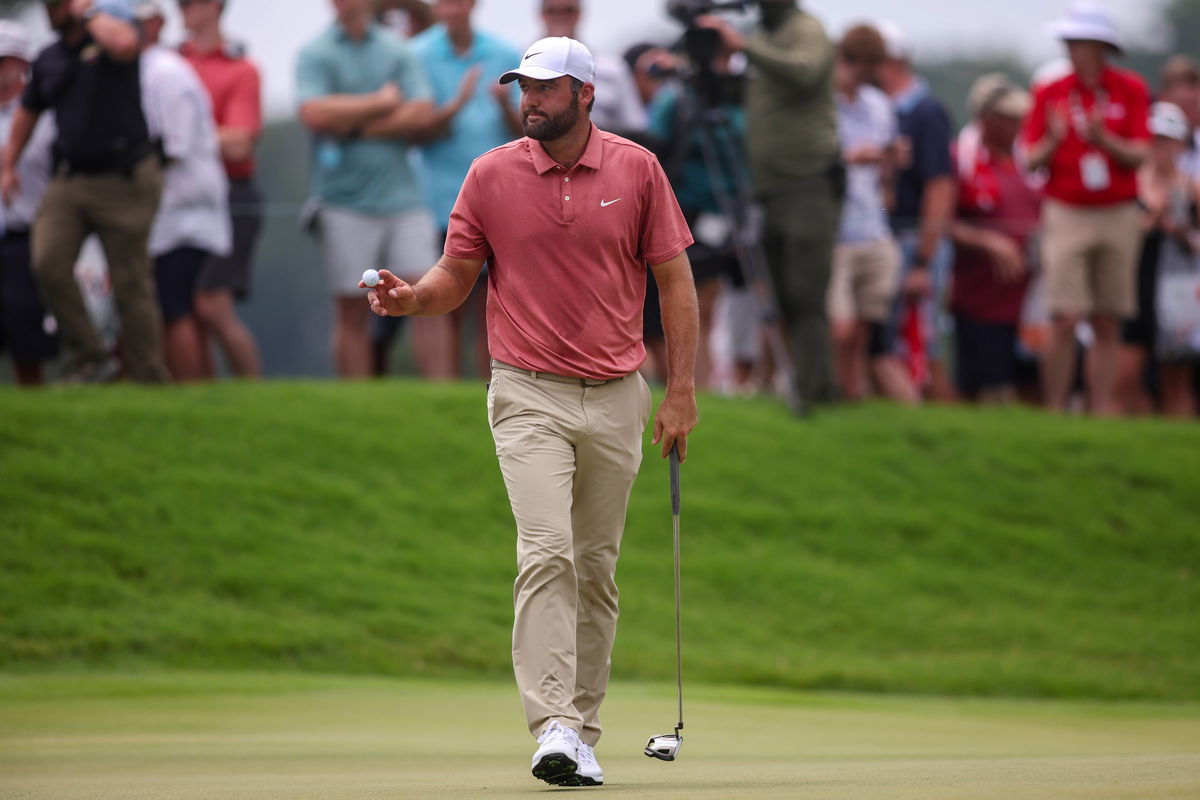
PGA, Golf Herren TOUR Championship – First Round Aug 21, 2025 Atlanta, Georgia, USA Scottie Scheffler reacts after making a putt on the first green during the first round of the TOUR Championship golf tournament. Atlanta Georgia USA, EDITORIAL USE ONLY PUBLICATIONxINxGERxSUIxAUTxONLY Copyright: xBrettxDavisx 20250821_bdd_ad1_094
Imago
PGA, Golf Herren TOUR Championship – First Round Aug 21, 2025 Atlanta, Georgia, USA Scottie Scheffler reacts after making a putt on the first green during the first round of the TOUR Championship golf tournament. Atlanta Georgia USA, EDITORIAL USE ONLY PUBLICATIONxINxGERxSUIxAUTxONLY Copyright: xBrettxDavisx 20250821_bdd_ad1_094
A putting lesson Scottie Scheffler delivered in August 2025 resurfaced on social media this week, and its timing couldn’t be better for golfers heading into the new year with some big goals. The World No. 1 dismantles a misconception that has plagued amateur golfers for generations. The villain isn’t a bad stroke or faulty alignment. It’s the question they keep asking.
Watch What’s Trending Now!
“So what I’ll see from guys a lot in pro-ams is a big breaking putt like this,” Scheffler explained. “They’ll look to me or my caddie and ask how much it breaks. It’s a funny question because it really depends on a lot of factors. I think what most AMs do is they make the mistake of aiming for a spot and then forgetting about the speed. Because if a putt breaks this much, it’s really more about speed than your line.”
There it is. The trap is the reason why amateurs three-putt. Amateurs stand over a sweeping 20-footer, obsessing over inches of break, while the real culprit, speed, goes ignored. Scheffler has watched this scene unfold countless times in Pro-Ams, where weekend golfers rub shoulders with the best in the world and still leave with the same flawed thinking.
Scottie Scheffler goes through his putting process. 💯 pic.twitter.com/qcTHe7i5Ae
— Golf Digest (@GolfDigest) December 21, 2025
The science backs Scheffler’s advice. Golf researchers call it “capture speed”: the velocity at which a ball crosses the hole’s edge. A putt dying at the cup can enter from almost any angle and still drop. The effective diameter expands because a slower ball has time to fall into the gravity well of the hole. Ram it three feet past, and that same cup shrinks to a sliver. The ball must hit dead center, or it will lip out.
Studies from the Journal of Sports Sciences confirm that a putt traveling at optimal capture speed, that is, roughly 1.5 to 2 feet of roll past the hole if missed, has the highest probability of dropping. If it’s too slow, it breaks off early, and if too fast, the margin for error collapses.


Scheffler’s visualization method weaponizes this principle. Where amateurs hunt for a precise spot near the hole, he sees something wider—an area, a zone, a window the ball must roll through.
“So from back here, I’ll look more at the entire putt breaks versus aiming at a spot up by the hole,” he said. “So I’ll look from there, and I’ll kind of get an area of where I think that ball is going to roll through.”
Remember, the distinction matters. A spot is unforgiving. If you miss it by a fraction, doubt floods in. An area offers margin; if you make it too firm, the cup becomes a coin slot, and if you loosen it, the hole opens up like a bucket. Scheffler’s routine reinforces this philosophy. He assesses the slope, reads the grain, visualizes the zone, then feels the last half of the putt—the section where speed determines everything. Two practice strokes. Then execution.
The lesson carries extra weight because Scheffler himself once battled the greens: a journey that transformed him from liability to weapon.
Scottie Scheffler’s putting evolution validates his Pro-Am advice.
In 2023, Scheffler ranked 162nd in Strokes Gained: Putting, while his ball-striking terrorized the field. The disconnect was staggering. A generational talent from tee to green, undone by the flatstick.
The transformation began when he hired putting coach Phil Kenyon after the 2023 Tour Championship. A putter switch followed in March 2024. He started playing with a TaylorMade Spider mallet, and the results were immediate. He won the Arnold Palmer Invitational in the club’s debut week. But the deeper shift was mental.
Scheffler recently disclosed on the Pat McAfee Show that his putting overhaul required patience, not just mechanics.
“Before, when I’d made changes with my putting, I would try it for one week, and if it didn’t work, I’d just move on to the next thing,” he admitted. “And that wasn’t really a good way to get better. You needed to really give it a chance.”
By 2025, the numbers told a different story. His three-putt percentage dropped from 2.8% to 1.4%. He climbed to 22nd in Strokes Gained: Putting—140 spots higher than two years prior. Six wins followed, including two majors at the PGA Championship and The Open.
The lesson he now teaches amateurs mirrors the lesson he learned himself: trust the process, prioritize pace, and stop chasing perfection on the line. So, the next time you face a big breaker, resist the urge to ask how much it breaks. Ask instead: how hard should I hit it?
Related Newsletters