
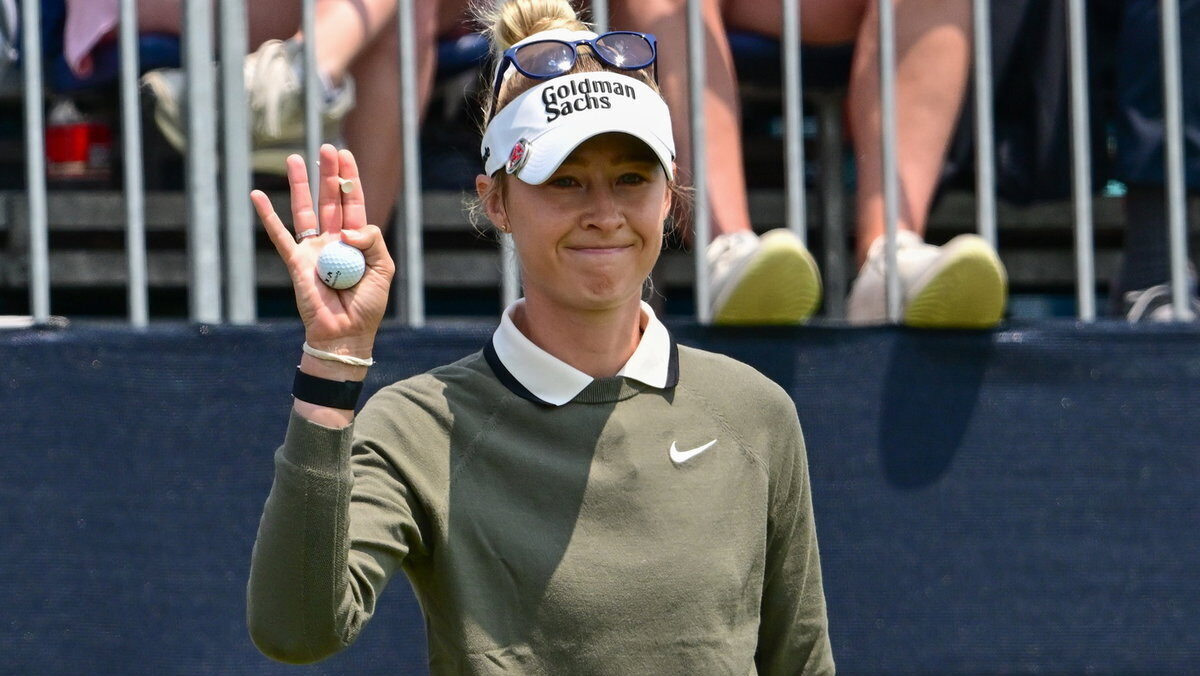
Juli Inkster has seen enough elite golf to understand the difference between talent and temperament. Having won seven major championships, two U.S. Women’s Open titles, and a spot in the World Golf Hall of Fame, she has the experience to know what sets players apart. So when a reporter at the Dow Championship press conference asked her about Nelly Korda‘s latest major win, Inkster didn’t turn to statistics, but she focused on something less tangible.
Watch What’s Trending Now!
“Nelly is very competitive. She wants to be No. 1. Some people don’t want that. Some people don’t want that limelight. She wants that. I think you got to have a little bit of that in you, that you’re not afraid to put yourself out there.”
Inkster’s assessment is notable because it did not begin at Riviera. It started earlier, at a pro-am in Singapore, years before Nelly Korda was a recognized name in women’s golf.
“Funny story is when I was in Singapore, LPGA player rookies had to do a pro-am, shadow a player. Jessica Korda shadowed me for nine holes. So we were talking and I was learning a little bit more about her family. She goes, oh, yeah, my sister is younger than me and she’s way more competitive than me and she’s going to be way better than me.”
What makes the story more interesting in hindsight is that Jessica wasn’t comparing Nelly to ordinary golfers.
Imago
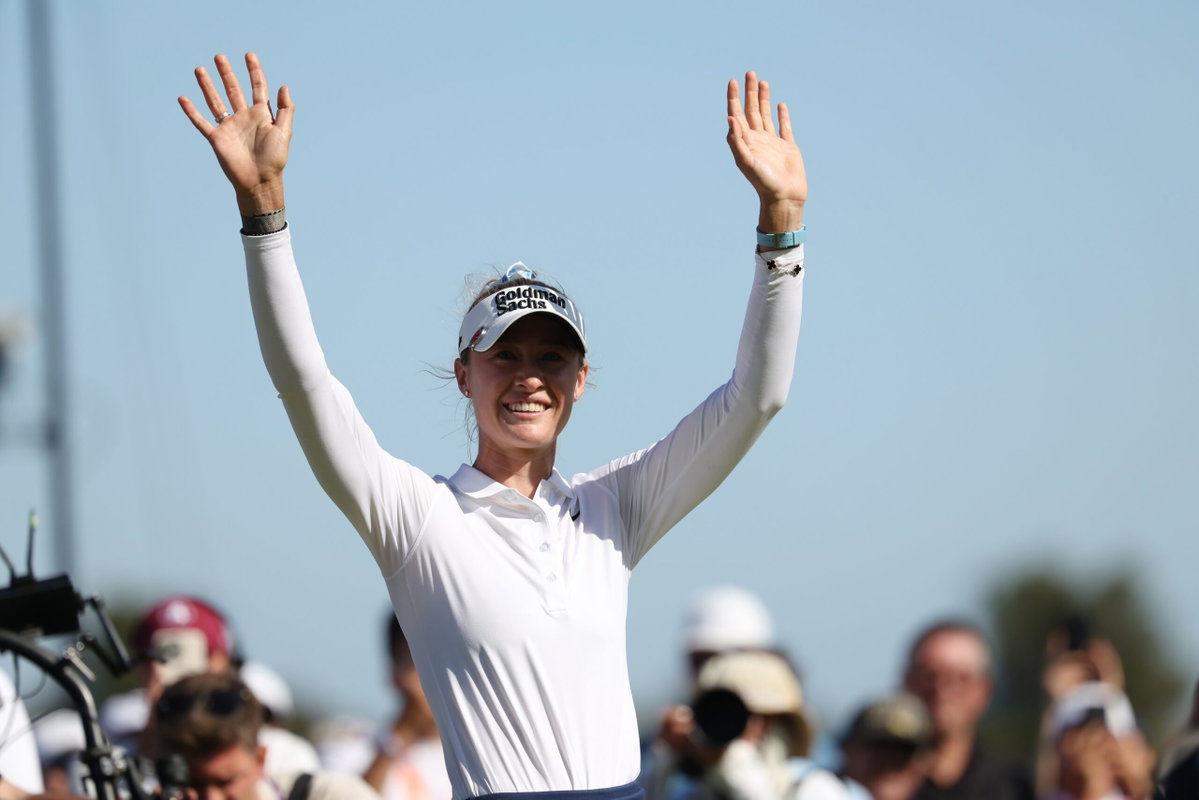
Jun 7, 2026; Pacific Palisades, California, USA; Nelly Korda celebrates on the 18th green after the final round of the U.S. Women’s Open golf tournament at Riviera Country Club. Mandatory Credit: Kiyoshi Mio-Imagn Images
The Kordas grew up in one of sport’s most accomplished families. Their father, Petr Korda, won the 1998 Australian Open, their mother Regina Rajchrtová played professional tennis, and brother Sebastian Korda would later become a top-ranked tennis player. Elite competition was the family business.
That context gives extra weight to Jessica’s assessment. She wasn’t predicting that Nelly would become a good LPGA player. She was telling a Hall of Famer that her younger sister possessed a different level of competitive drive.
Being the top-ranked player means carrying expectations every week, answering for losses, serving as the face of the tour and becoming the benchmark everyone else is chasing. Not every elite athlete embraces that responsibility. Inkster believes Korda does. The evidence is difficult to ignore.
Korda has spent more than 100 weeks atop the Rolex Women’s World Golf Rankings, repeatedly returning to No. 1 even after setbacks. Following a winless 2025 campaign, she opened 2026 with three victories, multiple runner-up finishes and another climb back to the top of the rankings, reinforcing the resilience Inkster was describing.
That competitiveness has never meant Korda is immune to pressure. In previous interviews, she has spoken about learning how to manage expectations during major championships and finding ways to stay relaxed when the stakes rise. The distinction Inkster appears to be making is not that Korda is fearless, but that she continues pursuing the biggest stages despite the pressure that comes with them.
Viewed through that lens, Jessica’s old prediction feels remarkably accurate. She wasn’t talking about swing mechanics or physical talent but personality. Years before Nelly became an Olympic gold medalist, major champion, and world No. 1, Jessica had already identified the trait that would separate her from many of her peers: an unwillingness to settle for anything less than being the best.
Her recent U.S. Women’s Open victory at Riviera Country Club offered another example.
Nelly Korda’s 2026 U.S. Women’s Open: Resilience over dominance
Korda’s victory at Riviera Country Club was not straightforward. She started with a two-over 73, seven shots behind, the largest first-round deficit ever overcome in U.S. Women’s Open history. Two rounds of 67 brought her back into contention. By Sunday, four players were in the mix, including Charley Hull and Gaby Lopez, and the final round can be just summed up with this: One birdie, one putt.
Korda made a nine-foot birdie putt on the 17th to take the lead, then secured her win with a par on 18. This was her fourth major title and her second consecutive major after winning the Chevron Championship in April. She called the week a grind and admitted she did not have her best game. That honesty is more important than the final score.
Inkster closed her Dow Championship remarks with something that felt less like praise and more like inevitability.
“It’s just a matter of time before she gets in the Hall of Fame.”
Korda now has 25 of the 27 points required for LPGA Hall of Fame eligibility. With three majors remaining before the 2026 deadline, time is running out faster than many expect. Inkster has consistently called for the LPGA to grow and give proper recognition to achievements like Korda’s. Her focus on Korda as the example of the sport’s future is telling.
Trophies are simple to count. The qualities Inkster highlighted at Midland Country Club, such as the drive to meet expectations and seek the spotlight, are rare and difficult to maintain.