
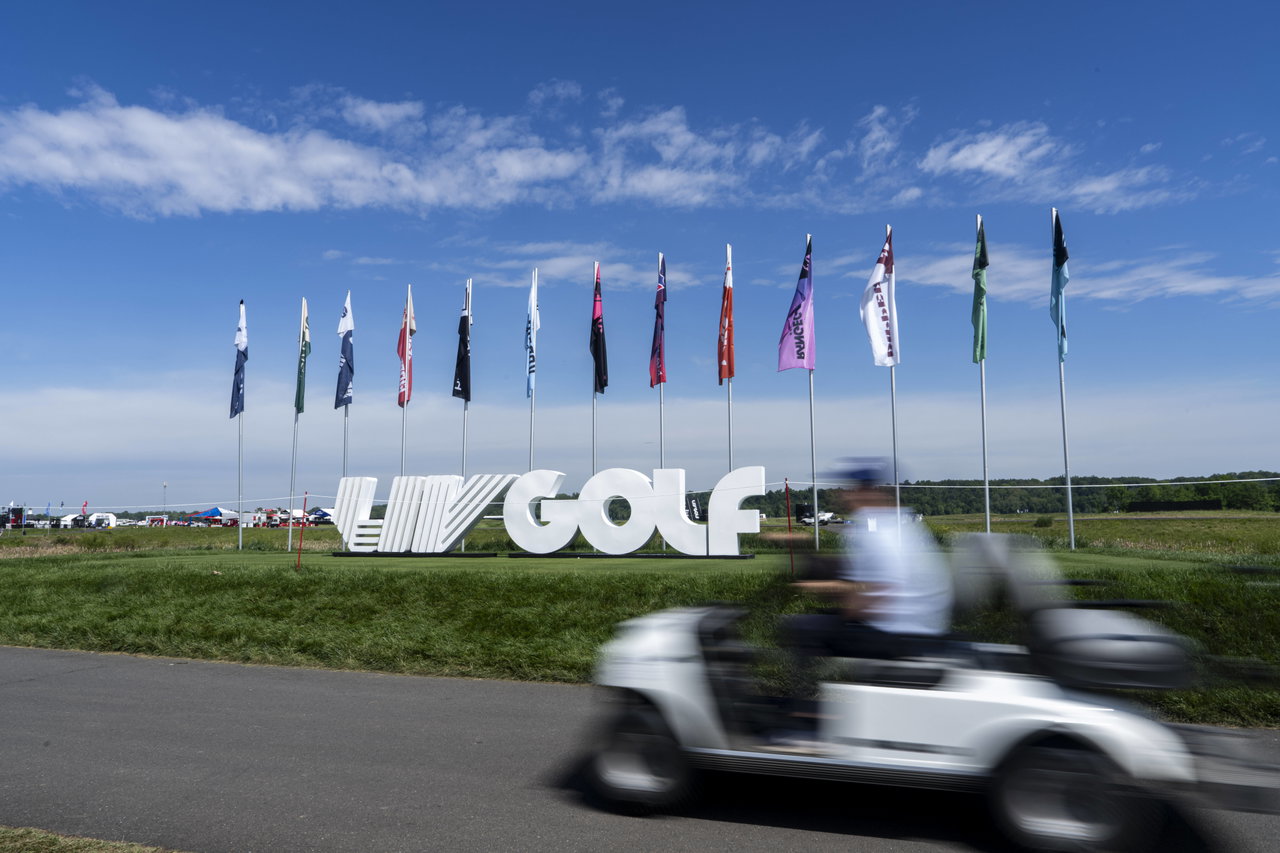
Since PIF announced it would cut ties with LIV Golf, the league has made several attempts to secure financing for 2027. Then came BC Partners with potential $300 million in funding that gave hope for LIV 2.0. But the breakaway league’s ambitious attempt to achieve a second life through a player-owned business model appears to have reached its final chapter. During Thursday’s U.S. Bankruptcy Court hearing in New Jersey, lawyers representing the league reportedly confirmed that the proposed LIV 2.0 would not move forward. This makes a formal wind-down the preferred course of action.
Watch What’s Trending Now!
“LIV AND LET DIE — LIV GOLF TO FORMALLY WIND DOWN. Officially confirmed in U.S. Bankruptcy Court this morning, lawyers for the league say 2.0 will not move forward, marking the end of an era for a tumultuous time in professional golf. LIV Golf’s lawyer: “We believe the wind down path is the best path,” NUCLR GOLF reported in an X post.
The announcement follows the collapse of a proposed financing arrangement with BC Partners Credit. The investment depended on the league securing commitments from a sufficiently strong group of players. But that condition proved difficult to satisfy.
Since its launch in 2022, LIV Golf has received more than $5 billion in financial backing from PIF. However, the withdrawal of its primary backer forced LIV to find alternative funding.
On September 8, 2026, LIV Golf filed for Chapter 11 bankruptcy protection in the U.S. Bankruptcy Court for the District of New Jersey. The league also entered into a restructuring support agreement with BC Partners Credit on the same day.
The proposed LIV 2.0 model represented a significant departure from the league’s original financial structure. Players were expected to collectively hold approximately 52.5% of the league’s equity.
The new competition was also expected to run a reduced schedule of at least 10 tournaments. The restructuring model aimed to put greater emphasis on team golf and adopt a more financially disciplined operating model.
LIV CEO Scott O’Neil had promoted the ownership opportunity as a fresh beginning for players. He described it as a “second bite of the apple.”
However, these changes were not enough to retain the top talent.
The collapse of the BC Partners arrangement appears to have stemmed primarily from uncertainty about the league’s future roster.
Earlier reports suggested that approximately 30 players, including several major champions, were willing to participate in LIV 2.0. However, securing expressions of interest was different from completing the agreements required by the prospective financier.
BC Partners needed a strong enough roster of golfers to establish that the restructured competition could operate as a commercially viable professional golf league.
Time pressure also added to an already complicated situation. BC Partners initially set October 25 as the deadline for players to commit to LIV 2.0.
As the deadlines approached, the proposed rescue became increasingly uncertain. On November 4, reports emerged that BC Partners would not proceed with the planned financing arrangement, leaving LIV without a clear alternative route to relaunch.
A source familiar with BC Partners’ operations told Front Office Sports, “This version is not going to be signed.”
Decisions from several prominent players who had already indicated they would not participate in its proposed next iteration compounded LIV Golf’s recruitment difficulties.
One of the most significant departures involved two-time major champion Jon Rahm. The Spaniard had independently reviewed the proposed LIV 2.0 terms and decided against continuing with the league.
Speaking about a possible return, Rahm indicated that it “wasn’t really ever much of a consideration.”
Other notable players who announced that they would not return included Tyrrell Hatton, Tom McKibbin, Ian Poulter, David Puig, Adrian Meronk, Sergio Garcia, Louis Oosthuizen, and Graeme McDowell.
Bryson DeChambeau, meanwhile, offered a different picture. He was among the most prominent players publicly supporting the idea of LIV 2.0. Many golfers and analysts questioned his decision because no strong competition remained for him.
The uncertainty surrounding LIV 2.0 was not limited to financial negotiations and player contracts. The league also faced an increasingly strained relationship with the DP World Tour.
In October, the DP World Tour indicated that it would bar players who remained with LIV Golf in 2027 from competing on its circuit under the proposed arrangements.
The decision added another consideration for players evaluating their future with LIV.
The reported wind-down is particularly striking given the optimism surrounding LIV’s future only days before the financing arrangement collapsed.
The league had recently announced the appointment of former TaylorMade CEO Mark King as a senior adviser and future chairman of its advisory board. King was set to recruit members and shape the organization’s next phase.
O’Neil had previously described BC Partners Credit head Ted Goldthorpe as a “white knight.”
These developments suggested that LIV was actively preparing to establish a more sustainable business model. The failure to secure the required player commitments undermined those plans. But BC Partners has reportedly stated that it is not completely out yet.