Imago
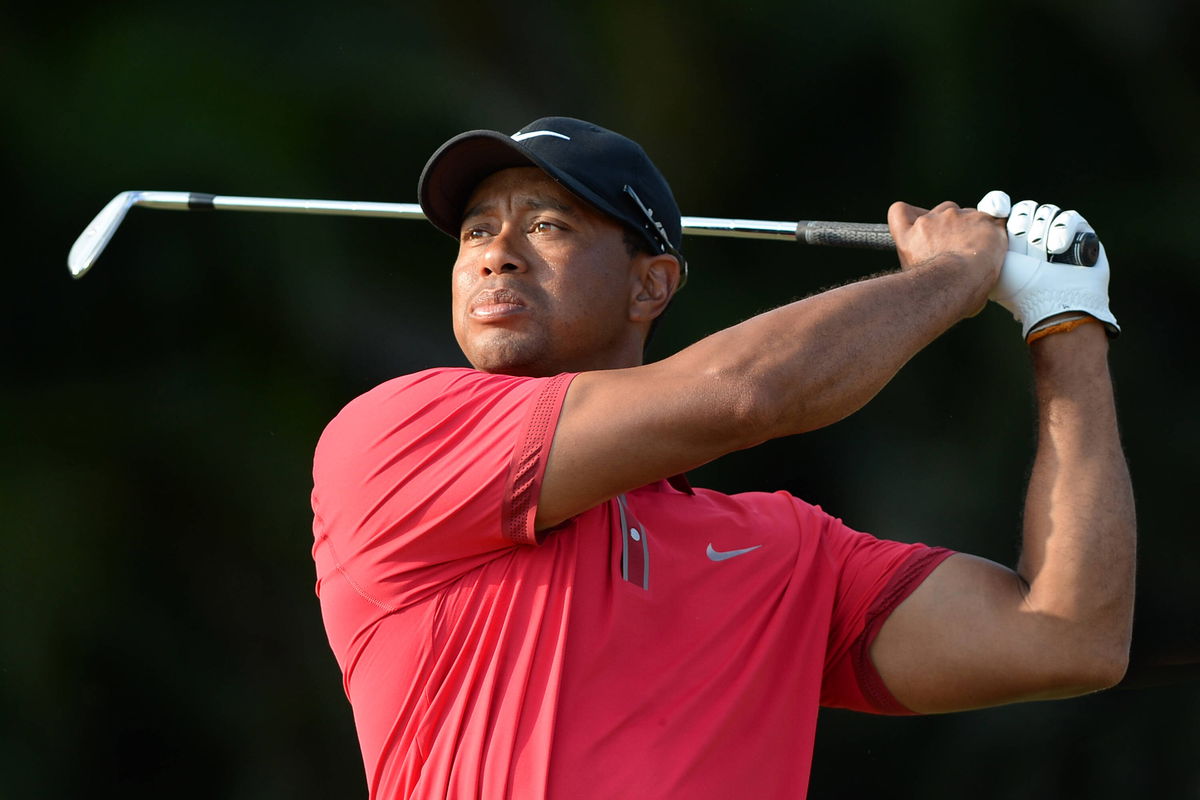
**FILE PHOTO** Tiger Woods and Nike End 27 Year Partnership. DORAL, FL – MARCH 9: Tiger Woods participates during the final round of the World Golf Championships-Cadillac Championship at Blue Monster, at Trump National Doral, on March 9, 2014 in Doral, Florida. Copyright: xmpi04/MediaPunchx
Imago
**FILE PHOTO** Tiger Woods and Nike End 27 Year Partnership. DORAL, FL – MARCH 9: Tiger Woods participates during the final round of the World Golf Championships-Cadillac Championship at Blue Monster, at Trump National Doral, on March 9, 2014 in Doral, Florida. Copyright: xmpi04/MediaPunchx
Your swing changes more often than you’d like. It’s not a lack of talent; it’s a lack of consistent fundamentals. But don’t worry, we’ve got you covered. You can improve it from your living room—no need to go outside. Here are the five drill tips that will help you in doing so:
Watch What’s Trending Now!
Drill #1: Distance from the ball
Everyone knows how precise Tiger Woods is when he sets up. You could achieve this, too. Woods is around 2 to 3 inches farther from the ball with a driver than with irons. This level of accuracy sets apart people who hit the ball consistently from those who don’t. Woods doesn’t have to guess how far he is; he knows exactly how far he is with each club.
Danny from the YouTube channel Hack Motion explains: “A good setup position is what we’re looking for; typically, for anyone that’s trained in the gym, a deadlift analogy is quite a good one.”
Start with good posture, then perform “just that first move you’re doing in a deadlift where you’re just cracking the knees” to create natural knee flex. Let your arms hang underneath your shoulders. Maintain about a hand’s width between your thighs and the grip end. Then, make a T-shape on the ground using two alignment rods. Put your ball about the same distance from the perpendicular rod as the head of your club. Tape down three spots: your six-iron, your highest wedge, and your driver. These reference points take the guesswork out of it. You won’t ever blame the distance of the setup for bad strikes again.
Once your setup is dialed in, the next step is perfecting where your body needs to be at the moment of truth.


Drill #2: Impact fix
The next tip will help you achieve another golfer’s strength, and it’s that of the legend Rory McIlroy. He is pretty efficient at impact because he moves his hips aggressively. McIlroy’s body is tilted away from the target by a huge 34 degrees at impact. This creates the best conditions for power transfer, something amateur golfers rarely experience.
The drill is all about “understanding simply what the difference is between setup and impacts.” For example, setup impact would be the hips opening a little bit, putting pressure forward, and having a beautiful little bit of shaft lean. Set it up how you usually would. To get into the impact position, widen your hips a little, move your weight forward, and lean your hands and shaft forward.
“Set up impact, little backswing, and just train where you want your body to be at impact.” Start with half swings and work your way up to full speed. And that’s how you’re teaching your body to remember and repeat the position that makes perfect strikes. It’s just muscle memory.
With impact sorted, controlling where the ball starts becomes your next weapon.
Drill #3: Clubface control
Think of clubface control, and Jon Rahm’s name will pop up. Reason? He keeps the face square during the first few feet of the swing to keep control of the clubface. Rahm’s bent lead wrist at the top keeps the clubface closed, which makes his hands move passively through impact, resulting in straighter shots.

Imago
Estrella Damm N.A. Andalucia Masters 2024 Jon Rahm ESP on the 9th tee during Round 4 of the Estrella Damm N.A. Andalucia Masters 2024 at Club de Golf Sotogrande, San Roque, Andalucia , Spain. 20/10/2024. Picture Thos Caffrey / Golffile.ie All photo usage must carry mandatory copyright credit Golffile Thos Caffrey San Roque Club de Golf Sotogrande Andalucia Spain Copyright: xThosxCaffreyx *EDI*
If you don’t have a launch monitor, use your net. Mark the line that shows your target. Now for the lesson: “Can you start some on purpose to the left of that from a normal setup?” and see where it hits. Then, on purpose, start one right. This way, you’re showing your hands how to make the ball fly in different ways.
You need to teach your hands how to change the angle of your face. If you hook, practice shots that start right. If you slice, practice how it feels to close your face. This helps you learn how to change the clubface when you need to on the course.
Now that you control direction, let’s ensure you’re actually hitting the ball first.
Drill #4: Low Point Control
Hitting the ball before the ground creates that crisp contact you hear on Tour. Spray a line onto your mat or use masking tape. Place the ball just on the target side of that line. Without a ball first, make practice swings. As Danny explains in his video, “You’re trying to land the club just right after that line, just getting that club to land at the right spot.” The goal is to hit the lower quarter of the ball before the club enters the ground.
Mats are easy to work with. You can hit behind the ball a lot and still get good results because of the bounce effect. That’s why this drill is important: it shows you your real low point. First, practice without a ball to see where the club goes. Then take some pictures and look at the spray pattern. Pure strikes don’t cause much spray disturbance.
With crisp contact mastered, it’s time to unlock the secret to effortless power.
Drill #5: The toilet roll drill for lag
The YouTube channel The Art of Simple Golf shows how to easily release your golf clubs, which might give you quick lag and explosive distance with your driver and all your clubs. You don’t need to think about your swing difficulty. All you need is a toilet roll and your golf club to find the precise release point and add 30 yards or more to your drives.
Thread a toilet roll through the end of your grip so it slides freely. The roll becomes instant feedback, showing exactly where you’re releasing energy in your downswing. “I just want you to have the goal, the objective, the intention to release the toilet paper, the toilet roll as we get to here” (at or after impact). If you cast early, the roll slides down too soon.
“When we have that intention to have the arms sort of straighter and to release more this way by this like after-impact sensation, it creates this whip, this release, and it’s just effortless power.” When you feel the toilet roll releasing at the right moment, you’ll understand what “effortless power” actually means. No strength required. Just timing.
Don’t let your winters go to waste. Practice it daily, and voila, you’ve got your perfect swing!
Related Newsletters