Imago
PACIFIC PALISADES, CA – FEBRUARY 19: Dustin Johnson hits from the sixth hole tee during the third round of the Genesis Open golf tournament at the Riviera Country Club on February 19, 2017. (Photo by Brian Rothmuller/Icon Sportswire) GOLF: FEB 19 PGA Golf Herren – Genesis Open – Third Round PUBLICATIONxINxGERxSUIxAUTxHUNxRUSxSWExNORxONLY Icon17021901 Pacific Palisades Approx February 19 Dustin Johnson Hits From The Sixth Hole Tea during The Third Round of The Genesis Open Golf Tournament AT The Riviera Country Club ON February 19 2017 Photo by Brian Rothmuller Icon Sports Wire Golf Feb 19 PGA Golf men Genesis Open Third Round PUBLICATIONxINxGERxSUIxAUTxHUNxRUSxSWExNORxONLY
Imago
PACIFIC PALISADES, CA – FEBRUARY 19: Dustin Johnson hits from the sixth hole tee during the third round of the Genesis Open golf tournament at the Riviera Country Club on February 19, 2017. (Photo by Brian Rothmuller/Icon Sportswire) GOLF: FEB 19 PGA Golf Herren – Genesis Open – Third Round PUBLICATIONxINxGERxSUIxAUTxHUNxRUSxSWExNORxONLY Icon17021901 Pacific Palisades Approx February 19 Dustin Johnson Hits From The Sixth Hole Tea during The Third Round of The Genesis Open Golf Tournament AT The Riviera Country Club ON February 19 2017 Photo by Brian Rothmuller Icon Sports Wire Golf Feb 19 PGA Golf men Genesis Open Third Round PUBLICATIONxINxGERxSUIxAUTxHUNxRUSxSWExNORxONLY
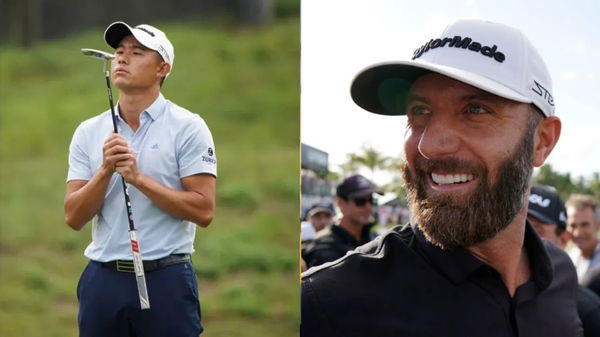
Have you ever seen a golf ball curve gently like a bird in the sky? This is called a fade. Most amateur golfers struggle with a slice that goes way too far into the deep trees. But professional golfers such as former major champion Dustin Johnson and Collin Morikawa love to use this special technique to make their ball dance in the air like a bird taking turns in the sky and land their balls on the green flawlessly. You can improve your game by following the simple lessons from these two greats of the game.


The secret of picking a start line and aiming left
Watch What’s Trending Now!
You start the first big secret by changing how you stand and where you aim. Dustin Johnson likes to stand with his feet pointing toward the far left side.
“I aim down the left side, and I kind of aim where I want it to start.”
This simple setup gives the golf ball plenty of room to curve back home, and the geometry makes the swing follow the feet and hips, producing a gentle out-to-in path. Amateurs often aim too far left and then steer, creating a harsh slice or pull. Instead, pick an aim point where you want the ball to start and trust the peel. Move the ball slightly forward to catch the arc after the low point of your swing. Open your stance a touch so your hips can clear and lead the rotation naturally. Morikawa sums it up neatly.
“I aim where I want it to start and then let it peel.”
That cue shifts attention to the start line and removes fear of going left. Practice by picking a start dot on the range and hitting ten balls to it. Legendary Jack Nicklaus used this same idea to hone their skills and believed that eliminating one side of the course makes the game much easier.
Control the club with a bowed wrist
While the setup starts the path, the wrist is what keeps the clubface in total control. Dustin Johnson is famous for having a very bowed wrist at the top of his swing. Collin Morikawa noticed this move and asked why they both have such a strong and funny wrist. They do not even think about it because it just happens when they move their arms.
“Some people think we purposely bow it. No! To try and get it, but like if you asked me to bow my wrist, I wouldn’t even know how to do it,” Morikawa said.
DJ agreed to that, saying, “Yeah, I don’t know either. That’s just how I swing.”
A bowed wrist helps the player keep the clubface from turning over too fast at impact. Many people think they should have a cupped wrist, but that makes the ball slice too much.
“Impact our wrists are still forward, similar to how we are in the back,” they explained.
This allows them to turn their bodies as fast as they want toward the target. It removes the need for lucky timing with your small hands during the fast swing.
Imago
Image Credit: IMAGO
Learn to play your misses like a pro
While your technique is vital, you must also master the mental side of golf. The final tip is about teaching us how a miss can become a safety net rather than a disaster because the pros always prepare for their tiny mistakes. Johnson shared that his worst miss is a ball that goes straight to the left. He calls this a straight pull, and it happens when his rhythm is not very good.
“It’s all about playing your misses right, not your good shot, because everyone hits good shots,” DJ said.
That mindset lets you swing freely and avoid the two-way panic of hooks and slices. The pros also understand how hitting the ball on different spots changes the flight. Johnson says his miss when swinging well is usually a low heel shot. So if he catches one on the toe, the ball actually goes dead straight. Morikawa admits he often misses on the toe but still hits a nice cut.
Now, how will you improve your game?
Practice two-shot outcomes: center contact fade and toe contact straight ball on the range. That drill trains your brain that both common misses can still find fairways under pressure.
Related Newsletters