
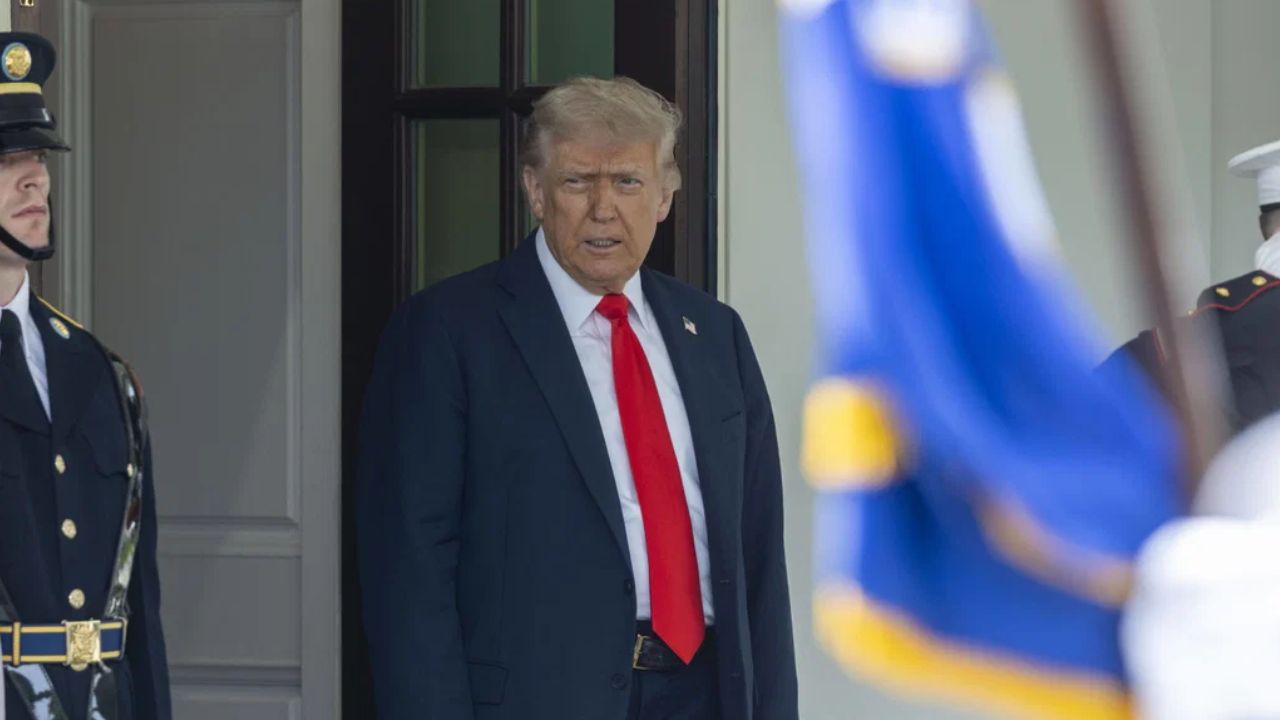
The legal fight over East Potomac Links has taken a sharp, ironic turn. Last week, U.S. District Judge Anna C. Reyes told a courtroom that she had trusted the government not to do exactly what it did: cut down hundreds of trees at a public golf course while her court was still weighing whether the project should proceed. But now, days later, that same government is asking that she no longer be the one to decide what happens next.
Watch What’s Trending Now!
According to MEAWW, the Justice Department filed a motion on Friday, October 16, asking Reyes to recuse herself from the lawsuit over the planned overhaul of East Potomac Links.
Government lawyers cited her conduct at Monday’s hearing, calling it “nothing short of egregious.”
The lawyers argued, “Judge Reyes’s conduct rises to the level of deep-seated and unequivocal antipathy toward the Trump Administration…The Trump Administration is entitled to a neutral forum and an adjudicator who is capable of maintaining the appearance of impartiality. Judge Reyes has demonstrated she cannot do that.”
A second motion followed hours later, in which the government asked Reyes to lift her order blocking further tree removal, arguing that the court had overstepped. That filing also revealed the larger scale of the work. The National Park Service now estimates that about 729 trees could ultimately be removed, roughly 200 more than the 529 initially identified, with about 300 still standing.
Who Asked to Cut the Trees?
To understand how the case got here, it helps to look at the backstory. East Potomac Golf Links is a public course built between 1918 and 1923 in a park listed on the National Register of Historic Places. Notably, it is not Donald Trump’s property. Instead, it belongs to the federal government and is managed by the National Park Service, which falls under the Interior Department.
That said, POTUS has other plans for it. After the administration ended a 50-year lease held by the nonprofit National Links Trust, Trump toured the course with architect Tom Fazio and said it would one day host the U.S. Open, the Ryder Cup, and the PGA Championship. Golf Digest has reported that he sees it as a future major championship venue. The administration says the course will remain open to the public, although reports have raised questions about the plans.
As Trump seeks to redesign the course to fit his vision, local golfers and D.C. preservation groups have sued, arguing that the project violates environmental and historic preservation laws.
Adding to those concerns, debris from the White House East Wing demolition was reportedly dumped at the site. The Park Service later found that it contained lead and chromium. Following these developments, Reyes ordered the government in May to provide notice before carrying out any major work—a requirement she later said had been breached.
Now, let’s look at the hearing that brought the dispute to a head. On October 6, the Park Service told the court it planned to carry out routine maintenance, including removing dead or hazardous trees. Officials also said the work was unrelated to the proposed redesign and would take place regardless of Trump’s plans.
However, on October 9, it disclosed a plan to remove about 529 trees over the holiday weekend. Crews were seen cutting trees that weekend, prompting the preservation league to seek an emergency order. Judge Reyes held an emergency hearing on Monday, October 12. By then, Justice Department lawyer Marisa Piropato told her that about 430 trees had been cut down.
Reyes was reportedly furious and demanded answers about why she had not been notified when the number of trees being removed exceeded the permitted threshold of 10. She also reprimanded government lawyers during the hearing, making several pointed remarks, some of which the Trump administration is now using to argue that she should be removed from the case.
Judge Reyes’ Comments on the Lapse
“I trusted you all not to do precisely what you have done,” she said, according to UPI. When government lawyers said they had not known the details, she responded that ignorance was not an excuse.
She continued to demand answers and questioned the government’s credibility. Reuters reported that she said the episode “has cost the government all of its credibility.”
Regarding the notice requirement she had imposed, she asked, ‘On what universe did anyone in your office think that was acceptable?’
When lawyers said they had done their best to inform her about other changes, she replied, “You did not do your best. You did your absolute worst.”
Reyes also said she had no faith that the tree cutting would stop without an order because “the government can’t be trusted.”
On Tuesday, Reyes further barred tree removal through October 26. ESPN reported that her written order concluded that officials had rushed the work because “President Trump demands haste with his redesign.” She also told the court, “I do not speak for the trees. I am the judge.”
For now, Reyes has scheduled a hearing for October 19 and ordered senior Interior Department and Park Service officials to testify in person. The order halting tree removal remains in effect through October 26 unless extended, while the government’s motions remain pending.