Imago
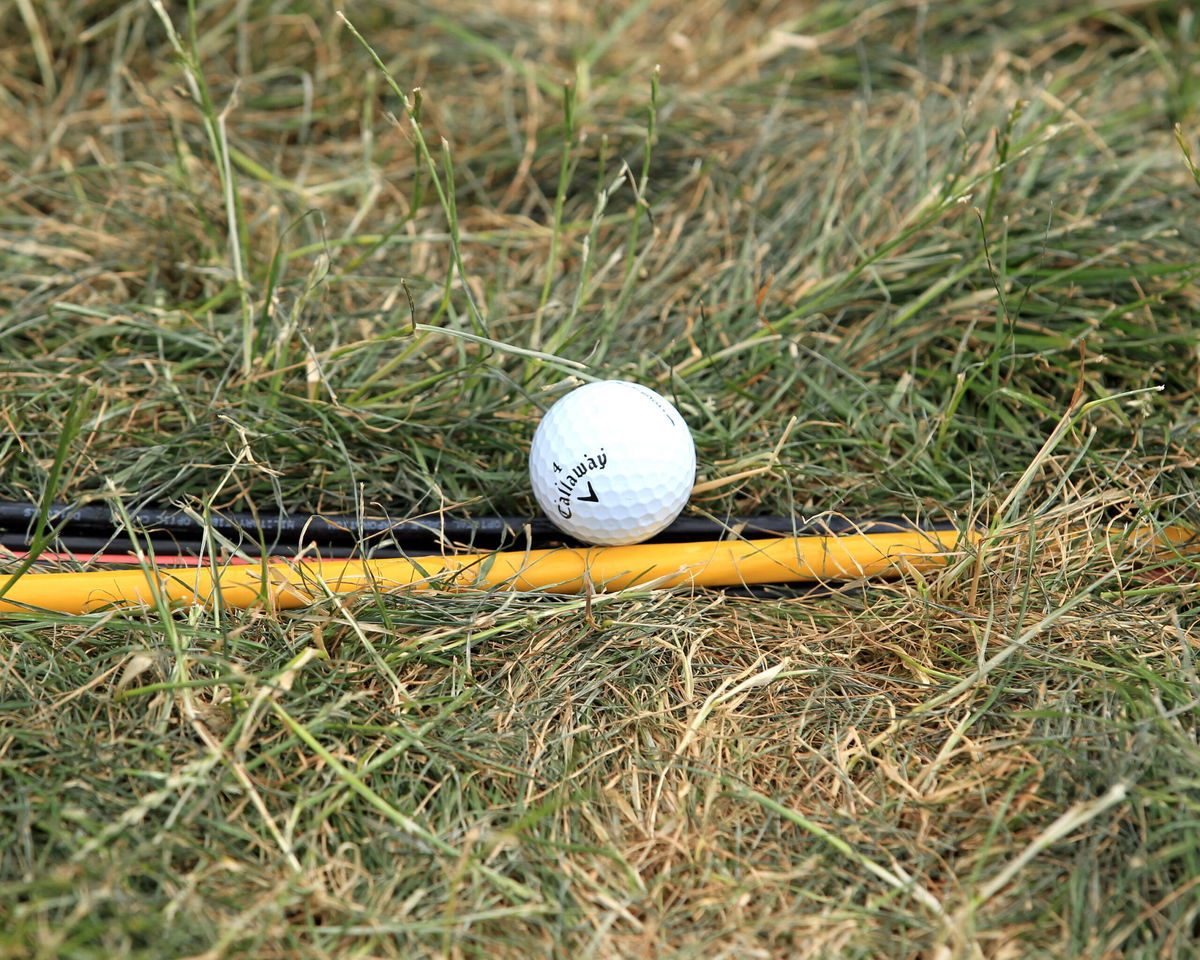
USGA: 110th US Open JUN 20 June 20, 2010: Phil Mickelson gets a USGA Official to rule on this ball lie on the 15th fairway, Mickelson would hit the ball from that lie on top of the wires, during the second round of the 110th US Open at Pebble Beach Golf Links, Pebble Beach California. Jeff Trouette/CSM.Credit Image: Â Jeff Trouette/Cal Media Pebble Beach California U.S. EDITORIAL USE ONLY Copyright: xx ZUMA-20100620_zaf_cj3_017.jpg JeffxTrouettex csmphoto341244
Imago
USGA: 110th US Open JUN 20 June 20, 2010: Phil Mickelson gets a USGA Official to rule on this ball lie on the 15th fairway, Mickelson would hit the ball from that lie on top of the wires, during the second round of the 110th US Open at Pebble Beach Golf Links, Pebble Beach California. Jeff Trouette/CSM.Credit Image: Â Jeff Trouette/Cal Media Pebble Beach California U.S. EDITORIAL USE ONLY Copyright: xx ZUMA-20100620_zaf_cj3_017.jpg JeffxTrouettex csmphoto341244
Mike Austin‘s impressive 515-yard drive in 1974 raised eyebrows regarding setting a ceiling on golfers’ shot distance. Bryson DeChambeau‘s 2021 Arnold Palmer bunker shot made the ceiling inevitable. Three years ago, in 2023, for this very reason, the golf ball rollback was planned. But as the date inches closer, a twist might add a delay.
Watch What’s Trending Now!
In a letter released on January 16, the USGA and the R&A said they are reconsidering the timeline for the updated Overall Distance Standard (ODS) for golf balls. Earlier, the elite competitions would adopt the new standard by 2028. Recreational golfers, on the other hand, were expected to do the same by 2030. But now, there’s a possibility of a single, unified global switch that may come in January 2030.
“During this engagement, several stakeholders have expressed concerns over the potential challenges that could come from the two-phase approach to implementation,” the letter stated regarding the reason for such an update.
ADVERTISEMENT
USGA, R&A consider shifting golf ball rollback dates https://t.co/r7OyCtIDa3
— Golfweek (@golfweek) January 21, 2026
After nearly two years of stakeholder engagement, the governing bodies are questioning whether the two-phase implementation might bring more chaos than solutions. Hence, they’ve opened a consultation period that will run through February 15. After this, the organizations are expected to make a final call.
But what ‘chaos’ are they skeptical of? While there are already looming questions, this time the issue is logistics. Revising the rule requires the manufacturing of a new set of balls. This is where the problem arises.
ADVERTISEMENT
If the organizations follow the two phases simultaneously, it can create widespread confusion for stakeholders.
- For instance, the manufacturers would be burdened with overlapping products. These would include the newly designed balls to meet the revised requirements, and also the existing balls for players who will be switching in 2030.
- Retailers, too, would find themselves in a spot. They would be selling golf balls that are legal for one party and illegal for another.
- Golfers will also wonder if a particular golf ball is accepted in a certain event, increasing the risk of penalties and fines.
ADVERTISEMENT
That’s why a single implementation date makes much more sense. These issues have surfaced after officials received several industry feedback sessions. Following the lead, more feedback is being welcomed, so no such loopholes remain as the rollback date inches closer.
But there is a cost of clarity that would cloud this. As golfers have been scoring massively, officials have been stretching the championship venues beyond their architectural intent. This stretch often comes at the expense of strategy, sustainability, and cost. Courses like St Andrews face the risk of turning obsolete. Now, if the phaseout takes place in 2030, the Tour officials will have to manage this pressure longer.
For now, nothing has changed. The only question is whether the transition should happen in stages. But whenever that happens, it will surely change the game, something that many believe.
ADVERTISEMENT
Top Stories
Phil Mickelson Has the Last Laugh After PGA Tour Protege Rejected His LIV Golf Offer

Scottie Scheffler Takes Side With Blunt 12-Word Message Days After Brooks Koepka’s Return Announcement

‘Disturbing’ Fake Messages Force Amanda Balionis to Issue Urgent Warning

After Jon Rahm’s Defiant Act Against $3M Fine, Tommy Fleetwood Makes DP World Tour Stance Very Clear

Dustin Johnson Sends Subtle Warning to Scottie Scheffler and Co. After Re-Signing With LIV Golf

The ultimate game changer for golf
As per the rule change, to test the ODS, a clubhead speed of 125 mph will be used with fixed launch angles and spin conditions. During that test, the balls must not exceed 317 yards of carry. If that happens, the ball becomes non-conforming.
Once this update comes, the longest hitters in pro golf might lose 13-15 yards. For the average golfer, it would be a reduction of 9-11 yards, and for the LPGA pros, a loss of 5-7 yards. For many golfers, this would be a significant blow, but the rollout of the update in 2030 will further worsen the situation.
ADVERTISEMENT
If the revision takes place in 2028, pro golfers will get time to align their equipment with the stated goals. This allows them to stay prepared. But on the contrary, many golfers also doubt whether such a revision will bring in incoherent changes.
“By the time we play these balls in 2028, there’s not going to be a difference,” Rory McIlroy said a few weeks back. “The difference is going to be so marginal that it’s not going to make a difference.”
He believes that changing the golf ball is a good start, but there should be a complete overhaul of the equipment for such a revision to make sense. The Northern Irishman’s longest recorded drive was 436 yards at the 2014 Aberdeen Scottish Open.
ADVERTISEMENT
“If the golf industry as a whole is serious about this, we’ve got to approach this from a lot of different angles and not just from the golf ball,” McIlroy noted.
ADVERTISEMENT
ADVERTISEMENT
ADVERTISEMENT
Related Newsletters