
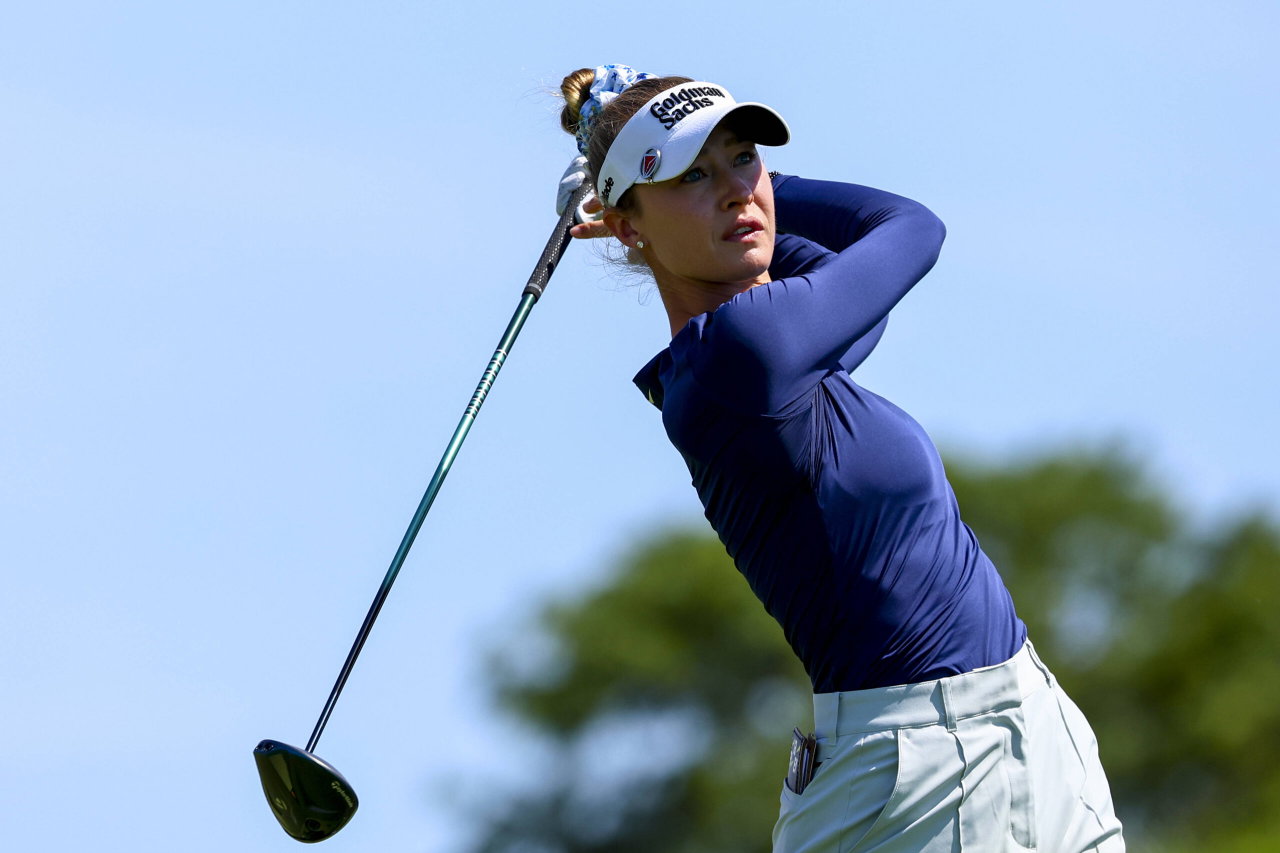
Angela Stanford knows exactly what it feels like to walk into a Solheim Cup carrying a target on your back; she’s done it as a player, a vice captain, and now, for the first time, as the person running the whole show. So when she sat down with Gary Williams on the 5 Clubs podcast ahead of Team USA’s trip to the Netherlands, her message about World No. 1 Nelly Korda wasn’t just captain-speak. It came from someone who’s lived both sides of that pressure.
Watch What’s Trending Now!
Stanford didn’t dodge the subject. Asked about her approach to pairings and Korda’s role on the team, she was blunt about wanting to protect her best player from an expectation that, in her view, does more harm than good.
“I think we put so much pressure on these players. This is a team function, this is a team event,” Stanford said. “We want Nelly to be Nelly, and that’s it. I’m not asking more of her. I’m not asking less of her. I just want Nelly to be Nelly, and I want her to enjoy the week.”
Stanford’s view matters because she knows what it is like to play for Team USA. In six appearances, she went 3-3 as a team and had an individual record of 4-13-3. Those numbers do not look like superstar stats. But in 2015, Stanford beat Suzann Pettersen in singles and secured the last U.S. victory on European soil. That is the same goal this year’s American team is chasing. Here, her message is quite simple: the players people remember are not always the ones with the best stats. Stanford wants Korda to play with freedom and not feel pressured by the big name and expectations on her.
Nelly Korda’s Own Solheim Cup Résumé and Her History With Pressure
Nelly Korda isn’t walking into Bernardus untested. Across four Solheim Cup appearances (2019, 2021, 2023, 2024), she carries a career record of 10-5-1, and she was part of the team that finally broke the Americans’ drought with a win in 2024 at Robert Trent Jones Golf Club, the tournament Stanford referenced when she said fans “saw a side of Nelly we hadn’t seen.”
And Korda has been remarkably candid about what that pressure actually costs her. After the 2021 Solheim Cup, she admitted she left “burnt out… and mentally so fatigued,” adding, “mentally being in these positions and playing week-in and week-out under the pressure definitely takes a toll on you.”
Korda has also spoken openly about handling pressure. In 2024, she said she saw pressure as a privilege. She believes players should accept it and use it positively rather than letting it become an extra burden.
Heading into 2026, Korda also admitted that she is still trying to move past an old habit.
“In the past, I’ve been very scared to make mistakes, and that’s locked me up a little bit.”
With that in mind, Stanford’s comments are more than just a captain trying to ease the pressure. They directly address something Korda has openly said she has struggled with. Stanford’s comments stand out even more because Korda has shared a similar view about Team U.S.A. She believes the team works best when everyone shares the responsibility instead of one player carrying all the pressure.
Korda has said that the players are open with each other and feel comfortable speaking up. She believes they can support one another and see everyone as a leader. For her, having an equal team helps remove pressure and allows the players to enjoy competing for their country.
Korda is also far from an inexperienced player. She enters the 2026 Solheim Cup on the back of a strong 2026 season: four wins, including two major titles, and three runner-up finishes. She also leads the U.S. standings by over 1,000 points. Stanford’s decision to take some pressure off Korda also makes sense because of the strength of the U.S. team.
Megan Khang has a 7-3-3 record in four Solheim Cup appearances and has been one of America’s most dependable players in team events. Rose Zhang may have fallen to No. 66 in the world rankings, but she went 4-0 in her Solheim Cup debut in 2024. Lindy Duncan also brings experience as a 35-year-old rookie who has little to lose.
Lauren Coughlin, Auston Kim, and Angel Yin add even more depth, with all three ranked inside the world’s top 25. This does not mean Korda can afford to play poorly. But it shows that Stanford has several players who can step up and win matches. That is the key message: Team U.S.A. does not need one player to be the hero. It needs all 12 players working together.