
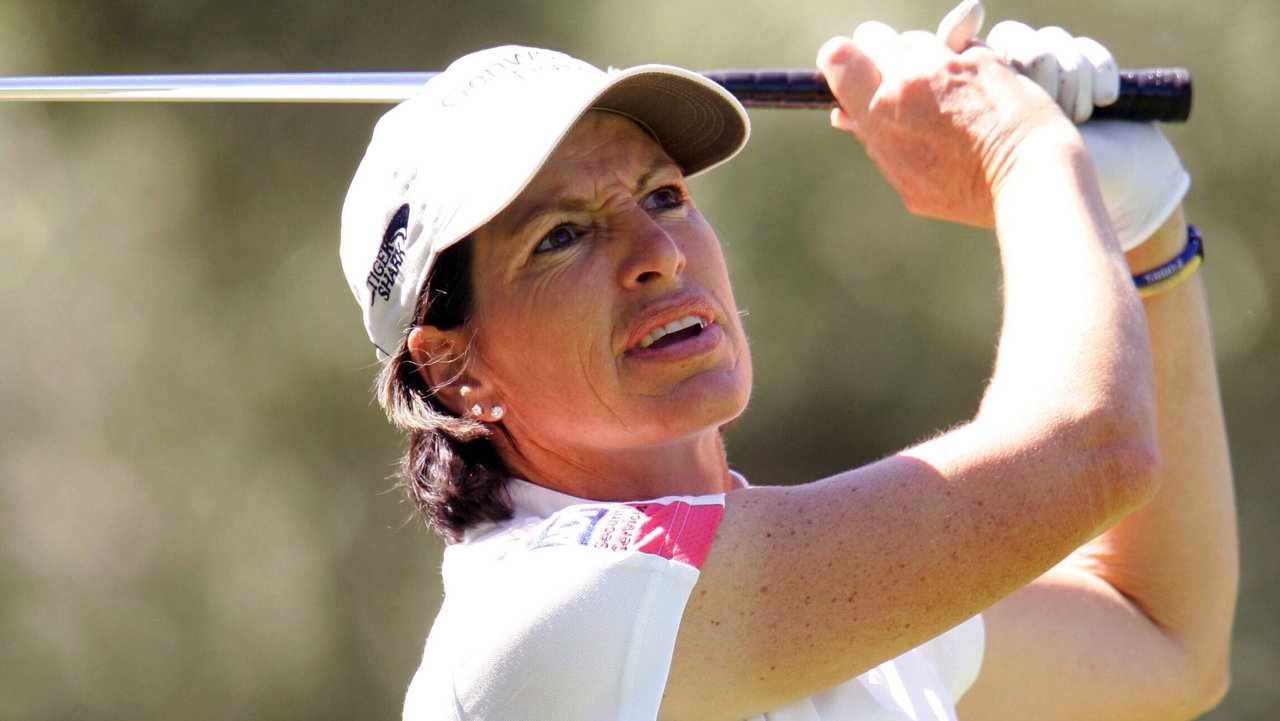
Juli Inkster is 66, but her golf still has plenty of bite. She’s out there shooting scores that can make players half her age nervous. It’s a pretty cool story already, right? But Inkster wasn’t done. This week, she aimed for something bigger than a golf ball. She asked a simple but uncomfortable question: if women’s bodies change after 50, why is golf’s age rule still stuck in the past?
Watch What’s Trending Now!
She was 4-under through Barton Hills on Thursday and was flirting with shooting her age before a late triple-bogey spoiled the fun and left her with a 70. Still, Inkster walked off happy. And that’s the fun part about watching her right now. Every time she tees it up, she seems to give golf another reason to pay attention.
This week was no different. Ahead of the U.S. Senior Women’s Open, Inkster used another strong showing to push an argument she has been making for years.
“I’m telling you, women’s bodies don’t stay the same as men at 50,” Juli Inkster said, according to Beth Ann Nichols from Golfweek. “It’s hard. You want quality golf. I know there’s a lot of people that totally disagree with me, and I get it. But even at 66, I want to play against the best.”
She wants to make a pretty big change: bring the tournament’s minimum age down from 50 to 40, not 45 like people have been talking about for years. What makes Inkster’s argument so strong is that she isn’t just talking about what older players could do. She has already proved it herself.
At 65 years, 11 months, and 19 days, she became the oldest player ever to make an LPGA Tour cut, breaking JoAnne Carner’s record from 2004. This isn’t a retired golfer wondering if she could still compete. Inkster is out there doing it, playing against golfers who are sometimes a third of her age.
That makes Inkster’s point even more interesting. The U.S. Senior Women’s Open is still a pretty new event. It started in 2018, 38 years after the men had their own senior championship. Inkster was already 58 when the women finally got theirs. That late start also meant many LPGA legends had already retired or were too old to get the chance to play in it.
The 10-Year Gap Keeping Juli Inkster and Golf’s Biggest Women’s Names on the Sidelines
Men’s professional senior golf tours also require players to reach 50 years of age to be eligible to compete. But for the women golfers, the real issue may not be the number 50. It’s the long gap before players even get there.
A golfer could leave the LPGA at 35 or 36, then spend the next 14 or 15 years waiting to reach the senior stage. Catriona Matthew summed up the problem with a simple question: “How many people are still on tour at 36, 37, 38?” Karen Stupples made the point even clearer: “There’s a whole lot of life that happens in those 10 years.”
Annika Sorenstam was once unsure about changing the age rule, but she has now changed her mind. She points out that the LPGA Legends already allows players to compete from age 45, while the USGA waits until 50 for a similar group of former stars.
“We should have the same field, I think,” Sorenstam said.
Karrie Webb, now 51, agrees to that too. She also wants the age lowered to 45, saying women can lose their competitive edge faster than men when they spend time away from the game.
USGA CEO Mike Whan is not fully sold on the idea. He says there is still no clear agreement to lower the age limit, with the strength of the field being one of the main concerns. But there is another side to that argument.
The debate gets a little trickier than just saying, “Let them play.” Sure, lowering the age limit would make the tournament more fun to watch. Fans could see stars like Ochoa, Kerr, Pettersen, and Pak back in action years earlier, and those big names would bring more attention to the event.
But there’s another side to it. If the age drops to 45, or even 40 like Inkster wants, the younger players could have a big advantage. Someone who left the LPGA five years ago is probably going to be much sharper than someone who hasn’t played top-level golf in 15 years. You can’t just bring back that tournament feel overnight.
So here’s the tricky part: Would lowering the age really help players in their 60s and 70s like Inkster? Or would it just turn the Senior Women’s Open into a younger, fresher tour where the “senior” part starts to feel a little less senior?
Science does support part of what Inkster is saying, although it’s not quite that simple. Research shows that women athletes do lose some physical ability as they get older. But when it comes specifically to menopause, researchers still do not have enough clear evidence to say exactly how much it affects athletic performance.
Also, Whan asked an important question: Is the championship really broken?
But maybe there is a better question to ask: Who is this championship meant to serve? Right now, the age rule favors players who can wait 10 years to reach the senior stage. Juli Inkster, now 66, believes it should not have to work that way. She wants a chance for more women to compete while they still have plenty of good golf left in them.