
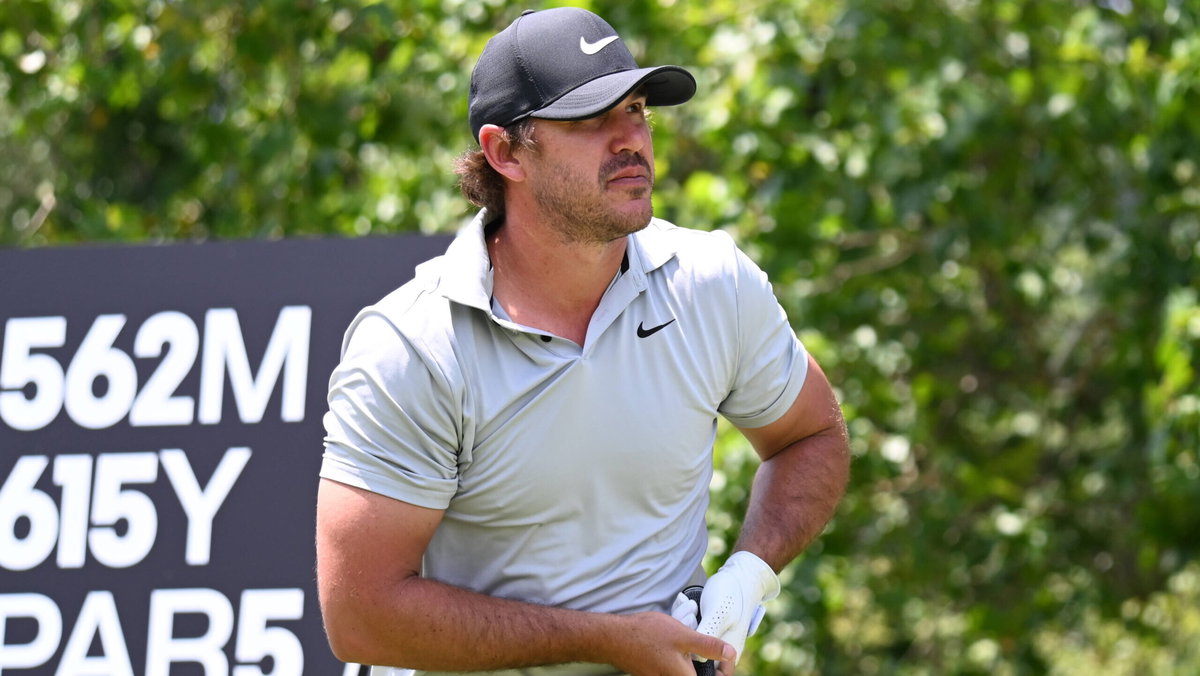
Brooks Koepka returned to Aronimink Golf Club on Thursday with more on his mind than just his clubs. He won the PGA Championship here in 2023, finishing 9-under over four rounds on this same Donald Ross course, which now hosts the 108th edition. Three years later, he started with a 1-under 69. At first glance, that score seemed solid, but his explanation told a different story.
Watch What’s Trending Now!
“Every round just seems to be the worst I can shoot. Hopefully, we can figure out a way to turn this around.” That’s how Koepka summed things up in the interview area after the first round.
His words capture the frustrating rhythm of his year. While he shows no visible signs of panic, his body language hints at a man split in two. One half plays with absolute perfection, while the other struggles to finish the job.
The assessment remains unchanged. At the Farmers Insurance Open in January, Koepka identified the putter as his main weakness, stating the issue was not the greens but his own performance. Four months and five top-20 finishes later, he repeated the same conclusion.
“Putter is absolutely horrendous. Ball striking is absolutely phenomenal. That’s been the story of the year.”
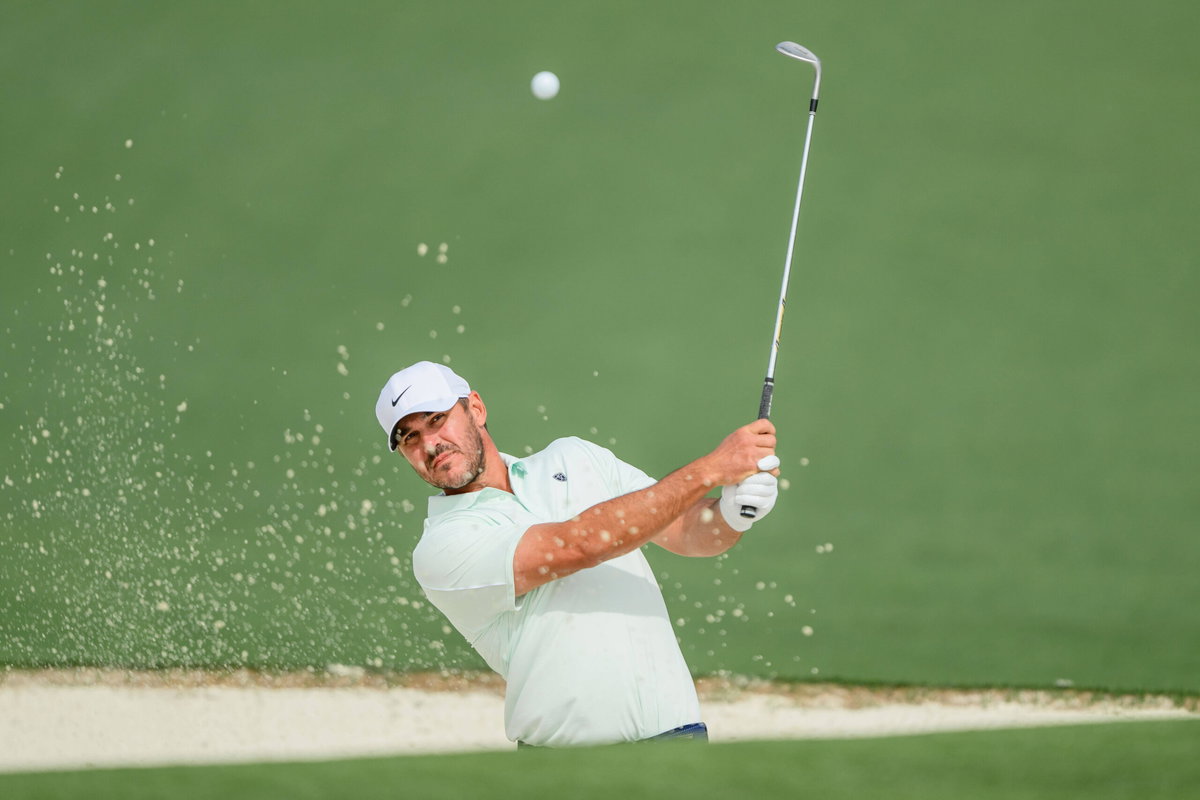
Imago
260407 Brooks Koepka of the United States during a practice round prior to the 2026 Masters Golf Tournament on April 7, 2026 in Augusta. Photo: Petter Arvidson / BILDBYRAN / kod PA / PA1191 golf masters bbeng the masters augusta *** 260407 Brooks Koepka of the United States during a practice round prior to the 2026 Masters Golf Tournament on April 7, 2026 in Augusta Photo Petter Arvidson BILDBYRAN kod PA PA1191 golf masters bbeng the masters augusta PUBLICATIONxNOTxINxSWExNORxFINxDEN Copyright: PETTERxARVIDSON BB260407PA097
He leads the PGA Tour in Strokes Gained: Approach at +0.983 and is second in Greens in Regulation at 70.83%. But on the greens, he ranks 149th in Strokes Gained: Putting at -0.525 and averages 29.64 putts per round. With those tee-to-green stats, you’d expect him to be near the top of the leaderboard on Sundays. Instead, his 2026 season shows finishes of T9, T13, T12, and T11. These results show how well he’s hitting the ball and how much his putting costs him weekly.
Koepka is not the first elite player to find himself in this particular holding pattern, and the history of the game offers little comfort — but some context.
Brooks Koepka and the champions who couldn’t escape the putter
Ben Hogan’s last decade as a professional was defined by a single issue: he could not start the putter on short putts. Despite being the best ball-striker in the game, he would stand over the ball and fail to move his hands. His iron play remained consistent. Even as his physical strength declined and he played fewer events, his performance from tee to green remained high. For Hogan, the putter undermined the strengths he built elsewhere.
Rory McIlroy faced a similar pattern in 2013. He was among the best off the tee and with his irons, but a single weakness repeatedly cost him. His third-round scoring average ranked 183rd on Tour, closing every opportunity his long game created. Both players eventually addressed their issues. Neither ignored the problem.
Koepka’s 2026 results—T18 at Valspar, T13 at THE PLAYERS, T12 at Augusta, T11 at Myrtle Beach, T9 at the Cognizant Classic—show a player who consistently contends but does not close. The putter remains the limiting factor. This is not a criticism, but a clear statement of his current position. He is in the company of close players, but not yet able to finish.
There are three rounds left at Aronimink. Koepka still has the ball-striking that made him a winner here before. The question is whether his putting will match the rest of his game. That will decide whether he can convert another opportunity.