Imago
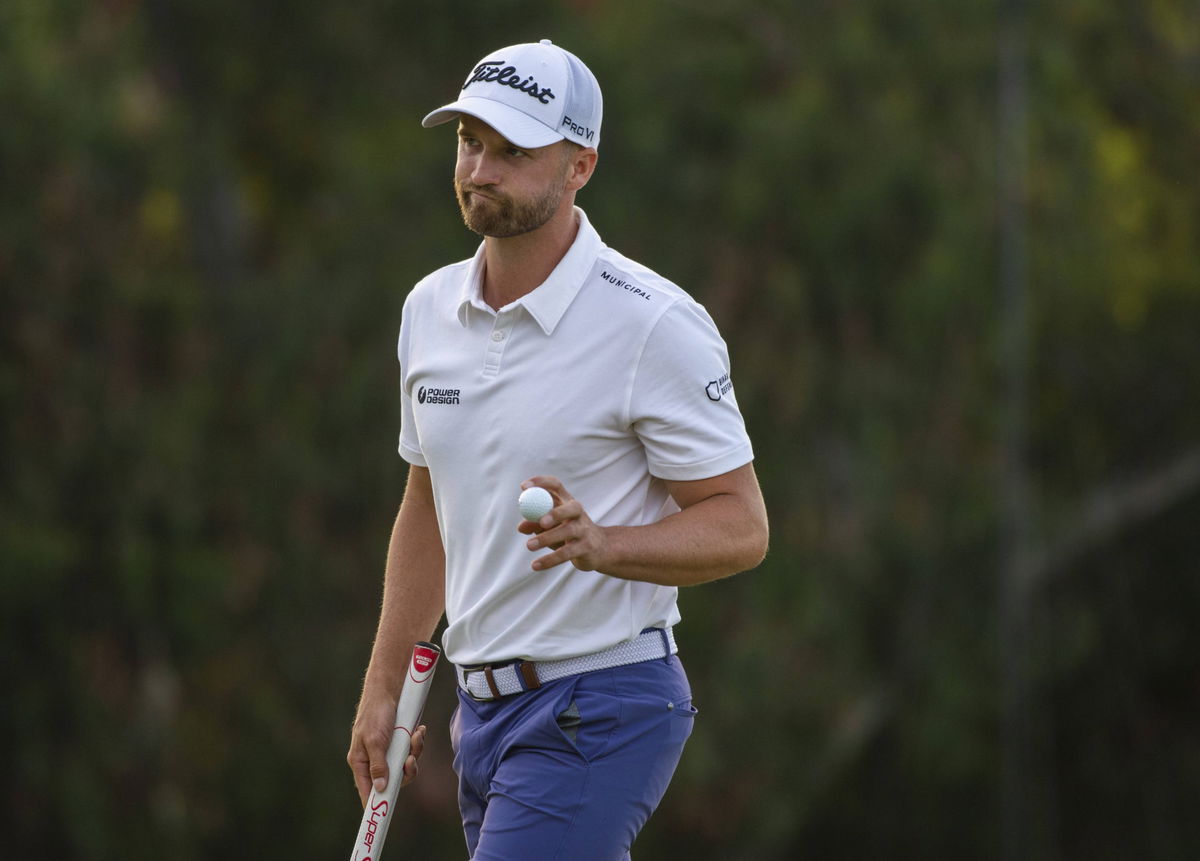
Wyndham Clark reacts to settling for par on the 14th hole during the third round for the 2023 U.S. Open at the Los Angeles Country Club in Los Angeles on Saturday June 17, 2023. PUBLICATIONxINxGERxSUIxAUTxHUNxONLY LAP2023061729 MIKExGOULDING
Imago
Wyndham Clark reacts to settling for par on the 14th hole during the third round for the 2023 U.S. Open at the Los Angeles Country Club in Los Angeles on Saturday June 17, 2023. PUBLICATIONxINxGERxSUIxAUTxHUNxONLY LAP2023061729 MIKExGOULDING
Imago
Wyndham Clark reacts to settling for par on the 14th hole during the third round for the 2023 U.S. Open at the Los Angeles Country Club in Los Angeles on Saturday June 17, 2023. PUBLICATIONxINxGERxSUIxAUTxHUNxONLY LAP2023061729 MIKExGOULDING
Imago
Wyndham Clark reacts to settling for par on the 14th hole during the third round for the 2023 U.S. Open at the Los Angeles Country Club in Los Angeles on Saturday June 17, 2023. PUBLICATIONxINxGERxSUIxAUTxHUNxONLY LAP2023061729 MIKExGOULDING
For someone who started playing golf at the age of 3, Wyndham Clark should have gotten used to the jitters. But in Denver’s Cherry Hills Country Club, the noises were always low. Soaring through his high school years up till his collegiate days, Clark received the 2011 state player of the year. Yet, none of the ordeal could ever match up to the anxiety he would face on the PGA Tour in 2018-19, his first season.
Watch What’s Trending Now!
“I would say I struggled with it my first year,” he reflected on Stories Untold on December 23. “The great thing, though, is that, like growing up, you had no fans, so it was always quiet, but [on the Tour] there are a lot of people, and there is chatter, and people are talking,” he shared. “Then the caddy or people quiet them down, and then all eyes are on you, cameras on you.”
It took Clark 12 tournaments to get comfortable on the PGA Tour. For him, it was a situation that became more comfortable with repetition. He doesn’t even think about it anymore as his mind gets directed to the shot. He tries to be present in the moment, despite feeling stares on his back. At times, he would wonder what the audience was thinking, and his attention would easily drift away, opening the door for anxiety.
Wyndham Clark’s admission punctures the common myth: elite players are immune to nerves. But in actuality, many of them go through what’s known as the “spotlight effect.” Performers of any sort overestimate the judgments they’re put through. However, for Clark, his psychological situation was far more challenging.
Around 2022, the American battled issues, including a “mental meltdown,” often manifesting through anger, negative self-talk, and more. The roots of his trauma went back to the years following his mom’s death. The moment it started reflecting on his game, his team forced him to see a psychologist, and Julie Elion then entered his life. Unlike other sports psychologists, Elion targeted Clark’s entire life—his relationships, his grief, and his attitude. The results soon seeped in.


With a transformative personality, Clark stepped on the course and won his first PGA Tour victory at the 2023 Wells Fargo Championship. A month later, he had his first major—the US Open. He later shared how Julie taught him mental strength and asked him to visualize his goals instead of focusing on others.
View this post on Instagram
“Before my eyes, I saw him transform into someone who truly believed, and what he held in his mind was manifesting right in front of him,” as Julie Elion once said.
Clark’s story tells how pressure often plays a role in golf. Research has consistently shown that audience presence heightens arousal. This can easily impair motor skills like putting and wedge play. Often, this is used by the crowd to derail the players from their game. To avoid this, the best method is to silence the surrounding noise and focus just on the game, as Clark did. Tiger Woods, infamous for his ‘Tiger Stare,’ would actually employ this tactic to brush off his anxiety.
Wyndham Clark and Tiger Woods aren’t the only ones to fight anxiety and pressure on the course. There are other golfers, too.
Wyndham Clark’s situation proves pressure isn’t one-size-fits-all
For Rory McIlroy, pressure was more about loneliness and catastrophic thinking. Turning pro at 19, the Northern Irishman would often be miles away from his home. When he would miss cuts, there would be no emotional buffer for him. He once recalled sitting on a hotel bed in Jeju Island, Korea, and just bursting into tears because he was playing badly and felt lonely.
His approach was rather different from that of Wyndham Clark and Tiger Woods. Instead of diverting his attention, McIlroy focused on embracing his nervousness. He reframed those jitters as excitement. At times, he would imagine worst-case scenarios, only to mentally prepare himself if they happened in real life. The result of these was visible in this year’s Ryder Cup, where he was absolutely solid, despite jabs thrown his way.
Then comes Jordan Spieth.
Golf’s Golden Child now struggles on the PGA Tour to affirm his footing. Spieth is a classic example of how pressure can get to you. This was visible in his 2016 Masters collapse. He had a five-shot lead, but a sudden crippling anxiety put off his game.
“I was nervous,” he shared later. “That’s something I’ve been struggling with when in these kinds of positions.”
The example of such top players reveals how golf is not just about skills and timing, but also about having control over one’s mind.
Related Newsletters