
Getty
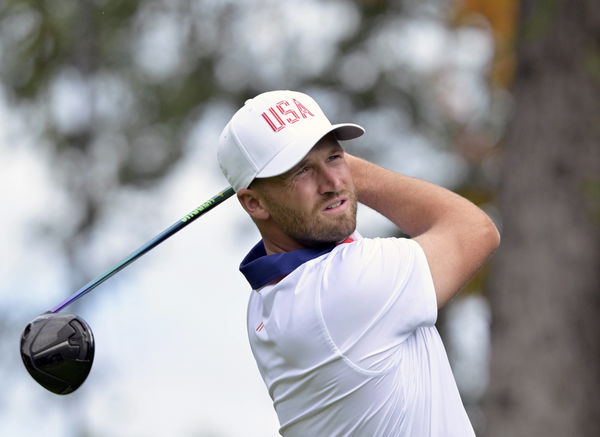
MONTREAL, QUEBEC – SEPTEMBER 25: Wyndham Clark of the U.S. Team looks on from the 18th tee during a practice round prior to the 2024 Presidents Cup at The Royal Montreal Golf Club on September 25, 2024 in Montreal, Quebec, Canada. (Photo by Jared C. Tilton/Getty Images)
Getty
MONTREAL, QUEBEC – SEPTEMBER 25: Wyndham Clark of the U.S. Team looks on from the 18th tee during a practice round prior to the 2024 Presidents Cup at The Royal Montreal Golf Club on September 25, 2024 in Montreal, Quebec, Canada. (Photo by Jared C. Tilton/Getty Images)
Wyndham Clark entered 2025 with everything going for him. But by mid-November, he had plummeted to #33 in the world. More than anything, his season will be remembered for his outbursts at the PGA Championship and the US Open. He faced significant backlash, which has now faded. With that, has come acceptance that the fallout was his own doing.
Watch What’s Trending Now!
As per Golfweek, he summed up his entire season in just two words: “Pretty shitty,” he told Golfweek. But then came the accountability: “I did something I regret. I brought it upon myself. Any negative press was self-induced and probably deserved…What happened at the U.S. Open was the kick in the face to say, ‘Hey, wake up, let’s get back to who I am.'”
The first of the two incidents that exposed his breaking point was the PGA Championship at Quail Hollow. During the final round, frustration boiled over on the 16th hole. Clark hurled his driver after a poor tee shot. The club smashed into a sponsor sign and broke on impact. He apologized the next day. Three weeks later, the U.S. Open brought something worse when Clark fired rounds of 74-74 at Oakmont and missed the cut by one stroke.
After his second round, he destroyed two lockers in the historic clubhouse. The outburst damaged locker doors and splintered wooden panels at one of golf’s most revered venues. Photos leaked online. The fallout was immediate and severe. Golf analyst Brandel Chamblee called the damage “reprehensible” and demanded Clark’s suspension. Oakmont Country Club took swift action.
Following discussions with the USGA, club president John Lynch announced Clark would be banned from the property. The ban would remain until Clark met specific conditions: full payment for damages, a meaningful charitable contribution, and completion of anger management counseling.
Clark stayed silent for nearly a week after the incident. Finally, at the Travelers Championship in late June, he addressed the controversy publicly. “I made a mistake that I deeply regret,” he said at the time. But his recent comments to Golfweek reveal a deeper level of reflection and accountability, acknowledging the mental struggles driving his behavior.
Imago
PGA, Golf Herren The Presidents Cup – Second Round Sep 27, 2024 Ile Bizard, Quebec, CAN Wyndham Clark of team U.S.A.hits his tee shot from the sixth tee box during the second round of The Presidents Cup golf tournament. Ile Bizard Quebec CAN, EDITORIAL USE ONLY PUBLICATIONxINxGERxSUIxAUTxONLY Copyright: xEricxBoltex 20240927_jla_bb5_044
“I started spiraling a little bit mentally, and my swing got off,” he admitted. The pressure of being a top-10 player had consumed him. At the beginning of the year, Clark was the reigning U.S. Open champion. He’d won three times in two years. His world ranking sat at No. 7. The 2023 Wells Fargo and 2024 AT&T Pebble Beach Pro-Am titles validated his breakthrough. He’d played on both the 2023 Ryder Cup and 2024 Presidents Cup teams, winning the latter. But, soon enough, he found himself in “a bad, dark place.”
Golf wasn’t just affecting his scores anymore. It was bleeding into everything else. The expectations felt suffocating. The sense that everything was slipping away became overwhelming. “You don’t want to be defined by your golf,” he said. “But that’s the struggle we have out here.”
That wake-up call translated into tangible results on the course.
Clark’s turnaround after owning up to his mistakes
Something shifted after Oakmont. The accountability seemed to unlock something. Clark opened with a 64 at the Travelers and finished T17. Two weeks later, he entered Sunday’s final round at the Scottish Open in third place. He ultimately finished T11, but the solid play continued.
Then came the British Open. Clark posted a T4 finish at 11-under, just one stroke behind winner Scottie Scheffler. He shot 65 in the final round. The Memphis tournament showed similar promise before a weekend stumble dropped him to T56.
The turnaround wasn’t just about scores. Clark brought in Pat Coyner from Cherry Hills as his new coach. They worked on shortening his backswing, which had gotten too deep. More importantly, Clark rediscovered something that had always fueled him.
“I love it,” he said about having a chip on his shoulder. “There’s something about grinding it out and people overlooking you. When you do that, it’s very rewarding.”
Clark’s situation mirrors his struggles from 2022. That year, his inner circle staged an intervention. He started working with sports psychologist Julie Elion. The result? His best golf followed, culminating in the 2023 U.S. Open victory.
Now he’s looking ahead with renewed hunger. Oakmont banned him pending restitution and completion of an anger management program. The PGA Tour signature events might require sponsor exemptions. None of it fazes him anymore.
“I feel like I matured a lot this year. You learn so much more in bad years than you do in good years. It’s made me really hungry for next year.”
Clark knows the road back won’t be easy. But he’s betting on himself again. And history suggests that’s when he plays his best golf.
Written by

Edited by

Riya Singhal