
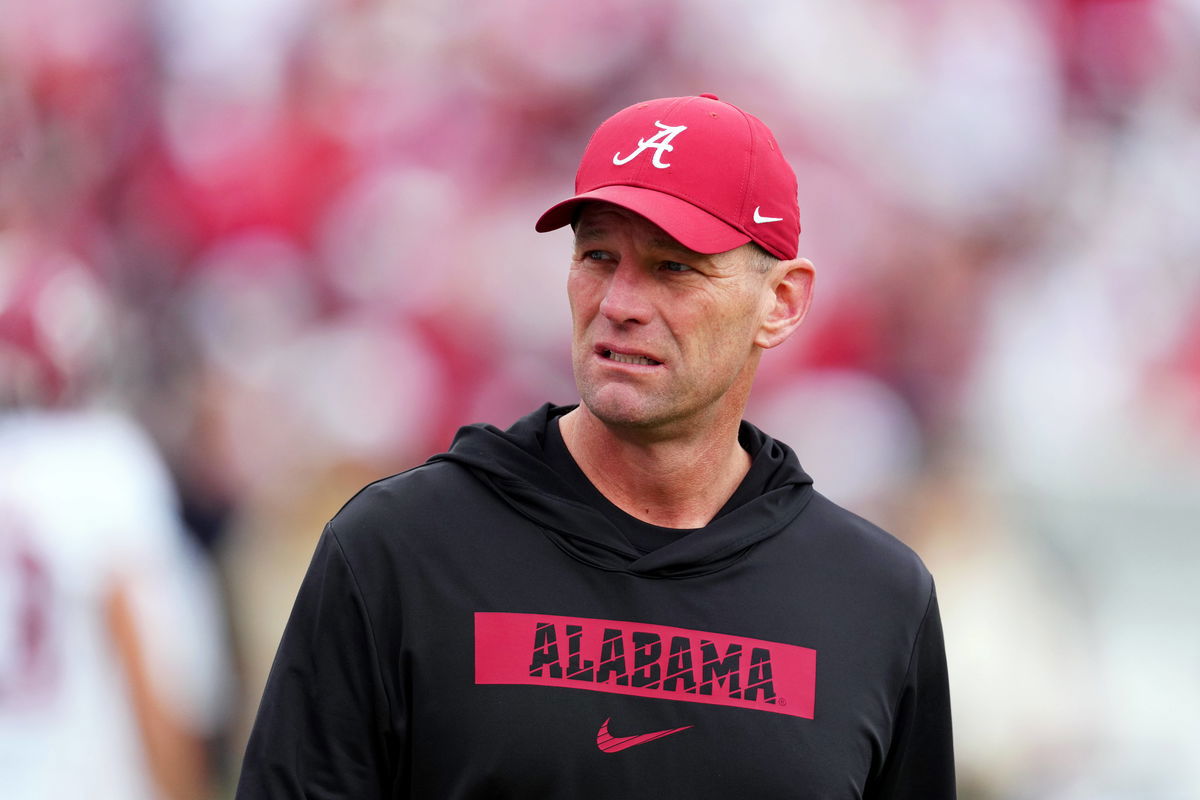
Alabama’s defensive front built its dynasty on sheer size, but recent seasons told a different story. In the trenches, the Crimson Tide lost the brute physicality that once defined Nick Saban’s top-five defenses. Now, entering 2026 fall camp, coordinator Kane Wommack is executing a massive blueprint to bring that muscle back.
Watch What’s Trending Now!
Following Alabama’s third preseason practice on August 7, Wommack admitted the staff ran a study on defensive line frames. The numbers were alarming: Alabama is ranked 14th in height and 15th in weight across the SEC. “We’re probably guessing a little bit some of that from overall length, but big bodies matter, right? You know, Mass kicks a–,” said Wommack, as reported by BamaOnLine.
“And so when you have big frames that have length and are able to strike people, but also when they’re getting a double team. Just sheer mass matters. And the truth is we got moved around some for the last two years here. And so that was an area where we’ve done some good things defensively here,” Wommack further stated.
For years, Alabama dominated by overwhelming opponents at the line of scrimmage. But getting pushed back on double teams exposed a rare vulnerability. In the SEC, talent alone cannot offset a lack of raw mass when rival offenses run straight at you in fourth-quarter grinding drives.
Alabama certainly did not lack individual talent, featuring playmakers like LT Overton and Malachi Moore, but individual skill could not hide structural deficits up front. To rebuild a championship-level defense, DeBoer’s staff realized they needed massive interior anchors to set the edge and hold the middle.
General Manager Courtney Morgan and Wommack responded through the transfer portal. They secured 330-pound Terrance Green from Oregon and 300-plus-pounders Devan Thompkins and Kedrick Bingley-Jones. Today, Alabama boasts six defensive linemen over 300 pounds and twelve players standing 6-foot-4 or taller, raising their SEC frame ranking from 14th to top five.
The physical overhaul was not subtle, as DeBoer’s staff stopped prioritizing smaller, lightning-quick edge rusher hybrids and pivoted back to pure weight-room monsters. Adding over 150 total pounds across the front seven fundamentally alters how Alabama anchors against the run, absorbing double teams instead of giving ground.
“We did a study. We looked at height, length, like arm length, and then just overall weight.” Wommack added. “Cumulatively over the last two years, we were like 14th, which is not the standard here.”
That added mass changes everything on Saturday afternoons. Instead of defensive linemen getting driven three yards off the ball, Alabama can now reset the line of scrimmage, freeing up linebackers to shoot gaps untouched and keeping the secondary clean on key third-and-short situations.
Wommack notes the early results are already showing up in camp through improved violence and consistency. While matching Saban’s iconic defensive standard takes time, DeBoer’s program now has the heavy armor required to stop getting pushed around. If size translates to control, Alabama’s defense is finally equipped to impose its will again.