
The Orioles’ $200 million offseason haul has produced one result: a 21-29 record and a sweep on the road. The Baltimore Orioles have lost the final game 5-3 against the Rays, who completed a series sweep at home. The Orioles were outscored 25-10 in the series, which the manager Craig Albernaz described as a “big-time gut punch.” As the team slipped to fifth in the AL East, a Baltimore analyst pointed out the most glaring issue.
Watch What’s Trending Now!
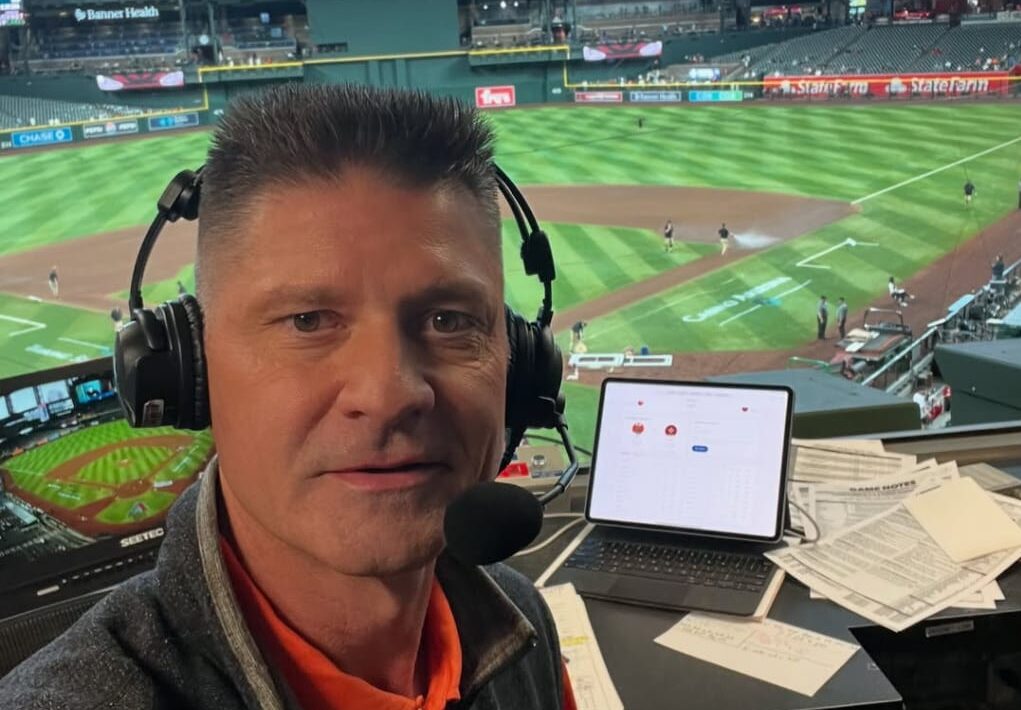
“They are struggling to have all phases of the game go right at the same time,” MASN analyst Ben McDonald told the Baltimore Banner. “That’s where the struggle is. So, all this nonsense is eyewash to me about all this analytical stuff.”
The Orioles suffered a 10-run defeat in the first road game in Tampa Bay and followed it up with a 4-1 loss this Tuesday. They were leading 3-1 at the top of the 8th inning on Wednesday. But they allowed four runs in the final inning to suffer a series sweep. And McDonald ripped apart the clubhouse during the postgame.
“I don’t care if you hit it hard and you hit it to somebody. You’re out… I don’t care what your spin rate was on your breaking ball if you bounce it three feet in front of home plate. I don’t care,” he added. “What I care about is, do you make plays? Do you make pitches? Do you get hits when it matters? And that’s what the Orioles are struggling to do right now.”
Depending on the analytics isn’t doing them any good on the field. McDonald thinks they are “not playing well right now. That’s the bottom line.”
The Orioles have a 21-29 record, and they are struggling in all departments. They are 23rd in MLB with a .233 AVG. Their 4.97 ERA is only better than four teams this season. They also hold a bad -59 run differential. Only the Angels are worse.
That’s why McDonald said, “They are struggling to complete ball games.”


Orioles analyst brutally shreds into team after getting swept by Rays: 'All this nonsense is eyewash' trib.al/8ic4DIW

Notably, the Orioles bagged some big names this offseason to bounce back from last season’s standings (finished 5th with just 75 wins). There was a lot of hope around the signing of Pete Alonso and Shane Baz. Each of them inked a 5-year contract. However, 31-year-old Alonso has a .228 batting average and a .744 OPS. This is subpar compared to his last season with the Mets, when he had career-best numbers (.282 AVG and .871 OPS).
Baz, on the other hand, is struggling with a 4.87 ERA as he has allowed 32 runs from 10 starts this season. He has a record of 1-5. The only positive factor is 48 Ks from Baz.
None of these expensive signings have worked out yet. The data might look good on paper, but McDonald thinks those spreadsheet numbers mean nothing without actual results.
Even as an expert analyst, he does not know how the Orioles can fix this mess. Ironically, the Rays team that just embarrassed Baltimore is the best example of using data correctly.
The Rays show that analytics only matter when execution follows
The Tampa Bay Rays have very little money, but they use data better than any team in baseball. They excel at turning analytics into real player growth.
In 2018, the Rays changed baseball by inventing the “opener” strategy. Instead of starting a traditional pitcher, they used a reliever for the first inning to face the opponent’s best hitters. The trick worked. The Rays bounced back from a 15-18 start to win 90 games that year. They made the playoffs every year from 2019 to 2023, and they lead the AL East again this season. It worked because they were successful in neutralizing the biggest opponent hitters on most occasions. And the strategy was ultimately adopted by the Yankees, Dodgers, and Brewers.
The biggest example of their player development was Yandy Diaz. The Orioles acquired Diaz from the Guardians in 2018 for almost absolute peanuts, as the infielder was heavily suffering at the plate.
Dias joined the Rays in 2018, and then the Rays’ analytics reshaped his swing. The data showed great power potential buried under weak contact. A tiny tweak in his mechanics changed his ground balls into fly balls. Díaz hit 14 homers in 2019 and peaked in 2023 with 22 homers, a .330 average, and a .932 OP
The Rays showed that analytics isn’t the problem. Rather, they turned it into a solution by combining it with on-field performance. That’s exactly what Ben McDonald wants. His frustration stems from overdependence on the analytical part without proper execution.
While the Rays continue to turn them into victories, the Baltimore Orioles are still looking for a way to utilize them and translate data into on-field winning moves.