
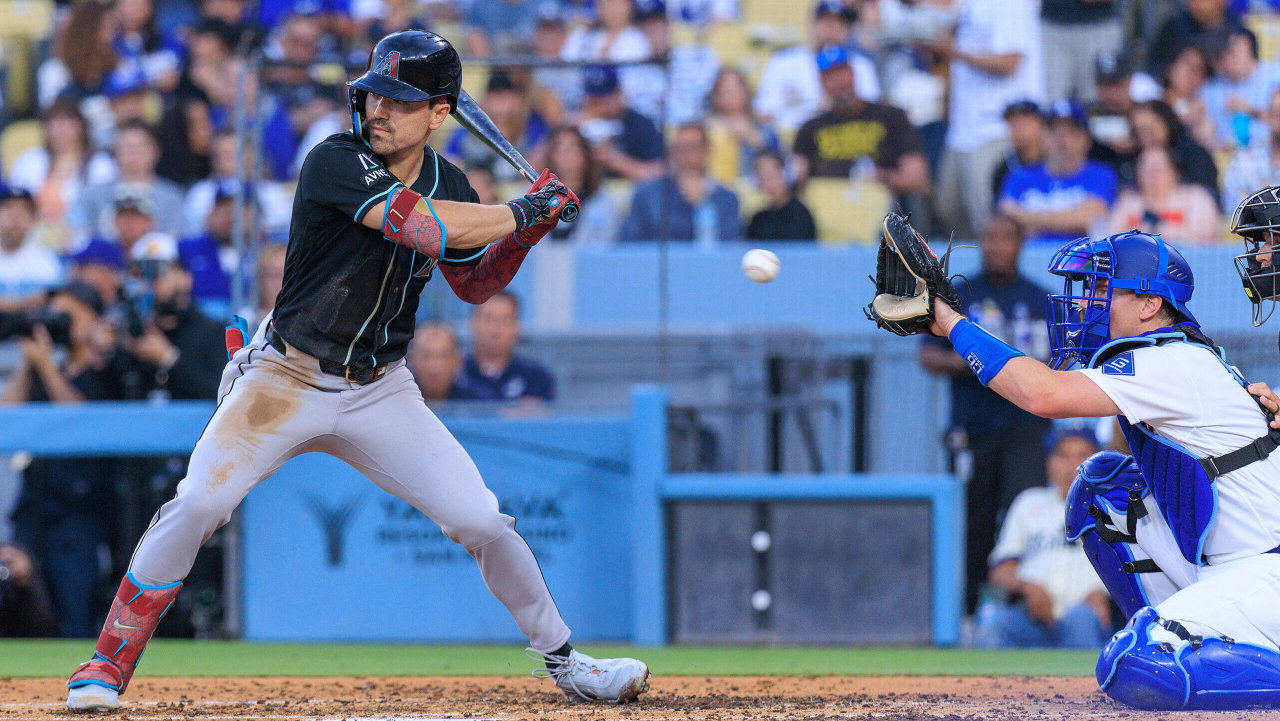
For a player whose speed is one of his biggest weapons, losing a step can cost far more than a few stolen bases. Corbin Carroll knows that all too well after an injury-riddled 2026 campaign that began with a hamate procedure and ended with elbow surgery, leaving the Arizona Diamondbacks paying a heavy price. The numbers tell the story: after swiping 54 bases in 2023, the 26-year-old managed just 21 this season.
While Thursday’s surgery to remove loose bodies from his right elbow offers hope for a fresh start in 2027, Carroll’s latest revelation suggests his troubles may run deeper than initially expected. A lingering back issue has now entered the picture, raising fresh concerns about how long the Diamondbacks will have to wait for their star slugger to return to full strength.
“It’s the removal of something as opposed to fixing something,” Carroll said in an interview with AZ Central. “I would say in terms of the pain and all that, so far it’s been less than the hamate.”
Per Carroll, he experienced mild elbow discomfort during the 2026 regular season, but the symptoms became significant enough after the season ended to warrant an evaluation. He noted that a few loose bodies likely broke off during the season, with more breaking loose right before the procedure.
Doctors reportedly utilized a minimally invasive NanoScope (NanoNeedle) procedure. Because it focuses entirely on the removal of loose pieces rather than repairing structural damage, the recovery process is much faster and less painful.
While a full recovery takes about eight weeks, Carroll only expects his initial offseason hitting program to be delayed by about two weeks. He intends to start swinging a bat again in early December 2026. But his back injury still persists.
In late August, Carroll suffered a sudden back spasm simply standing up off the dugout bench. By September, the discomfort reached its peak, forcing manager Torey Lovullo to scratch him from the starting lineup 90 minutes before a game against the Kansas City Royals. He ultimately missed two consecutive games during that series.
Following his late-season flare-up, Carroll returned to Phoenix to undergo an MRI and specialized medical imaging. Fortunately, the results revealed no structural damage. The root cause was diagnosed as treatable back spasms and severe muscle tightness, allowing him to return to the field without an IL stint.
However, while Carroll noted that the back didn’t necessarily cause overwhelming pain, it caused him to unconsciously “compensate” mechanically. This mechanical shift contributed to a dip in his peak explosive bat speed and general fatigue during the final month of play.
Corbin Carroll is currently executing a tailored core and lower-back weight room program to improve his positioning and ensure he avoids similar flare-ups during the 2027 season. Yet the D-Backs’ hope for a healthy Corbin Carroll may still be some time away.
For Arizona, it means their offseason needs should include slugging options also.
The Diamondbacks’ search for offense continues
The Arizona Diamondbacks desperately need new sluggers this offseason because their first base production ranked dead last in MLB with a .636 OPS in 2026. After struggling mightily against right-handed pitching (ranking 26th in MLB with a .697 OPS) and seeing injuries or poor performance from their corner options, general manager Mike Hazen’s primary objective is finding a productive bat.
Moreover, with Corbin Caroll far from being fit, the need for new sluggers is greater now. The Miami Marlins’ Kyle Stowers could lead the race. Under team control through 2029, Stowers represents an affordable, high-upside option. He hit 21 home runs with a 114 wRC+ in 2026. He also specializes in crushing right-handed pitching, making him an ideal platoon or everyday corner bat to fix Arizona’s primary split weakness.
But if Hazen decides to keep third baseman Nolan Arenado flexible enough to take occasional reps at first base, the front office might pivot away from a strict first baseman. They could target a pure Designated Hitter or a versatile corner utility player with pop.