Imago
Source: IMAGO
Imago
Source: IMAGO
When a player is inducted into the MLB Hall of Fame, many questions arise, but mostly it is whether another player deserved it more. But some, like Carlos Beltrán, draw criticism about whether he really deserved to go after what has happened.


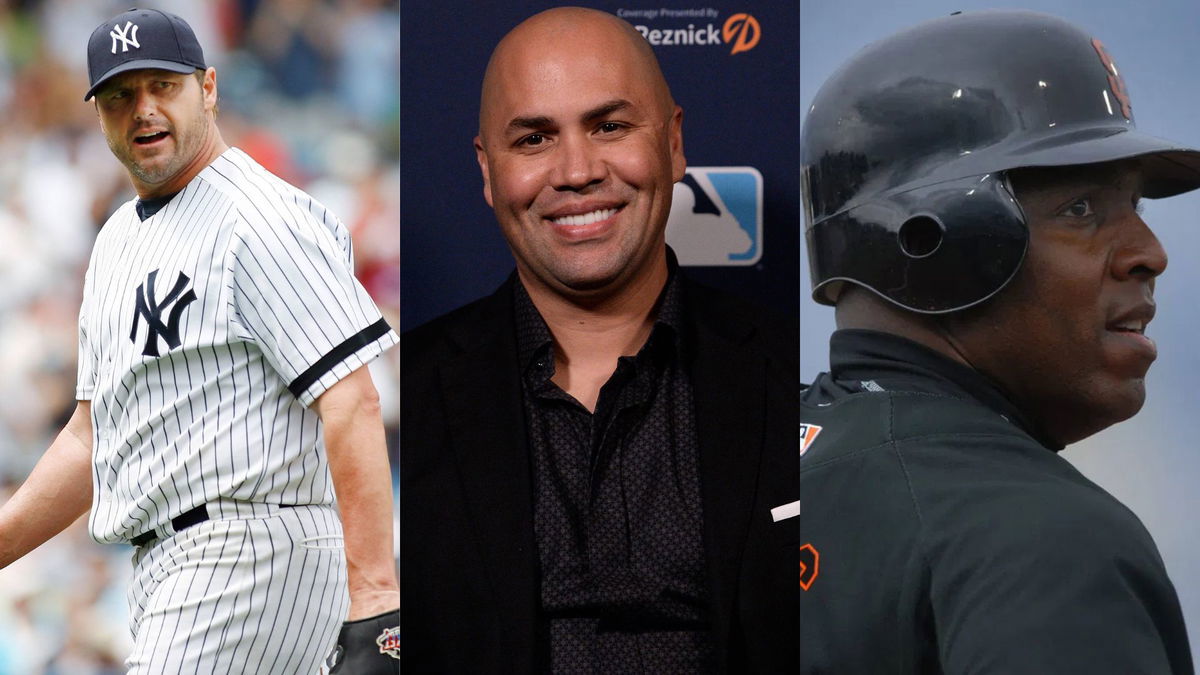
And if Beltrán can go into the Hall of Fame after what happened with the Astros, why can’t Roger Clemens and Barry Bonds? Jeff Frye has an answer.
Watch What’s Trending Now!
“The whole system is flawed! They both are deserving, obviously, numbers-wise. If you were caught cheating, I don’t believe that you deserve to get in.”
The Class of 2026 includes Carlos Beltrán, Andruw Jones, and Jeff Kent, who were elected through a process. Beltrán and Jones passed 75% on BBWAA ballots, while Kent was elected by committee. They join a Hall of Fame calendar set for July 26 in Cooperstown, New York, for a ceremony.
The results followed a weak ballot year, leaving many first-time candidates with under 5% support.
Beltrán’s induction drew criticism because of his central role in Houston’s 2017 sign-stealing scandal. Investigators found Astros players used video feeds to decode signs and relay them illegally. MLB punished Houston with fines, draft pick losses, and suspensions for management officials involved.
Beltrán was named but not suspended, and later lost the Mets managerial job.
Speaking after the election, Beltrán acknowledged his mistakes and said he accepted responsibility publicly at the time. He described losing trust, being fired, and later rebuilding relationships across baseball circles.
Those remarks reopened debate among fans about consistency in the Hall of Fame standards. Questions quickly shifted toward Barry Bonds and Roger Clemens, still excluded repeatedly despite their records.
The whole system is flawed! They both are deserving obviously numbers wise. If you were caught cheating I don’t believe that you deserve to get in! #shegone
— Fryedaddy/Frito (@shegone03) January 21, 2026
Bonds and Clemens dominated eras statistically, but remain tied to steroid-era investigations from baseball. Bonds leads MLB with 762 homers, 2,558 walks, and 162.8 bWAR career marks overall. Clemens won 7 Cy Young Awards and recorded 354 wins across careers spanning seasons.
Neither tested positive, yet the committee’s votes again fell below the required five-ballot threshold.
Jeff Kent’s election sharpened the contrast even more, given his clean record and delayed recognition by writers.
Kent hit .290 with 377 homers, 1,518 RBIs, and 351 second-base homers over career. He received 14 of 16 committee votes, finally clearing the 75% line requirement set. His path underscored structural changes separating writers’ ballots from era committee judgments since 2022.
Former Red Sox infielder Jeff Frye has noted that cheaters caught should be excluded entirely. Frye argues standards must apply equally, regardless of era, team, or election pathway used.
Yet the 2026 class leaves baseball balancing accountability, history, and trust with its audience still. MLB’s election process now looks more like a careful shuffle than a strict meritocracy.
After this MLB Hall of Fame induction, one Mets player will be very happy
While Cooperstown celebrates Beltrán’s nod, one former Met couldn’t help but crack a grin. David Wright’s vote totals just leaped, and suddenly the Hall of Fame feels a little closer to Flushing.
David Wright fans have reason to feel encouraged after the latest Hall of Fame vote results.
Wright jumped from 8.1 percent to 14.8 percent in his third year on the ballot. This increase of 6.7 points ensures he stays safely above the five percent threshold to remain eligible. The gain shows that voters are beginning to recognize the impact he had during his career.
His Hall of Fame case is complicated because spinal stenosis shortened his playing years significantly. In under 6,000 at-bats, he compiled 1,777 hits, a .296 batting average, and 970 RBI. Despite fewer total seasons than some peers, his OPS+ was 133, meaning he performed 33 percent above league average.
These numbers show he dominated third base during his healthy years, even with a shortened career.
Comparisons with other players highlight Wright’s strong peak performance relative to peers like Chase Utley.
Wright made seven All-Star teams and won two more Gold Gloves than Utley, despite similar counting stats. His improvements this year put him ahead of Billy Wagner’s pace for eventual Hall induction.
With younger voters valuing dominance over longevity, Wright’s path to Cooperstown is becoming increasingly visible and credible.