Imago
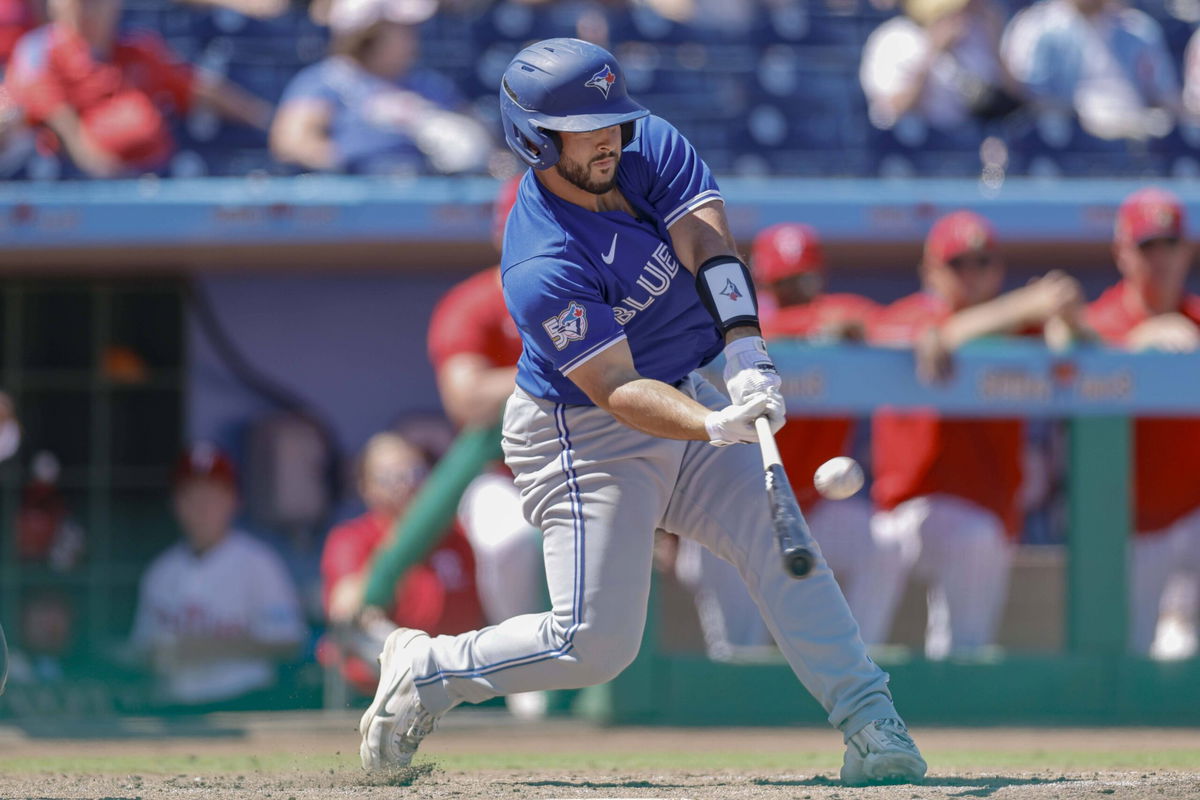
MLB, Baseball Herren, USA Spring Training: Blue Jays Prospects at Phillies Prospects Clearwater, FL: Toronto Blue Jays catcher Aaron Parker 50 flies out to center field during an MLB Spring Breakout game against the Philadelphia Phillies on March 21, 2026 at BayCare Park. The Phillies Prospects beat the Blue Jays Prospects 5-4. Kim Hukari/Image of Clearwater Florida USA EDITORIAL USE ONLY Copyright: xImagexofxSportx KimxHukarix iosphotos401948
Imago
MLB, Baseball Herren, USA Spring Training: Blue Jays Prospects at Phillies Prospects Clearwater, FL: Toronto Blue Jays catcher Aaron Parker 50 flies out to center field during an MLB Spring Breakout game against the Philadelphia Phillies on March 21, 2026 at BayCare Park. The Phillies Prospects beat the Blue Jays Prospects 5-4. Kim Hukari/Image of Clearwater Florida USA EDITORIAL USE ONLY Copyright: xImagexofxSportx KimxHukarix iosphotos401948
Determination can overcome even the toughest of obstacles, including chronic autoimmune illness. The Toronto Blue Jays have a living example of that in their ranks. One of their catching prospects balances the life of a baseball player with his illness. To survive, the 23-year-old has to treat medications and baseball with equal importance, for one missed dose can turn life-threatening.


When the Blue Jays picked Aaron Parker in the sixth round of their 2024 draft, he had already been a Type-1 diabetic for several years by then. The catcher opened up to Sportsnet’s Arden Zwelling about the risks of being a diabetic while pursuing a pro MLB career. He spoke about how carefully he has to regulate his insulin levels to avoid hypoglycemia during a game.
Watch What’s Trending Now!
“I’ll typically back off and be a little less aggressive with my insulin to make sure that if I go hit a triple, I’m not going to crash after a big sprint or something,” Parker said to Zwelling.
While in a game, Parker’s blood glucose also gets used up after the muscles work through the stored glycogen. In that case, if he injects too much insulin, he can crash from getting hypoglycemia, a condition in which blood sugar levels drop below 70 mg/dL.
“Sometimes when you’re in a stressful situation, your heart rate gets up, and it can feel a little hypoglycemic at times. Which is why I tend to run it a little higher so I don’t have to worry about it actually being hypoglycemia,” he revealed about in-game situations.
While playing, Parker targets a higher blood glucose range of 150–250 mg/dL, so he lessens his insulin intake.
Type-1 diabetes is not entirely uncommon in the MLB. San Diego Padres pitcher Mason Miller is also a Type-1 diabetic. Former MLB pitcher Jason Johnson was the first player in history to wear an insulin pump in a match in 2004.
For Parker, hyperglycemia is equally risky as hypoglycemia. Hyperglycemia occurs when the blood sugar level becomes too high. So, Parker carries his fanny pack stuffed with emergency medication everywhere in camp.
“It’s my rainy-day pack. And it looks good, too. People like it,” Parker half-joked about his fanny pack to Zwelling, emphasizing how important it is for him to remain prepared.
His fanny pack contains a blood glucose testing kit, syringes, insulin vials, a pack of Skittles, and glucagon medication, according to Sportsnet. In case he injects himself with a higher dose of insulin than required, Skittles can help in a quick sugar hit, while the medication works to stimulate the release of stored blood sugar from his liver.
Parker further explained how insulin and glucose monitors have become an inseparable part of his life. A glucose monitor connected to an insulin pump constantly regulates the insulin flowing through Parker’s system.
He manages the system from his phone, where an algorithm predicts the glucose level in his bloodstream 30 to 60 minutes in advance.
Doctors diagnosed Parker with Type 1 diabetes as a teenager.
How did Aaron Parker get diagnosed?
At 13, Parker played multiple sports, including baseball, football, and wrestling, and had to maintain different body weights for each. In a year, he weighed 145 pounds for baseball, 140 pounds for football, and 135 pounds for wrestling.
After the season was over, he regained those 10 pounds he lost throughout the year. But when he lost almost 20 pounds after wrestling season and did not gain those back despite eating more, suspicions arose. Furthermore, he was feeling lethargic, extremely thirsty, and urinating frequently. Even walking made him tired.
What followed was a doctor’s appointment and a blood sugar test that revealed the underlying cause of all his problems.
After recovering from the shock of finding that he was a Type-1 diabetic, Parker searched for athletes with similar conditions. When he found plenty, he became determined not to lose hope and pursue his career as a pro athlete.
“Once I saw that, I was determined that I was going to do everything I want to do. You don’t have much choice. It’s not going away,” revealed Parker.
At the age of 13, he faced his first scare and almost became hypoglycemic during a game. After hitting a triple, he suddenly felt sick and found his blood glucose level had dropped to 70 mg/dL. He might have pumped too much insulin or not eaten the required amount of carbohydrate before a game.
Now 23 years old, Parker has become a pro at managing his glucose level. Parker now uses a closed-loop system that regulates the insulin. This lets him completely focus on his game without worrying about a crash.
Written by

Edited by

Arunaditya Aima