
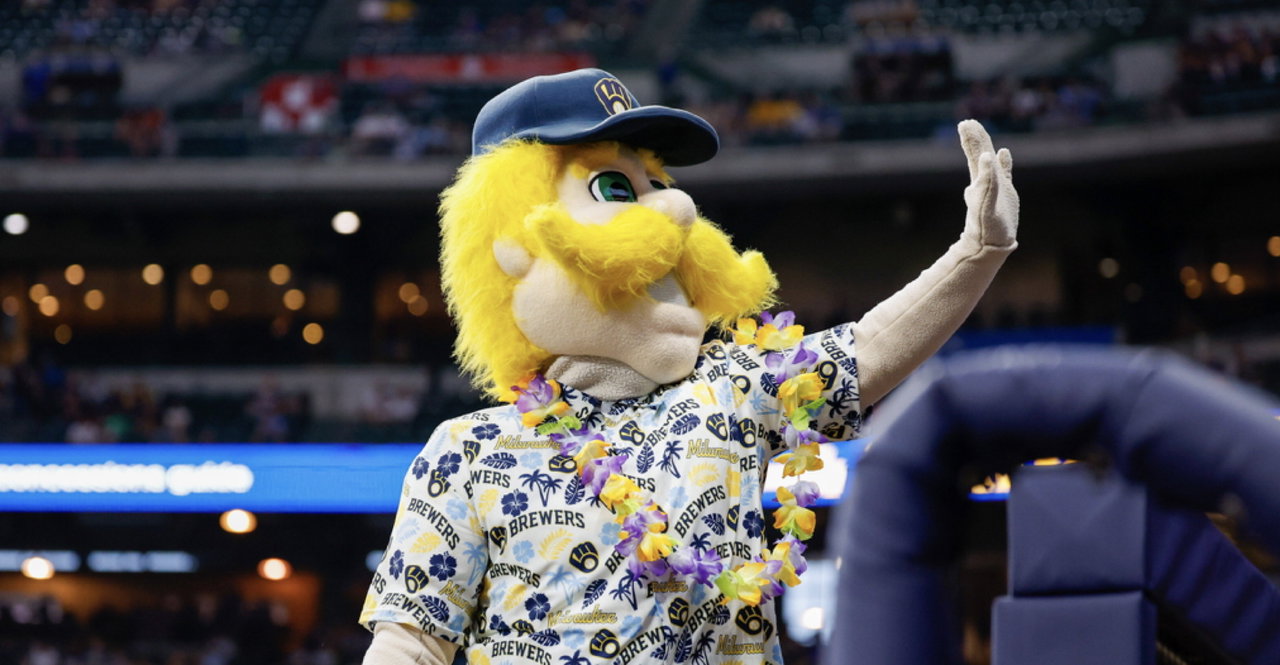
For years, the Los Angeles Dodgers and New York Yankees have been the faces of MLB’s biggest stage, bringing star power, massive payrolls, and millions of viewers along with them. But 2026 World Series Game 1 drew 12.26M viewers, nearly matching 2025 despite a 13 million home-market disadvantage. It defied expectations surrounding a Fall Classic without a traditional big-market powerhouse.
Watch What’s Trending Now!
The numbers have yet to match the heights of the 2025 World Series. But Fox Sports’ latest figures offer a promising sign that even MLB’s smallest market can command national attention.
“No Dodgers in this year’s World Series? No problem for Fox Sports. The series opened with 12.26 million viewers for Game 1 across Fox Sports, Fox Deportes, and Univision, followed by 10.85 million for Game 2,” Front Office Sports shared via X.
Game 1 nearly matched 2025’s 12.3 million viewers, a minuscule 0.04 million drop, remarkable for a market 75% smaller. Game 2 averaged 10.85 million viewers, down roughly 6% from the 11.6 million recorded for Game 2 in 2025.
This data couldn’t beat the 2025 World Series. But it outperformed World Series Game 1 data from 2021 to 2023, when the Dodgers were absent. So, the Dodgers are still one of the biggest money-spinning markets in MLB, but surviving without them is still possible. 2026 is proving that.
Notably, the resilience of the 2026 ratings is heavily attributed to an explosive local footprint in the Midwest. Despite Milwaukee being MLB’s smallest television market, the Brewers’ base generated an eye-popping 33.9 local rating / 70 share for Game 1 and a 35.4 rating / 71 share for Game 2.
Furthermore, the narrative of two small-market, lower-payroll organizations vanquishing the heavyweights, including the Brewers eliminating the two-time defending NL champion Dodgers, captivated a healthy baseline of national sports fans.
Also, the 2025 World Series had some edge-of-your-seat thrillers, and Game 7 determined the winner. In comparison, the Brewers’ 3-0 lead this year means a more subdued environment.
Yet the 2026 matchup represents MLB’s smallest combined market in 20 years: 3.2M homes vs. 13.3M in 2024. The Tampa Bay Rays and Brewers offer a combined 3.2 million homes. That’s lower than the St. Louis Cardinals and Detroit Tigers’ 3.17 million market 20 years ago. By contrast, the 2024 World Series featured a combined 13.3 million market size from the Dodgers and Yankees.
Hence, with such limited market potential, the 2026 World Series giving a fight to Fox Sports’ best-ever record is attributed to the Rays and Brewers fans. Special credit goes to the Brewers fans who are crowding out Tropicana Field, making it another extension of Milwaukee.
Yet, Game 3 is projected to face a steep decline due to heavy competition from the Dallas Cowboys vs. Philadelphia Eagles on Monday Night Football. A lopsided 10-1 Milwaukee blowout could also drive away casual viewers.
Meanwhile, the Brewers fans are doing everything for a record 2026 season.
The Brewers are redefining MLB’s market division
The Brewers owner, Mark Attanasio, hates being called “We’re too small” or “We can’t do this.” The fans are proving him right. MLB’s official smallest market saw 2,788,933 fans in the regular season at American Family Field. This made the Brewers the 11th-ranked team in terms of attendance in 2026.
The fans are turning the franchise’s first Fall Classic appearance in 44 years into a record-breaking spectacle. Fueled by the excitement of a potential first-ever championship, Milwaukee supporters have shattered MLB’s record for most merchandise sold during a postseason run.
The massive contingent of Brewers fans completely took over the parking lots outside Tropicana Field hours before first pitch. They effectively turned the Rays’ home stadium into a booming Milwaukee home game. Back home, the Brewers sold out stadium watch parties for over 31,000 fans in less than 20 minutes just to view the games on the scoreboard.
No matter whether the Rays or the Brewers win the 2026 World Series, it is now proven that fans’ excitement and engagement can defy long-lasting narratives in baseball.