
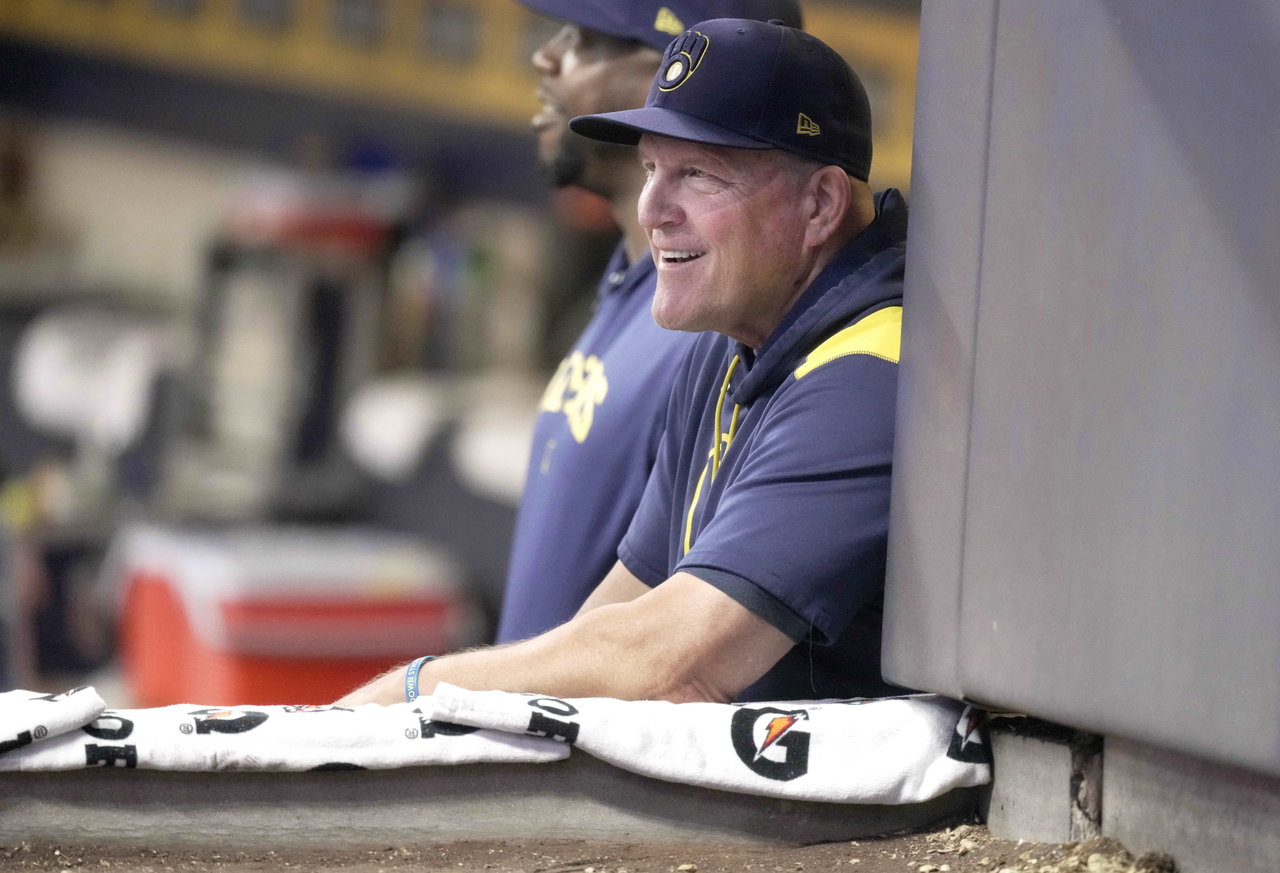
For a team that seemed almost invincible, the biggest threat to its dynasty came from a franchise that had every reason to be the underdog. The Los Angeles Dodgers entered the 2026 NLCS chasing history after dominating the regular season and the NLDS, but the Milwaukee Brewers turned that dream into a nightmare. With a $146 million payroll compared to the Dodgers’ $339 million, Milwaukee was hardly expected to match the defending champions, let alone sweep them 4-0 after suffering the same fate in the 2025 NLCS. Yet, a year later, the Brewers flipped the script, turning their biggest weakness on paper into one of baseball’s most remarkable postseason triumphs.
Watch What’s Trending Now!
But this was more than just an NLCS upset. The Dodgers’ elimination ended their hopes of a historic three-peat while handing MLB’s small-market teams a powerful reminder that financial muscle does not guarantee October glory. With the league’s collective bargaining agreement negotiations intensifying and the proposed salary cap debate putting the Dodgers under the spotlight, Milwaukee’s stunning sweep could become a defining example in the battle over competitive balance. So, how did the Brewers dismantle baseball’s financial powerhouse, and could their triumph reshape the conversation surrounding MLB’s future?
The Brewers corrected themselves after 2025
“They may have a bunch of Hall of Famers, but we’ve got a bunch of gamers,” Pat Murphy said after the victory. “And the gamers won this week.” That’s where the Brewers got over the Dodgers. While the Dodgers’ star-studded roster was one-of-a-kind with future Hall of Famers like Shohei Ohtani, Yoshinobu Yamamoto, and Kyle Tucker, the Brewers opted for performers. Small-name but effective on the field.
The Dodgers had Edwin Díaz as their closer in Game 4, while the Brewers had Aaron Ashby. Díaz is one of the top names in the league. During his time with the Mets, his walkout from the bullpen became a must-watch theatrical event in sports, crossing over into mainstream social media trends and making him recognizable even to casual or non-baseball fans. He is a 3-time MLB All-Star and a 3-time Reliever of the Year. He holds one of the most dominant individual pitching seasons in baseball history, racking up 57 saves in 2018 with the Seattle Mariners.
Ashby, by contrast, is a multi-inning reliever, effective but unglamorous. In 2026, he posted 13 wins from the bullpen, a career-high. Because he operates in a multi-inning role rather than the glamorous, game-ending closer spot, he does not have the same national spotlight or pop-culture footprint as Díaz.
Still, just when it mattered the most, Díaz pitched 3 innings, allowing 1 ER and recording 2 strikeouts. In comparison, Ashby recorded 3 strikeouts from his 3 innings without allowing any runs.
The Brewers learned from 2025. Their bats had managed just four runs across four games; in 2026, they hit seven home runs in the series. In 2026, despite hitting the fewest home runs in the National League during the regular season, the Brewers turned into a powerhouse in October, smashing seven home runs in the series while holding the Dodgers to just one. Series MVP Jake Bauers and Garrett Mitchell provided critical home runs in Game 3, and they repeatedly came through with runner-advancing, patient contact.
In 2025, Brewers relievers burned out against the Dodgers’ relentless lineup. In 2026, Milwaukee’s bullpen was flawless. In Game 2, four Brewers relievers combined to retire 15 consecutive batters, marking the most perfect innings ever thrown by a bullpen in a single game in MLB postseason history.
The Brewers managed workloads effectively and matched the Dodgers’ star-studded rotation zero-for-zero. Behind rookie depth and dominant young arms like Jacob Misiorowski and Logan Henderson, the staff neutralized an otherwise explosive Dodgers lineup, outlasting them when it mattered most.
History awaits the Brewers
The Brewers’ last World Series appearance was in 1982, when they lost the Fall Classic in seven games to the St. Louis Cardinals. They are yet to win a ring in their franchise history. The Guardians are currently leading the ALCS by 2-1. So, if the Guardians get into the World Series, the Brewers-Guardians face-off will have no underdog story.
The Brewers lead the all-time regular-season series against the Guardians with a 219–213 record (.507 winning percentage) across 432 games. Hence, no one is absolutely leading the other. However, in the last 10 games, Milwaukee holds a 7–3 record.
If the Brewers win the World Series, it will be their first. If the Guardians win, it will be their first since 1948, and if the Tampa Bay Rays win the ring, it will also be their first. So, with any of the three remaining teams’ wins, history will be made.
The Dodgers’ NLCS loss will impact the salary cap discussions
The Dodgers’ 4-0 sweep loss to the underdog Brewers in the 2026 NLCS heavily undercuts MLB owners’ primary public argument for a hard salary cap. By demonstrating that a low-payroll team can dismantle baseball’s highest-spending juggernaut, the outcome provides a massive narrative boost to the MLB Players Association just before the current CBA expires on December 1, 2026.
The Dodgers carried a staggering $433.1 million luxury tax in 2026, more than the other three playoff semifinalists (the Brewers, Guardians, and Rays) combined ($360.5 million). Team owners wanted the Dodgers to dominate to prove to fans that small-market teams have no mathematical chance without structural spending restrictions. But the Brewers’ sweep shatters this argument in the court of public opinion, making it harder for owners to claim the sport’s competitive balance is inherently broken.
The MLBPA can now point directly to the 2026 postseason as living proof that smart roster execution, player development, and strong bullpen management matter more than outspending the competition.
So, let’s now see how the CBA negotiations proceed from here. Yet the Brewers proved that even the invincible can be beaten if planned right.