Imago
Source: IMAGO
Imago
Source: IMAGO
Imago
Source: IMAGO
Imago
Source: IMAGO
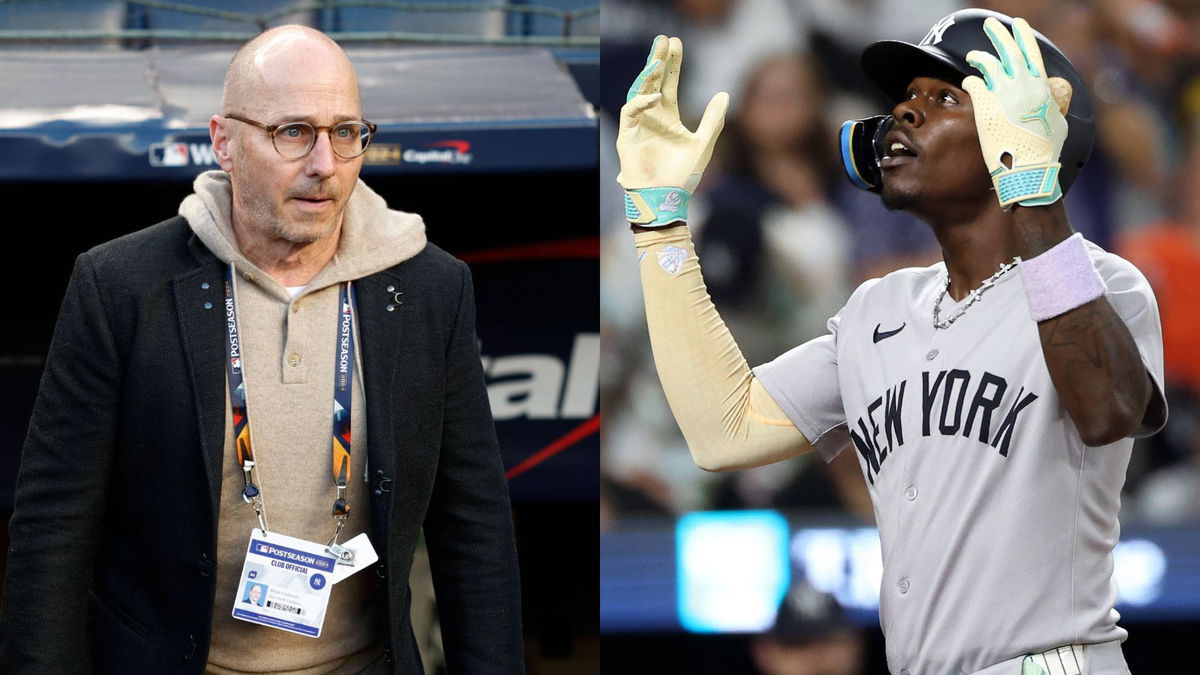
The New York Yankees made the postseason again. And got knocked out again. Brian Cashman is trying to improve all the points he thinks are weak. With some rumors linking the Yankees to a second base player, you could tell Jazz Chisholm Jr. might be one of them. But there’s a problem.
Watch What’s Trending Now!
The rumored second base player is not interested in signing with the New York Yankees. Fireside Yankees recently reported, “The Yankees are reportedly on Ketel Marte’s five-team no-trade list, according to Jon Heyman.”
Meanwhile, the Yankees and Jazz Chisholm Jr. remain without extension talks despite years of speculation. Brian Cashman confirmed no negotiations have begun, even after speaking with Chisholm’s agent this week.
Jazz Chisholm Jr. delivered thirty-one home runs, eighty RBIs, and thirty-one steals in 2025. His strong season kept fans engaged, yet his contract clock continues to tick steadily.
Interest in Ketel Marte has added another layer to the unfolding situation around Chisholm Jr.


Arizona has taken calls on Marte, though he remains signed through 2031 on guaranteed terms. There is no indication Marte wants to join the Yankees, as the Arizona Diamondbacks hold his rights with a $116.5M contract. That reality keeps the Yankees watching closely while their own second baseman waits for clarity.
The Yankees are reportedley on Ketel Marte’s five-team no-trade list, according to Jon Heyman.#Yankees pic.twitter.com/RcZo9yAJhf
— Fireside Yankees (@FiresideYankees) November 14, 2025
The uncertainty leaves Jazz Chisholm Jr. in a difficult spot as the offseason continues to shift. His future could tighten if Marte’s situation changes late and impacts team decisions. A late move would leave Jazz with limited time to explore strong opportunities elsewhere. Fans feel the weight of the moment as both paths remain unsettled.
The Yankees now face a crossroads where Jazz Chisholm Jr. and Ketel Marte shape real consequences. Both situations demand clear choices before the clock forces decisions that feel rushed and avoidable.
The Yankees are looking to make changes to their catching position, too
The Yankees spent the past year pretending their catching situation was “fine,” the same way you pretend your Wi-Fi is fine while rebooting the router every ten minutes. Brian Cashman knows better.
Austin Wells worked hard, Ben Rice did what he could, and J.C. Escarra filled a gap, but New York can’t keep patching leaks with hope. Something bigger is coming, and the room feels ready for it.
The Yankees’ catching setup feels stretched thin because Austin Wells is their primary option, and his support mainly comes from left-handed hitters Ben Rice and J.C. Escarra. Brian Cashman has said Rice can still catch, but expects him to handle first base next year.
That shift reduces their depth behind the plate and pushes the need for a reliable right-handed catcher.
Ryan Jeffers fits that search because he brings established production and clear value in matchups.
He hit .266 with 9 home runs and 47 RBIs last season, which reinforces his impact against steady pitching. His career totals of 68 home runs and 223 RBIs show consistent power that can support a regular workload. He is projected for a modest arbitration salary and has team control remaining, which strengthens his fit for New York’s plans.
The picture becomes clearer as the Yankees weigh Austin Wells’ ability to handle growing demands. Ben Rice shifting positions and Ryan Jeffers entering discussions hint at a larger organizational rethink. New York now stands at a point where bold choices matter more than familiar comfort.