
Tarik Skubal, the left-hander who is an ace and a top free agent, struck out 186 batters while pitching 158.2 innings following elbow surgery. The market is heading toward a probable shutdown on December 1, and Super-agent Scott Boras believes teams have a window to sign talent before the lockout.
Watch What’s Trending Now!
“For many teams, I can make an argument it’s clearly best for them to sign players currently, before the (new) CBA, than it is after,” super-agent Scott Boras said in a report by The Athletic’s Andy McCullough. “Because they have more freedom to do what they’re going to do. They can react later. Now they can get the talent. They can get what they want.”
The expected lockout is set to begin December 1, 2026, when the current CBA expires.
With the CBA expiration, it may trigger a freeze that prohibits major-league signings and trades. The ownership plan from May set a $245.3 million cap, so clubs that commit to talent now sidestep rules not yet established. Physicals and paperwork must clear first. Boras is not alone in that view.
“I think there’s going to be more urgency,” one executive who requested anonymity said in The Athletic’s report on the pre-lockout market.
This trend can be seen through last winter’s relief market, which saw Devin Williams sign a three-year, $51 million contract with the New York Mets on Dec. 1, followed by other high-end relievers Robert Suarez and Luke Weaver. This momentum might continue.
“The middle tier could move fast,” one executive said in the same report from McCullough.
The relief market last winter ranked second-weakest in a decade, per Tim Britton’s Athletic analysis. Padres’ King and Mariners’ Arozarena competed for similar deals. But Skubal stands out.
“In a talent-run world, there are no rules until there are rules,” Boras said during his interview with The Athletic’s McCullough when asked how he convinced the owner to sign Skubal on a contract that the owner thinks should be outlawed.
Boras means teams can structure deals before new CBA rules take effect, giving them flexibility owners later lose.
The MLB framework set during June limited outside free agents to five years and $202 million, while another executive proposed 10 years and $400 million for Skubal, more than that of Los Angeles Dodgers right-handed pitcher Yoshinobu Yamamoto’s $325 million.
Skubal’s résumé supports the asking price.
He finished the 2026 MLB season between the Detroit Tigers and Los Angeles Dodgers, combining a 12–7 record and a 2.72 ERA over 158.2 innings pitched.
The stakes are much higher now.
For the first time since 1994, owners have suggested a salary cap, and executives think the agents will make an effort to get more talks during the Nov. 9 general managers’ meetings in Las Vegas.
Patience is his calling card. Executives believe that Boras will advise Skubal to play through the lockout if the offers do not impress, while the flurry of activity could come the week after Thanksgiving, Black Friday for baseball.
Whether the MLB super agent is right will show up fast. If teams act as he anticipates, the Hot Stove might see its biggest names traded before the freeze, with meaningful CBA discussions possibly delayed until February or March.
However, behind all those November negotiations, there is a commissioner who sees the shutdown as a negotiating strategy.
Why Rob Manfred sees leverage in an MLB lockout
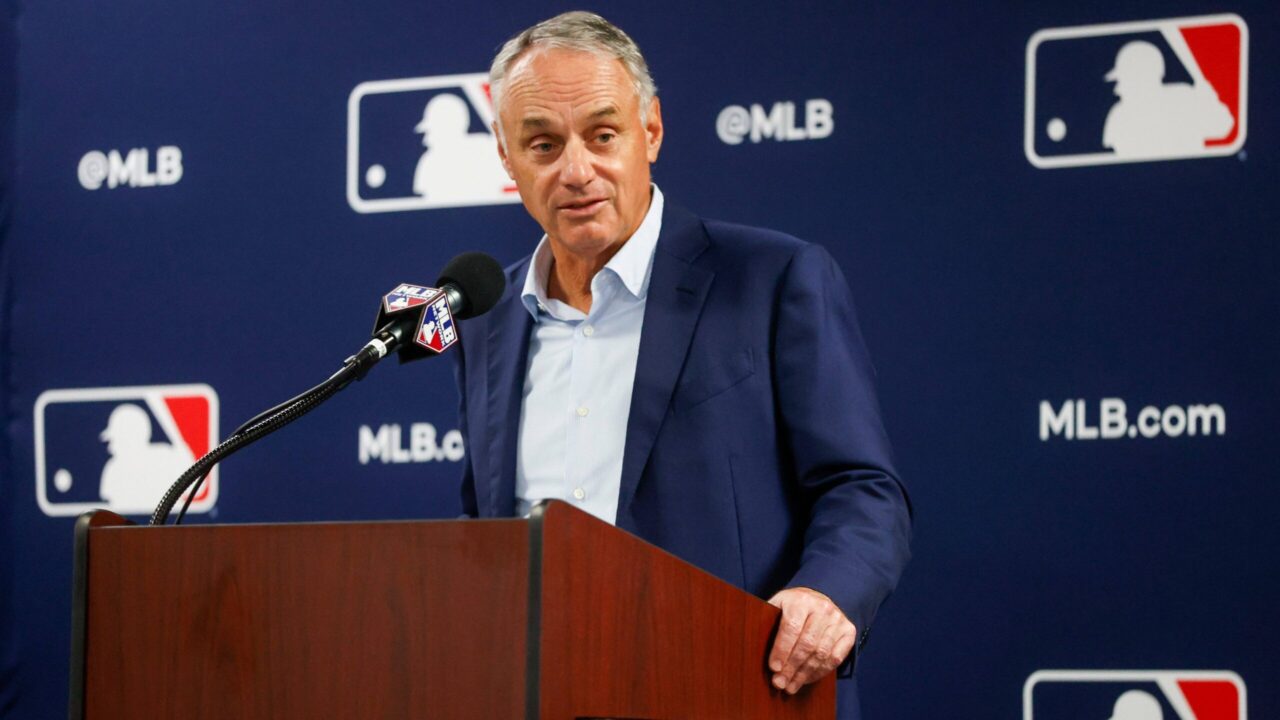
MLB commissioner Rob Manfred sees a shutdown during the winter as leverage, rather than a catastrophe. The owners will be putting the players into a lockout from December 1, and Manfred has been forthright about how timing is everything.
“In a bizarre way, it’s actually a positive,” Manfred said in public comments ahead of the lockout.
“There is leverage associated with an offseason lockout, and the process of collective bargaining under the NLRA (National Labor Relations Act) works based on leverage.”
Manfred repeated that logic after the 2021 lockout began, saying the move was designed to “jumpstart the negotiations and get us to an agreement that will allow the season to start on time.”
The timeline tells a different story, though.
The owners did not offer their first CBA proposal until roughly six weeks after the 2021 lockout commenced, and the lockout extended for 99 days before both sides settled on March 10, 2022.
A lockout preempts a strike, so the union cannot time a walkout around Opening Day or the stretch drive.