
Imago
MLB, Baseball Herren, USA Chicago Cubs press conference, PK, Pressekonferenz Aug 1, 2025 Chicago, IL, USA Baseball Commissioner Rob Manfred announces Major League Baseball and the Chicago Cubs will host the 2027 All Star game at Wrigley Field. Chicago Wrigley Field IL USA, EDITORIAL USE ONLY PUBLICATIONxINxGERxSUIxAUTxONLY Copyright: xDavidxBanksx 20250802_cec_bb6_001
Imago
MLB, Baseball Herren, USA Chicago Cubs press conference, PK, Pressekonferenz Aug 1, 2025 Chicago, IL, USA Baseball Commissioner Rob Manfred announces Major League Baseball and the Chicago Cubs will host the 2027 All Star game at Wrigley Field. Chicago Wrigley Field IL USA, EDITORIAL USE ONLY PUBLICATIONxINxGERxSUIxAUTxONLY Copyright: xDavidxBanksx 20250802_cec_bb6_001
Looks like the MLB has a problem anew. Forget the umpires, the strike zone, and even Rob Manfred and the CBA. The new problem seems to be that the players are shrinking. But are they really, or is there a reason behind the changes in their height on the player profile?


Well, their heights didn’t go down; the rules just got stricter. As said by BarStools Sports, “The truth has caught up to all the majors leaguers who are under 6 feet… every player is mandated to have their height measured to the highest scrutiny. No more sympathy inches.”
Watch What’s Trending Now!
MLB has changed how it measures the height of players after introducing the ABS. This is to measure where the strike zone of the player is accurately. This is going to help them set the strike zone for each of those players and give a fair hand to the pitcher.
Coaches define the strike zone by percentages of a player’s true height, from 27 % at the bottom to 53.5 % at the top.
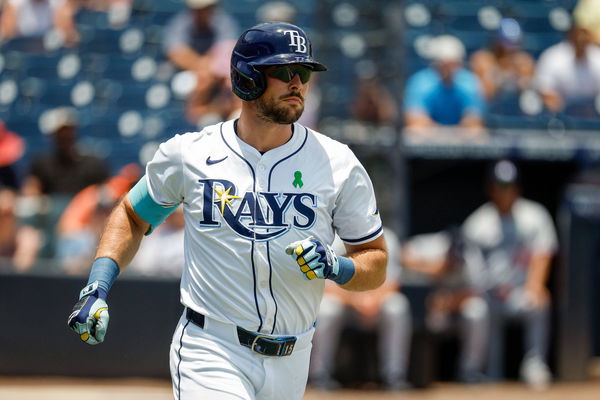
Imago
May 28, 2025, Tampa, Fl, US: The Tampa Bay Rays traded outfielder Josh Lowe to the Los Angeles Angels on Thursday, Jan. 15, 2026, in a three-team deal that brought second baseman Gavin Lux and pitcher Chris Clark to Tampa Bay. Tampa US – ZUMAm67_ 20250528_zaf_m67_035 Copyright: xJeffereexWoox
Before, the heights used to be self-reported, but due to the scrutiny in checking, the heights have dropped. The protocols for height measuring are no shoes, no hats, heels together, knees exposed, and backs against the wall. The organizers will test each player twice to rule out any human error.
Because when you see the height drop of a few players, you wonder if they were wearing heels.
Gavin Lux went from being listed at 6 ft 2 in with the Reds to 5 ft 11 in with the Rays. Connor Wong went from 6 ft 1 in to 5 ft 10 in, and Tucker Barnhart went from 5 ft 11 in to 5 ft 8 in. With the ABS giving a chance to challenge the pitcher, the pitcher now has a good idea as to where the batter’s strike zone is.
This could change how pitchers attack the zone and how hitters adjust their swings. And this will even help the umpires, who might start to do a better job than they have done until now.
MLB umpires are already learning that they can’t get away with bad calls
MLB’s ABS system has already started to put umpires on hot seats. Each overturned call will bring more eyes on the umpires. During the Spring Games, umpires like CB Bucknor have overturned around 52.2% of challenges, and that is not a good look.
In a Spring Game between the Nationals and Astros, CB Bucknor had 3 calls overturned in the very first inning. Similar to Bucknor, umpire Mitch Trzeciak has had at least five calls overturned. But let’s understand one thing: human errors will happen. The umpires will get calls wrong, but it is about how many calls they get wrong.
For example, CB Bucknor has an accuracy rate of 92.81%, Laz Diaz has a 92.8%, and Rob Drake has 90.99%. All this while the league average is between 93 and 94 percent. With the opening day just a few days away, this tech will challenge the pride and vision of many umpires.
