
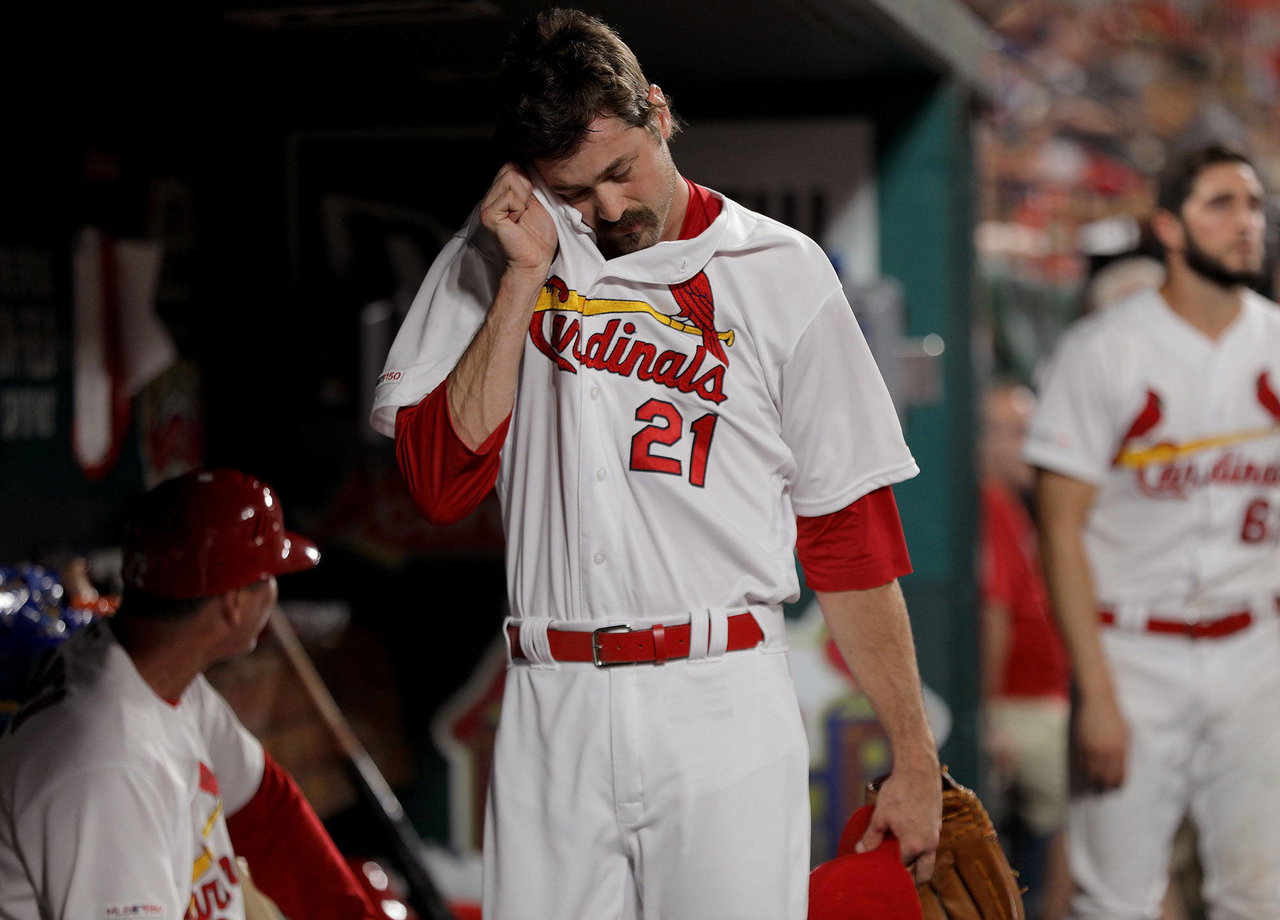
Andrew Miller is now at the center of MLB’s fight over a salary cap that could reshape players’ earnings. The former pitcher serves as the MLBPA’s director of collective bargaining and strategic initiatives. After retiring in 2021 and earning an MBA from UNC, he returned to the union. Now, he is helping lead the players’ resistance alongside interim executive director Bruce Meyer.
Watch What’s Trending Now!
“A salary cap, honestly, is just straightforward. It’s a chance for the owners to limit their labor costs. The fact that they’re going to come out and sell that as competitive balance… we can very easily kind of disprove those notions,” said Andrew Miller in an interview with Foul Territory.
Miller argues owners are using competitive balance as cover to limit labor costs—a claim he says will not lower ticket prices or bring labor peace. Lower team payrolls do not automatically mean lower prices for fans attending games.
MLB’s salary cap proposal is not new, as owners pushed for similar restrictions during the 1994 labor dispute. The disagreement triggered a 232-day players’ strike, eventually cancelling the World Series before owners withdrew their proposal in 1995. Now, the 2026 proposal has brought that same fight back, raising concerns about another major confrontation between players and owners.
Manfred counters that competitive balance is essential: fans need hope their team can win. He argues the luxury tax has failed to close payroll gaps, making a cap necessary. Its opening proposal set a 2027 cap at $245.3 million and a $171.2 million floor. The league says the floor would push lower-spending clubs to invest more in their players.
Miller points to recent World Series matchups when questioning whether baseball needs a salary cap. The 2024 World Series featured the Dodgers and Yankees, both major-market, high-payroll teams. Miller said the series drew phenomenal viewership, despite finishing before a seventh game. The 2023 Rangers-Diamondbacks matchup also showed smaller markets could deliver compelling baseball. In 2026, Milwaukee swept the Dodgers before beating Tampa Bay for its first championship.
Miller points to the Dodgers, owners’ main example of high-spending dominance, as proof that money doesn’t guarantee titles. Los Angeles won only 4 World Series in 40 years despite massive payrolls. The Mets signed Juan Soto to a $765 million contract, but remained without another championship. Miller says capped leagues still produce dominant teams, including the Patriots, Chiefs, and Warriors.
The union’s biggest concern is how a cap could restrict earnings across entire major-league rosters. Under MLB’s opening proposal, 8 teams would need to cut payroll by $578 million combined. Meanwhile, 12 teams would need to add $617 million to reach the proposed floor. MLB says its plan would increase total player compensation in 2027 and share revenue equally. The union disputes that promise and argues a hard ceiling limits teams’ bidding power.
The MLBPA has firmly rejected a salary cap, arguing that it would restrict players’ earning potential and limit teams’ ability to compete for talent. Instead, the union wants to preserve the current system, protect guaranteed contracts, and maintain players’ freedom to negotiate salaries without a hard spending ceiling. With the CBA expiring December 1, both sides face a difficult negotiation that could lead to a lockout.
MLB says its plan would strengthen competition and give fans hope across more markets. Miller sees owners gaining control over their largest expense, not solving every competitive problem.
An MLB salary cap would be an insult to Curt Flood’s legacy
Curt Flood’s fight for player freedom is back in baseball’s spotlight as owners push for a salary cap. With the current agreement expiring December 1, players face another defining labor battle this winter. A cap would limit team spending, potentially restricting the market that rewards players for performance. For Flood’s family, that proposal carries meaning beyond another financial disagreement about baseball’s future. His daughter Shelly believes baseball cannot ignore the sacrifices behind the freedom players enjoy today.
In 1969, St. Louis traded its star center fielder to Philadelphia without asking permission. Flood refused to report, challenging a reserve clause that kept players tied to teams indefinitely. He had earned 7 Gold Gloves, made 3 All-Star teams, and won 2 championships. Yet, after 12 seasons, he still could not choose where he wanted to play.
“I do not feel I am a piece of property,” Flood wrote to Commissioner Bowie Kuhn.
Flood took MLB to court, arguing baseball’s reserve system violated players’ rights, but ultimately lost. The Supreme Court ruled 5-3 against him in 1972, again upholding baseball’s antitrust exemption. His case exposed the system’s unfairness and strengthened pressure for lasting change across baseball. In 1975, arbitrator Peter Seitz ruled for Andy Messersmith and Dave McNally, opening free agency. The 1973 agreement introduced trade protection for qualifying veterans, later called the Curt Flood Rule.
That fight helped create today’s market, where players negotiate deals now considered almost unimaginable. Juan Soto’s 15-year, $765 million Mets contract shows how far that freedom reaches today. Shelly said her father would have been astonished by the money players can earn.
“No one has the right to tell you what your God-given talent is worth.” She questions why players face limits when MLB generated $12.1 billion last year.
Bryce Harper reportedly confronted Manfred, telling him to leave the Phillies’ clubhouse over cap discussions. The current agreement expires December 1, and owners are expected to lock out players afterward.