
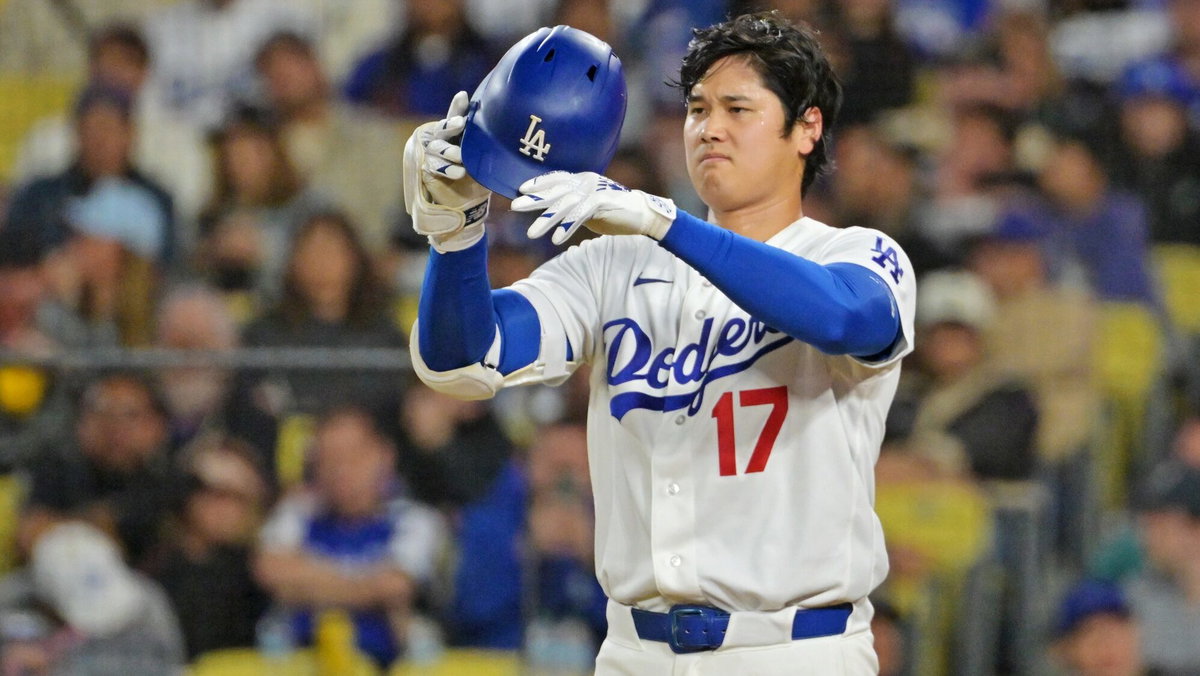
Less than a week ago, Dave Roberts basically admitted Shohei Ohtani looked too hurt to be helping the Dodgers. The superstar was shaking his arm, wincing through swings, and clearly did not look right at the plate. Los Angeles sat him for four games, then put him right back in the lineup. Now the bigger question is getting uncomfortable: was four days anywhere near enough, and has Ohtani been downplaying just how bad he actually feels?
Watch What’s Trending Now!
“I think, maybe Shohei wasn’t as honest with how much discomfort he was in,” Katie Woo said in a recent podcast, as per Dodgers Territory.
Woo was not accusing Ohtani of lying. She even pointed out that stars like Freddie Freeman or Clayton Kershaw probably would not volunteer for a day off either. That is exactly the problem. Ohtani wants to play, and Roberts has already shown he may have to make that decision for him.
And this is not based on one ugly night. Ohtani’s body has been sending warning signs since June, starting with left knee inflammation on June 11 that forced him out against the Pirates and kept him out the following day. The Dodgers called it manageable, but the soreness never fully disappeared.
Then came July 3 against the Padres. Ohtani threw a season-high 110 pitches before feeling tightness in his right biceps during his final at-bat. He later admitted he had felt something in the same area months earlier and had simply played through it.
That admission is what makes Woo’s concern harder to dismiss. Ohtani had already shown that feeling discomfort did not necessarily mean he would stop playing.
That July 3 outing remains his last start on the mound, and a return this season now looks highly unlikely. His knee continued bothering him through the All-Star break, even after an Orthovisc injection and several days of rest, forcing the Dodgers to halt his pitching work.
Ohtani tried again on July 22, throwing around 30 pitches in a bullpen session in Philadelphia. But the progress stalled almost immediately, and he did not throw again for more than two weeks before restarting with catch on August 8.
Even staying in the lineup as a DH was no longer completely smooth. On July 31, renewed soreness in his left knee forced another day off, while the Dodgers also acknowledged that his right biceps had become another obstacle in his pitching progression.
The August comeback attempt followed the same pattern. After a bullpen session on August 28, Ohtani told the Dodgers he did not feel right physically, and Roberts soon admitted he was “not 100%” because of his knee, biceps and “overall body.”
His bat started slipping at roughly the same time. After restarting his throwing program on August 8, Ohtani went 18-for-82 (.220) with 26 strikeouts and eight walks over his next 20 games, while Roberts admitted he did not expect everything to get back to 100 percent before the season ended.
Then September 2 made the problem impossible to ignore. Ohtani went 0-for-4 with four strikeouts against the Cardinals while visibly wincing, shaking his arm and compensating through his swings. Roberts called it the “tip of the iceberg,” saying Ohtani had not looked like himself for weeks.
The physical punishment had piled up during the series too. Ohtani took a hard slide back into third base and appeared to stretch his right knee afterward. He was also hit on the right elbow, adding another blow to an already battered stretch.
That was when Roberts finally questioned whether Ohtani playing through everything was helping at all. He knew Ohtani believed that if he could stand, he should play, but said that if he felt as bad as he looked, staying in the lineup was “really not helping anyone.”
The Dodgers finally gave him four games off before bringing him back on September 7 against the Reds. Ohtani went 0-for-3 with two strikeouts, and while he looked better physically, Roberts still wanted to see how his body responded before deciding his workload moving forward.
And that is where protecting Ohtani becomes a roster problem for the Dodgers. Because he carries two-way status, an injured-list stint would keep him out for at least 15 days rather than 10. With only 18 regular-season games remaining, that would wipe out a significant chunk of the Dodgers’ final push.
Los Angeles sits atop the NL West at 87-57, but its first-round bye is not secure. The Dodgers are second in the National League, with the 85-59 Braves close enough to threaten that spot.
If Atlanta jumps them, Los Angeles could fall to the No. 3 seed and lose the first-round bye. That means playing the Wild Card Series instead of going straight to the Division Series, hardly ideal for a team already managing physical concerns and uneven stretches on both sides of the ball.
That is also why Ken Rosenthal has raised concerns about the pressure waiting for the Dodgers in October. A team chasing a third straight World Series does not want to enter the postseason already asking how much its biggest star can physically handle.
So the Dodgers’ problem is no longer just how quickly they can get Ohtani back to full strength. It is whether keeping him available now is worth risking how much of him they will actually have when the games matter most.